Contents
Indoor insect infestations can disrupt your home environment and pose health risks. Identifying the type of pests you’re dealing with is vital for effective extermination. Once you understand the problem, sealing entry points and maintaining cleanliness becomes imperative. There are various methods to control these pests, from natural repellents to professional exterminators. Let’s explore essential strategies that can help you reclaim your space and prevent future infestations.
Key Takeaways
- Identify and monitor insect infestations by observing signs like droppings and inspecting hidden areas regularly.
- Seal entry points with caulk, weather stripping, and inspect utility line openings to prevent pest access.
- Maintain cleanliness by storing food in airtight containers and regularly cleaning kitchens and living areas.
- Control indoor humidity levels between 30% and 60% to deter moisture-loving pests and discourage breeding.
- Use natural repellents like essential oils and DIY sprays to disrupt insect behavior while keeping your home smelling fresh.
Identify the Insect Infestation
How can you effectively identify an insect infestation in your home? Start by observing common infestation signs, which can vary based on the insect species present.
Look for droppings, shed exoskeletons, or bite marks on furniture and fabrics. You might also notice unusual sounds, like rustling or buzzing, particularly at night.
Check areas where food is stored, as many insects are attracted to crumbs and spills. Pay attention to cracks and crevices, as these are prime hiding spots for pests.
Additionally, damp areas can signal moisture-loving insects like termites or cockroaches.
If you spot these signs, it’s essential to act quickly. Properly identifying the specific insect species can guide you towards effective extermination methods.
Seal Entry Points
To effectively prevent insect infestations, you should focus on sealing entry points around your home.
Start by inspecting window screens for tears or gaps that could allow pests to enter. Repair or replace any damaged screens to create a tight barrier.
Next, implement draft sealing strategies around doors, windows, and any cracks in your home’s exterior. Use weather stripping or caulk to fill gaps, ensuring a secure seal.
Pay special attention to areas where utility lines enter your home, as these can also be entry points for insects.
Regularly check your home’s foundation and basement for any vulnerabilities.
By taking these proactive measures, you’ll greatly reduce the chances of unwanted pests finding their way in.
Creating a welcoming and safe environment for your family requires diligence, so make sealing entry points a priority in your pest prevention efforts.
Maintain Cleanliness
After sealing entry points, maintaining cleanliness in your home is a key strategy for preventing insect infestations. By adopting effective household habits, you can considerably reduce the likelihood of unwanted pests. Regular cleaning helps eliminate food sources and nesting sites, making your home less inviting to insects.
| Area to Clean | Frequency | Tips |
|---|---|---|
| Kitchen | Daily | Wipe surfaces, sweep crumbs |
| Living Room | Weekly | Vacuum carpets, dust shelves |
| Bathroom | Weekly | Scrub sinks, remove hair |
Make it a habit to store food in airtight containers and promptly dispose of garbage. Pay special attention to hidden areas, like behind appliances and under furniture. By integrating these practices into your routine, you’ll foster a clean environment, creating a home that feels welcoming and pest-free.
Utilize Natural Repellents
To combat indoor pests, you can effectively utilize natural repellents like essential oils and vinegar solutions.
Essential oils such as peppermint and tea tree oil are known for their insect-repelling properties, while a vinegar and water mix can disrupt their habitat.
Implementing these methods reduces insect presence and minimizes chemical exposure in your living space.
Essential Oils for Repellents
While many commercial insect repellents contain harsh chemicals, essential oils offer a natural alternative that can effectively deter pests.
Lavender oil is renowned for its calming scent, but it also repels mosquitoes and moths. You can mix a few drops with water in a spray bottle and apply it around your home for a pleasant fragrance and pest protection.
Peppermint oil, with its strong aroma, is particularly effective against ants and spiders. To use, combine peppermint oil with water and spray areas where you’ve noticed these pests.
Both oils are safe and eco-friendly, making them excellent choices for your indoor pest control strategy. Embracing these natural repellents protects your space and fosters a healthier living environment.
Vinegar and Water Solutions
Vinegar and water solutions serve as an effective, natural method for repelling various indoor insects. By harnessing vinegar benefits, you can create a powerful deterrent without harmful chemicals.
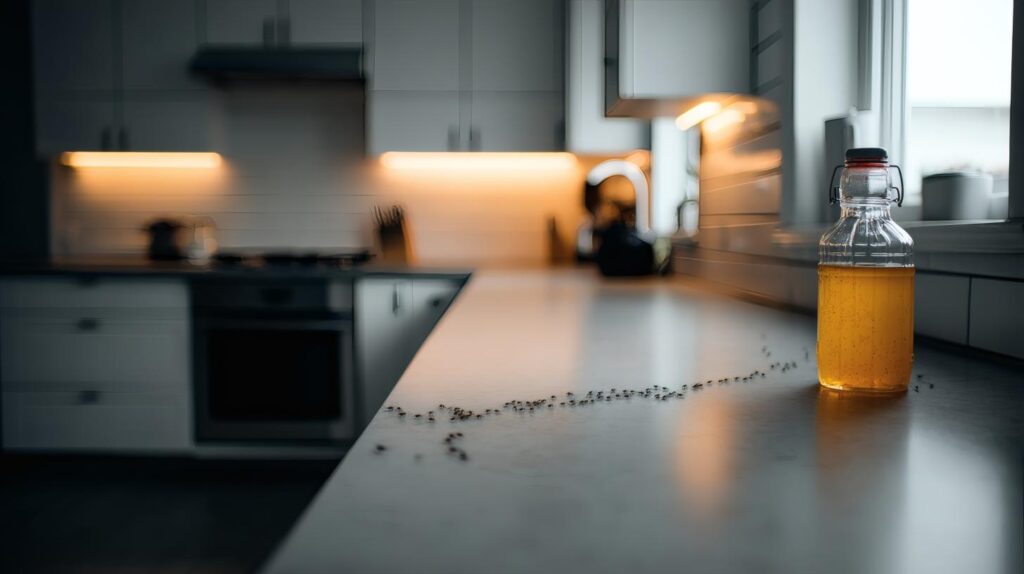
To formulate your solution, mix equal parts of vinegar and water for a balanced ratio. This combination works well against ants, spiders, and fruit flies.
Simply spray the mixture in areas where you’ve noticed insect activity, such as countertops or entry points. The strong scent of vinegar disrupts their pheromone trails, making it harder for them to navigate.
Additionally, it’s safe for your home and family, allowing you to maintain a healthy environment. Embrace this eco-friendly approach to keep your indoor spaces insect-free while feeling good about your choices.
Set Traps Strategically
To effectively combat indoor pests, you need to set traps in high-traffic areas where insects are most active.
Select the right bait types that attract specific pests, ensuring a higher capture rate.
Regularly monitor the traps to assess their effectiveness and make adjustments as needed.
Identify High-Traffic Areas
Identifying high-traffic areas in your home is essential for effective insect extermination. By understanding pest behavior in indoor environments, you can enhance your extermination efforts.
Start by pinpointing common areas where insects often gather. Here are three key locations to take into account:
Kitchens and Pantries: These spaces attract pests due to food sources and moisture.
Bathrooms: High humidity levels make this area appealing for various insects.
Entry Points: Check around windows and doors where insects may enter your home.
Use Appropriate Bait Types
When selecting bait types for insect traps, it’s crucial to match the bait to the specific pest you’re targeting. Different insects have distinct bait preferences based on their behavior.
For example, ants are attracted to sugary substances, while cockroaches prefer protein-based baits. Understanding these preferences can greatly enhance your extermination efforts.
Additionally, consider the time of day when placing traps; many insects are more active at night. Strategically positioning traps near high-traffic areas increases the likelihood of capturing pests.
Always read the labels to verify the bait is suitable for indoor use, as improper bait can be ineffective or harmful.
Monitor Trap Effectiveness
After setting your traps with the right bait, monitoring their effectiveness is key to your pest control strategy.
Regular trap maintenance ensures peak performance and aids in effectiveness evaluation. Here’s how to do it:
Inspect Traps Weekly: Check traps for insect activity and replace bait as needed.
Record Findings: Keep a log of captured insects to identify patterns and adjust strategies accordingly.
Adjust Trap Locations: If traps aren’t capturing pests, reposition them based on observed insect movement.
Apply Insecticides Carefully
Applying insecticides carefully is essential for effective pest control while minimizing risks to humans and pets. To ensure safety during application, follow these key safety precautions and application techniques:
| Safety Precautions | Application Techniques |
|---|---|
| Wear protective gear | Use targeted sprays |
| Keep pets and children away | Apply during low activity times |
| Read instructions carefully | Mist, don’t soak areas |
| Ventilate the area | Choose appropriate insecticides |
| Store chemicals safely | Monitor treated areas |
Monitor and Maintain Humidity Levels
Monitoring and maintaining humidity levels is essential for effective indoor insect extermination.
Most pests thrive in environments with high humidity, so keeping levels within the ideal range of 30-60% can deter infestations.
Use hygrometers or smart home devices to keep track of humidity and make adjustments as needed.
Importance of Humidity Control
While it might seem easy to overlook, controlling humidity levels is vital for effective indoor insect extermination. High humidity can create a perfect breeding ground for pests, making it important for you to implement humidity control techniques.
Here are three steps to help you manage humidity effectively:
Use humidity monitoring devices – Invest in hygrometers to keep tabs on moisture levels in your home.
Ventilation – Ensure proper airflow in areas prone to dampness, such as bathrooms and kitchens, to reduce humidity build-up.
Dehumidifiers – Utilize these devices to actively remove excess moisture from the air, keeping your indoor environment less inviting for insects.
Ideal Humidity Range
Maintaining an ideal humidity range is essential for preventing indoor insect infestations. Generally, keeping humidity levels between 30% and 60% creates an unfavorable environment for many pests.
High humidity can amplify humidity effects, encouraging mold growth and attracting insects like termites and cockroaches, while low humidity may cause pests to seek moisture indoors. You need to understand how humidity affects pest behavior; for instance, some insects thrive in damp conditions, making your home a target.
Regularly monitor humidity levels and adjust as necessary to deter infestations. Utilize dehumidifiers or humidifiers to maintain this ideal range, ensuring your living space remains comfortable and pest-free.
Tools for Monitoring Humidity
To effectively control humidity levels in your home, utilizing the right tools is key. Monitoring humidity ensures a comfortable environment while preventing insect infestations.
Here are three essential tools you should consider:
Humidity Sensors: These devices provide real-time readings of the indoor humidity levels, allowing you to make necessary adjustments quickly.
Moisture Meters: Ideal for checking specific areas like walls or floors, moisture meters help identify damp spots that could encourage insect activity.
Dehumidifiers: While not a monitoring tool, having a dehumidifier can help maintain ideal humidity levels when combined with sensors.
Use Essential Oils for Pest Control
Many homeowners are turning to essential oils as an effective and natural method for pest control. These oils possess aromatic properties that can repel insects and disrupt their behavior.
By harnessing the power of oils like peppermint, lavender, and tea tree, you can create DIY blends tailored to your specific pest problems.
To make your DIY pest control spray, mix a few drops of essential oil with water in a spray bottle. Shake well before each use and apply it to areas where pests are commonly found.
Not only do these oils help deter unwanted insects, but they also leave your home smelling fresh and inviting.
Hire Professional Exterminators
When dealing with persistent pest infestations, hiring professional exterminators can provide a targeted and effective solution.
These experts possess the necessary exterminator qualifications and use advanced pest control methods tailored to your specific needs.
Here are three key benefits of hiring professionals:
Expertise: Professional exterminators undergo rigorous training and certification, ensuring they understand various pests and their behaviors.
Safety: They utilize eco-friendly pest control methods that minimize health risks to your family and pets, while effectively eradicating pests.
Long-term Solutions: Professionals assess the root cause of infestations and implement strategies to prevent future outbreaks, giving you peace of mind.
Follow Up and Prevent Reinfestation
Although you’ve successfully eliminated pests, follow-up actions are essential to prevent reinfestation. Understanding pest behavior is vital to develop long-term strategies that keep your home pest-free.
Start by regularly inspecting areas where pests are likely to return, such as kitchens and basements. Seal entry points like cracks and gaps, as these are common access routes for invading insects.
Implementing proper sanitation practices can greatly deter pests. Keep food stored in airtight containers, clean up spills immediately, and take out the trash regularly.
You might also consider using natural repellents or traps as a preventive measure.
Lastly, monitor your environment for any signs of pest activity. If you notice problems returning, don’t hesitate to consult professionals again.
Wrap-Up
Effectively managing indoor insect infestations involves identifying the problem, sealing entry points, and maintaining cleanliness. By utilizing natural repellents, strategically setting traps, and monitoring humidity levels, you create an inhospitable environment for pests. You can enhance your efforts with essential oils and, if necessary, hire professional exterminators for targeted solutions. Follow up diligently and implement preventative measures to ensure long-term success. Stay vigilant, stay proactive, and keep your home insect-free for good.
Recent Posts
Eliminate Earwigs From Your Garden Easily
If you’re dealing with earwigs in your garden, you’re not alone. These pests can wreak
Top Solutions for Indian Meal Moth Infestations
The pantry can be a battleground against the silent invader known as the Indian meal
What Are Top Treatments for Indian Meal Moths?
When it comes to managing the unwelcome presence of Indian meal moths, you’ll find that