
Contents
You might think removing a tick is straightforward, but improper techniques can lead to serious health risks. It’s vital to approach this task with the right tools and methods to ensure safety for both you and your pet. Understanding the correct steps can make all the difference in preventing infection and disease. Let’s explore the essential tips that will help you handle tick removal effectively and safely.
Key Takeaways
- Gather necessary tools like fine-tipped tweezers, antiseptic wipes, and a container for safe tick removal and storage.
- Conduct a thorough body examination, focusing on high-risk areas where ticks commonly attach.
- Use the correct technique by pulling the tick upward steadily without twisting or jerking to ensure complete removal.
- Avoid home remedies that may leave parts behind or introduce harmful pathogens, opting for proven removal methods instead.
- After removal, clean the bite area, monitor for symptoms, and seek veterinary care for pets if needed.
Gather the Right Tools
Before you tackle tick removal, it’s essential to gather the right tools to ensure a safe and effective process. Start with tick removal tools like fine-tipped tweezers or a specialized tick remover. These tools allow you to grasp the tick as close to the skin’s surface as possible, minimizing the risk of infection.
You’ll also need essential supplies such as antiseptic wipes or rubbing alcohol to clean the bite area afterward. Having a small container to store the tick can be useful if you need to identify it later or show it to a healthcare professional.
Being prepared with these tools assures a smoother process and helps everyone feel more secure during a potentially stressful situation.
Locate the Tick Properly
Once you’ve gathered your tick removal tools, the next step is to locate the tick properly.
Start by examining your body thoroughly, focusing on areas where ticks are likely to attach, such as behind your ears, under your arms, and around your waist. Ticks prefer warm, moist environments often found in grass, wooded areas, or your pets’ fur—these are their common habitats.
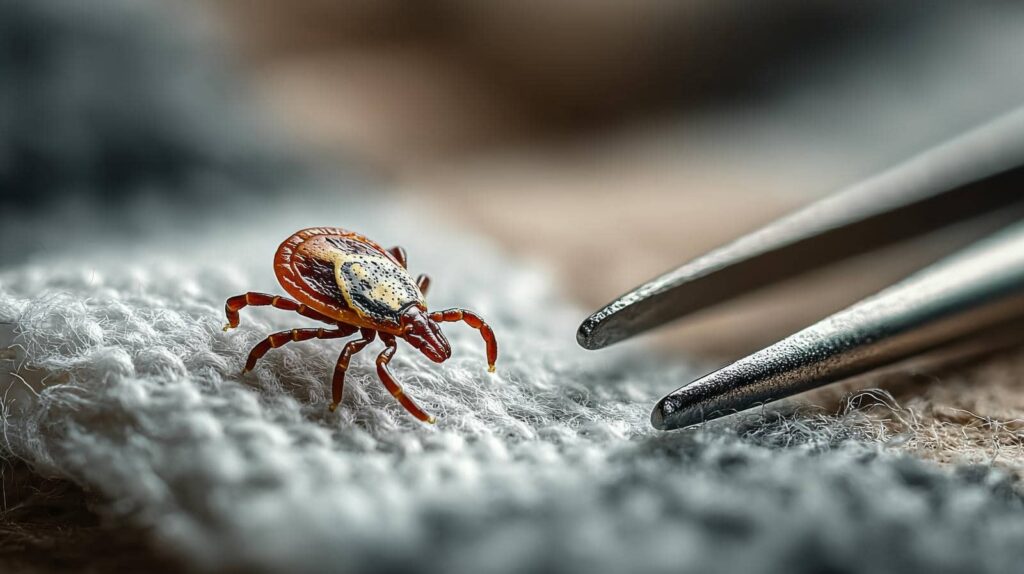
For effective tick identification, look for small, dark brown or black creatures, often resembling a tiny seed. If you’re unsure, compare it with images online or consult a local expert.
Use the Correct Removal Technique
To effectively remove a tick, it’s important to use the correct technique, as improper methods can lead to infection or incomplete removal.
Understanding tick anatomy is vital; you need to grasp how to detach it safely. Use the right removal tools, like fine-tipped tweezers or a tick removal device, to minimize risks.
Here are some key steps to follow:
- Grasp the tick as close to your skin as possible.
- Pull upward with steady, even pressure; don’t twist or jerk.
- Clean the bite area and your hands with rubbing alcohol or soap and water afterward.
Avoid Home Remedies
When dealing with tick removal, it’s essential to avoid home remedies, as they often employ ineffective techniques that can leave parts of the tick behind.
This not only prolongs the risk of infection but can also lead to serious health issues.
Instead, stick to proven methods for safe and complete removal.
Ineffective Removal Techniques
While it might be tempting to try home remedies for tick removal, many of these methods can actually do more harm than good. Instead of relying on unproven techniques, focus on effective tick prevention methods and developing your tick identification skills.
Here are some ineffective removal techniques you should avoid:
Using matches or hot objects: This can cause the tick to release harmful pathogens.
Applying petroleum jelly: It may suffocate the tick but can also irritate the skin, increasing infection risk.
Using essential oils: While they might seem natural, their effectiveness isn’t supported by evidence.
Stick to proven methods for safe removal, and you’ll protect both your well-being and that of your loved ones.
Potential Health Risks
Using home remedies for tick removal can expose you to significant health risks, as these methods often fail to effectively eliminate the tick.
Techniques like using petroleum jelly or heat can cause the tick to release harmful pathogens into your bloodstream. This can lead to tick-borne diseases, including Lyme disease, which can have serious long-term health implications.
If you don’t remove the tick properly, you risk prolonged exposure to its saliva, increasing your chances of infection.
It’s important to rely on proven removal techniques, as inappropriate methods can do more harm than good.
Prioritize your health by seeking professional help or using reliable tools to ensure safe and complete tick removal.
Your well-being matters, so don’t take unnecessary risks.
Clean the Area After Removal
After you’ve successfully removed a tick, it’s essential to clean the area thoroughly to reduce the risk of infection or disease transmission.
Practicing good post removal hygiene ensures your skin stays healthy and free from complications.
Follow these steps for effective cleaning:
- Use soap and water to wash the bite area gently.
- Apply an antiseptic solution or alcohol to disinfect the site.
- Dispose of the tick properly in a sealed bag, or submerge it in alcohol.
Monitor for Symptoms
Once you’ve removed a tick, it’s crucial to monitor for any symptoms that may indicate a tick-borne illness.
Being proactive about symptom awareness can make a significant difference in your health. Keep an eye out for fever, chills, headaches, fatigue, or joint pain in the days following the tick removal.
These can be early signs of tick-borne diseases such as Lyme disease or Rocky Mountain spotted fever. If you notice any of these symptoms, don’t hesitate to reach out to a healthcare provider for guidance.
Seek Veterinary Assistance if Necessary
If you find a tick on your pet, it’s essential to seek veterinary assistance if you’re unsure about the removal process or the potential risks involved.
Some ticks can transmit diseases that may endanger your pet’s health. Here are a few signs that warrant a call to your vet:
- If the tick is embedded deep and you can’t safely remove it
- If your pet shows symptoms like lethargy, fever, or unusual behavior
- If you need guidance on effective tick prevention tips
Veterinary services can provide expert advice and ensure your pet receives proper care.
Frequently Asked Questions
Can Ticks Transmit Diseases Immediately After Attaching?
Ticks typically need to be attached for several hours before they transmit diseases. The risk of disease transmission increases with tick attachment timing, so it’s vital to remove them promptly to minimize potential health risks.
How Can I Tell if a Tick Is Dead?
You can tell a tick’s dead if it doesn’t respond to gentle pressure. With a lifespan of two years, understanding tick anatomy helps you recognize changes. Remember, dead ticks still pose risks; stay vigilant.
Is It Safe to Remove a Tick With My Fingers?
It’s not safe to remove a tick with your fingers. Use proper tick removal techniques, like tweezers, for safe handling. This reduces the risk of infection and ensures you effectively remove the tick without complications.
What Should I Do if the Tick’s Head Breaks Off?
If a tick’s head breaks off, don’t panic! Use head removal techniques like tweezers to extract it carefully, and cleanse the area to prevent infections. Seek medical advice if you’re unsure about any symptoms.
Are There Specific Ticks I Should Be More Concerned About?
You should be more concerned about ticks like the black-legged tick, which spreads Lyme disease, and the Rocky Mountain wood tick, known for transmitting Rocky Mountain spotted fever. Awareness helps you stay safe while enjoying the outdoors.
Review
By following these essential tips for safe tick removal, you’re not just protecting yourself; you’re safeguarding your health like a vigilant gardener tending to their prized plants. Each careful step, from gathering your tools to monitoring for symptoms, acts as a shield against potential dangers. Just as a gardener removes weeds to nurture growth, you’re ensuring your well-being flourishes. Remember, knowledge and caution are your best allies in this battle against ticks. Stay vigilant, and keep your health thriving.
Recent Posts
What Are Top Treatments for Indian Meal Moths?
When it comes to managing the unwelcome presence of Indian meal moths, you’ll find that
Why Treat Indian Meal Moths in Your Home?
If you’ve noticed tiny moths fluttering around your kitchen or found webbing in your food,
Top Spider Control Techniques for Your Home
When it comes to keeping spiders out of your home, understanding their behavior is vital.