
Contents
If you’ve noticed Indian meal moths in your home, it’s essential to understand why they’re there. These pests are drawn to stored food products, particularly grains and dried fruits. They can quickly turn a small oversight into a full-blown infestation. By examining your food storage habits and pantry cleanliness, you might uncover the root cause of the problem. Let’s explore the lifecycle of these moths and how they invade your space.
Key Takeaways
- Indian meal moths are attracted to stored food sources, particularly grains and dried fruits, where they lay their eggs.
- Poor food storage practices, like using unsealed containers, can invite infestations of Indian meal moths.
- Infestations often start from infested items purchased from stores, bringing eggs or larvae into your home.
- Clutter and unclean pantry environments provide ideal conditions for moths to thrive and reproduce.
- High humidity and warm temperatures create a favorable environment for Indian meal moths to infest your home.
Understanding the Indian Meal Moth Lifecycle
To effectively manage an infestation, it’s essential to understand the lifecycle of the Indian meal moth. These pests go through four distinct lifecycle stages: egg, larva, pupa, and adult.
Female moths lay hundreds of eggs in food sources, typically grains and dried fruits. Once hatched, the larvae emerge, exhibiting specific moth behavior as they feed and grow. This larval stage can last several weeks, during which they can cause significant damage to your pantry items.
After the larvae mature, they spin silk and enter the pupal stage, where they undergo metamorphosis. Finally, adult moths emerge, ready to reproduce and continue the cycle.
Common Signs of Infestation
When you notice small, web-like structures or clumpy debris in your pantry, it’s likely a sign of an Indian meal moth infestation. These pests thrive in food storage areas, particularly where grains, nuts, and dried fruits are kept.
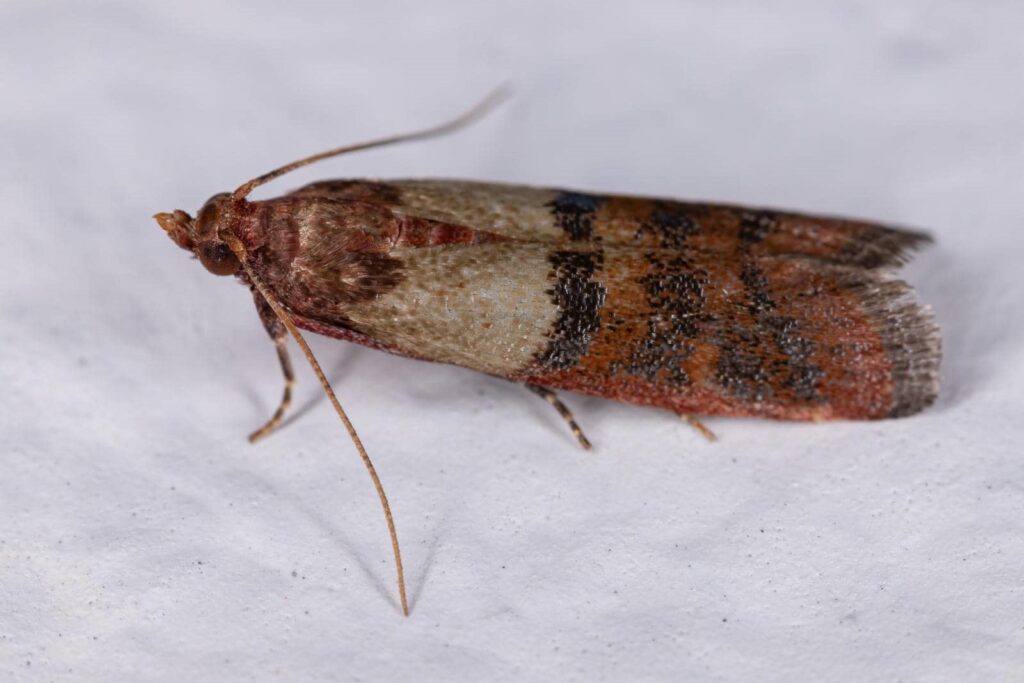
Look for tiny, brownish moths fluttering around your kitchen, especially near food sources. Their behavior includes laying eggs in your stored food, which leads to larvae that create those webs and debris.
If you find adult moths or larvae crawling in your pantry, it’s essential to act quickly. Spoiled food often has a distinct, musty odor, indicating contamination.
Inspect all food items, and check for any signs of damage or holes in packaging. By recognizing these common signs, you can take the necessary steps to reclaim your space and ensure a pest-free environment for you and your family.
Identifying and Locating the Source
Identifying and locating the source of an Indian meal moth infestation is crucial for effective control. Start by inspecting all areas where you store food, paying close attention to grains, nuts, and dried fruits, as these are common targets.
Look for webbing, larvae, and adult moths, which can help in source identification. Don’t overlook pantry shelves, as eggs can be hidden in cracks or crevices.
Check any open packages for signs of infestation; sealed containers may also harbor pests if not airtight. If you find infested items, discard them immediately and clean the area thoroughly.
Vacuuming and wiping surfaces will eliminate remaining eggs and larvae, reducing the chance of reinfestation.
Effective Prevention Strategies
Although you may have successfully identified and dealt with an Indian meal moth infestation, ongoing prevention is essential to avoid future problems.
Start by implementing preventative measures in your pantry. Store all dry goods in airtight containers to limit access to these pests. Regularly inspect your food products for signs of moths or larvae, and promptly dispose of any infested items.
In addition, consider using home remedies like bay leaves or vacuum-sealed bags, which can deter moths naturally. Make certain your kitchen and pantry areas are clean; crumbs and spills attract these pests.
Lastly, maintain a consistent temperature and humidity level in your home, as Indian meal moths thrive in warm, moist environments.
When to Call a Pest Control Professional
Are you struggling to control an Indian meal moth infestation despite your best efforts? It might be time to call pest control professionals for assistance.
Here are some key signs that indicate you need expert help:
Widespread Infestation: If you notice moths in multiple rooms, it’s a sign the problem has escalated.
Repeated Failures: When your DIY efforts haven’t worked after several attempts, don’t hesitate to seek professional services.
Food Contamination: If you find larvae or webbing in your pantry items, it’s vital to act quickly to avoid further contamination.
Health Concerns: If you or family members experience allergic reactions or respiratory issues, contacting a pest control expert is essential for safety.
Don’t let the infestation persist.
Professional pest control services can provide effective solutions tailored to your specific needs.
Final Thoughts
To keep your home free from Indian meal moths, it’s crucial to practice proper food storage and maintain cleanliness. For instance, consider a family that neglected to seal their grain bags, resulting in a severe infestation that ruined not only their pantry but also their peace of mind. By regularly inspecting your food supplies and sealing containers tightly, you can effectively prevent these pests from turning your kitchen into their breeding ground.
Recent Posts
The Best Pet Safe Mouse Repellent Options, Ranked by a Pro
You probably don’t know that many “mouse repellents” fail because they target the mouse instead
How Much Does Mice Extermination Cost in West Michigan?
In West Michigan, how much does mice extermination cost can vary significantly from one home
Do Mice Go Away on Their Own? The Honest Answer
You may not realize that mice often stay put even when a home feels busy