
Contents
If you’re dealing with earwigs in your garden, you’re not alone. These pests can wreak havoc on your plants if left unchecked. Fortunately, there are effective strategies to eliminate them. By understanding their behavior and implementing both preventative measures and natural remedies, you can reclaim your garden. But before you take action, it’s essential to identify the signs of an infestation and explore the best techniques for control. Let’s explore how to tackle this issue effectively.
Key Takeaways
- Maintain a clean garden by removing waste and limiting mulch to discourage earwig habitats.
- Use natural deterrents like diatomaceous earth or essential oils to repel and disrupt earwigs.
- Set traps with water and essential oils to effectively capture and reduce earwig populations.
- Apply insecticidal soaps directly on affected plants for targeted elimination of earwigs.
- Consult professional pest control for severe infestations to ensure effective management and restoration of your garden.
Understanding Earwigs and Their Behavior
Earwigs, often misunderstood creatures, play a unique role in the garden ecosystem. Understanding earwig behavior can help you appreciate their contributions.
These nocturnal insects thrive in moist, dark environments, making garden mulch, compost piles, and under rocks ideal earwig habitats. You’ll often find them seeking shelter during the day, emerging at night to forage for food.
They primarily feed on decaying organic matter, but they’re also known to munch on pests, helping to balance your garden’s ecosystem.
Identifying Signs of Earwig Infestation
You might notice certain signs indicating an earwig infestation in your garden.
Recognizing these clues early can help you take action before they cause significant damage.
Here are three key signs to watch for:
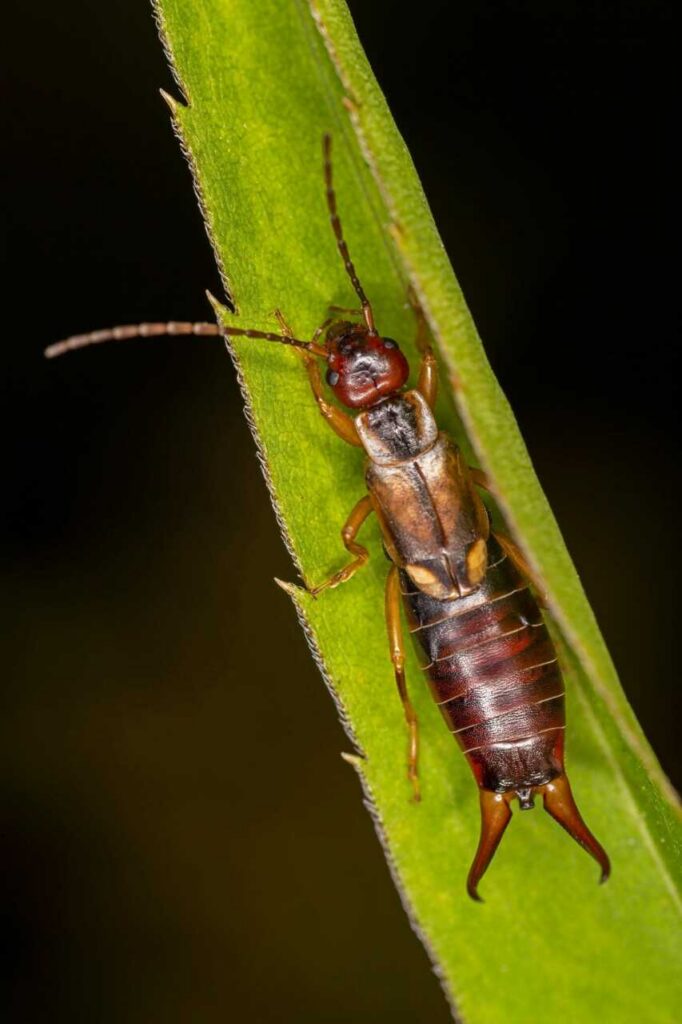
Earwig Appearance: Look for brown, elongated bodies with pincers at the rear. They’re usually about 1 inch long and prefer dark, damp environments.
Damage Symptoms: Check your plants for irregular holes in leaves or petals. Earwigs often feed on tender foliage, leaving behind noticeable nibbling marks.
Shelter Preferences: You may find them hiding under mulch, rocks, or garden debris. They thrive in moist conditions, so these areas can quickly become hotspots for infestations.
Preventative Measures to Keep Earwigs Away
To keep earwigs away, you need to maintain a clean and tidy garden, as debris can provide them with hiding spots.
Using natural deterrents like diatomaceous earth or essential oils can also help repel these pests.
Finally, optimizing soil drainage will reduce the damp conditions earwigs love, making your garden less inviting to them.
Maintain Garden Cleanliness
Maintaining cleanliness in your garden is essential for preventing earwig infestations. By keeping your space tidy, you minimize potential pest attractants that could invite unwanted visitors.
Here are three practical tips to help you maintain a clean garden:
Remove garden waste: Regularly clear away fallen leaves, decaying plants, and any debris that could provide shelter for earwigs.
Keep mulch in check: While mulch can help retain moisture, excessive layers can harbor pests. Limit its depth to discourage earwig populations.
Organize tools and equipment: Store your gardening tools neatly, as clutter can create hiding spots for these pests.
Implementing these simple strategies will foster a healthier garden environment, making it less appealing to earwigs and more enjoyable for you.
Use Natural Deterrents
While it might seem challenging to keep earwigs at bay, using natural deterrents can effectively prevent these pests from invading your garden.
One practical way is to create herbal sprays using ingredients like neem oil or garlic. Simply mix these with water in a spray bottle and apply it around your plants.
Essential oils, such as peppermint or tea tree oil, also work wonders. Just add a few drops to water and spray the affected areas.
These natural solutions repel earwigs and keep your garden safe for beneficial insects.
Optimize Soil Drainage
Proper soil drainage plays a significant role in keeping earwigs away from your garden. When the soil remains too moist, it creates a perfect breeding ground for these pests.
To optimize drainage and promote healthy soil aeration, consider these steps:
Amend with organic matter: Adding compost or well-rotted manure improves soil texture and prevents compaction, allowing excess moisture to escape.
Install drainage tiles: For areas prone to flooding, drainage tiles can effectively redirect water away from your garden beds.
Create raised beds: Elevating your plants helps manage moisture levels, ensuring the soil dries out more quickly and becomes less inviting to earwigs.
Natural Remedies for Earwig Control
If you want to keep earwigs from invading your garden, natural remedies can be both effective and environmentally friendly. One popular option is herbal sprays made from ingredients like peppermint or rosemary.
These deter earwigs and provide a pleasant aroma for you. Simply mix a few drops of the essential oils with water in a spray bottle and apply it to affected areas.
Another effective method is to use diatomaceous earth, a natural powder that disrupts the earwig’s exoskeleton, leading to dehydration.
Sprinkle it around your garden beds for a barrier.
You can also create traps using small containers filled with a mix of water and a few drops of essential oils.
Place these traps in shady spots to attract and capture earwigs.
With these natural approaches, you can protect your garden while maintaining a safe environment for your plants and pets.
Chemical Treatments for Earwig Elimination
Chemical treatments can be a powerful solution for eliminating earwigs from your garden when natural remedies fall short.
By using the right products, you can create a barrier that protects your plants and keeps these pests at bay. Here are three effective options to evaluate:
Chemical Barriers: Apply granular insecticides around the perimeter of your garden. This creates a protective shield, preventing earwigs from entering.
Insecticidal Soaps: Spray insecticidal soaps directly on affected plants. These soaps penetrate the earwigs’ exoskeletons, effectively killing them upon contact.
Boric Acid: Mix boric acid with sugar to attract and eliminate earwigs. Place it in discreet locations where you’ve noticed pest activity.
Trapping Techniques for Effective Capture
While chemical treatments can effectively rid your garden of earwigs, trapping techniques offer a more hands-on approach that can yield immediate results.
Start by selecting the right bait types; earwigs are attracted to moisture and decaying organic matter. You can use a mix of vegetable scraps, such as cucumber peels or a bit of beer, to draw them in.
Next, focus on trap placement. Set your traps in sheltered areas where earwigs typically hide, like under pots or near damp soil.
You can create simple traps using shallow containers filled with your bait, ensuring they’re level with the soil’s surface.
Check your traps regularly, and dispose of captured earwigs promptly to keep your garden thriving.
Maintaining a Healthy Garden to Deter Earwigs
To effectively deter earwigs from invading your garden, maintaining a healthy and balanced ecosystem is essential.
Here are three key strategies to reflect upon:
Compost Management: Keep your compost pile well-aerated and dry. Overly moist conditions attract earwigs, so balance your greens and browns for ideal decomposition.
Plant Selection: Choose plants that naturally repel earwigs. Herbs like rosemary and basil enhance your garden’s beauty and act as deterrents.
Regular Maintenance: Regularly clear debris and excess mulch from your garden. Earwigs love to hide in damp areas, so a tidy environment reduces their hiding spots.
When to Call a Pest Control Professional
Even with the best practices in compost management, plant selection, and regular maintenance, you might still encounter a significant earwig problem in your garden.
It’s essential to know when to intervene. If you notice an overwhelming number of earwigs or signs of damage to your plants, that’s a clear signal to seek help. A professional assessment can pinpoint the issue and provide tailored solutions that you may not have access to on your own.
Calling in pest control experts can save your beloved plants and ensure your garden thrives. They use specialized techniques and products that are often more effective than home remedies.
If you’re feeling overwhelmed or your DIY efforts haven’t paid off, don’t hesitate. Remember, it’s better to address a pest problem early than to let it escalate. Trust the professionals to help you reclaim your garden and restore harmony in your outdoor space.
Review
By following these practical steps, you can reclaim your garden from earwigs and restore its vibrant beauty. Think of your garden as a canvas, and with a few brushstrokes of prevention and natural remedies, you’ll paint a pest-free paradise. Keep a watchful eye and maintain cleanliness, and these unwelcome visitors will be nothing more than a distant memory. If the battle rages on, don’t hesitate to call in the cavalry—professional pest control can be your secret weapon!
Recent Posts
Top Solutions for Indian Meal Moth Infestations
The pantry can be a battleground against the silent invader known as the Indian meal
What Are Top Treatments for Indian Meal Moths?
When it comes to managing the unwelcome presence of Indian meal moths, you’ll find that
Why Treat Indian Meal Moths in Your Home?
If you’ve noticed tiny moths fluttering around your kitchen or found webbing in your food,