
Contents
Red flour beetles often infest sealed pantry spaces before you notice visible damage. You can identify them by tiny reddish-brown adults, larvae, shed skins, and fine powder in flour, cereal, or spices. To remove them, you need to inspect dry goods, discard contaminated packages, and clean every shelf, crack, and corner with precision—because one missed source can restart the infestation.
Key Takeaways
- Inspect flour, cereal, pasta, and rice for live beetles, larvae, cast skins, frass, and clumped or damaged food.
- Discard all infested packages immediately, sealing them tightly before placing them in the trash.
- Vacuum pantry shelves, cracks, joints, and floor edges thoroughly, then wipe surfaces with hot water and detergent.
- Store dry goods in airtight glass, metal, or heavy-duty plastic containers after cleaning the pantry.
- Seal entry gaps, repair screens, and monitor weekly with traps; call a pest professional if infestation persists.
What Red Flour Beetles Look Like
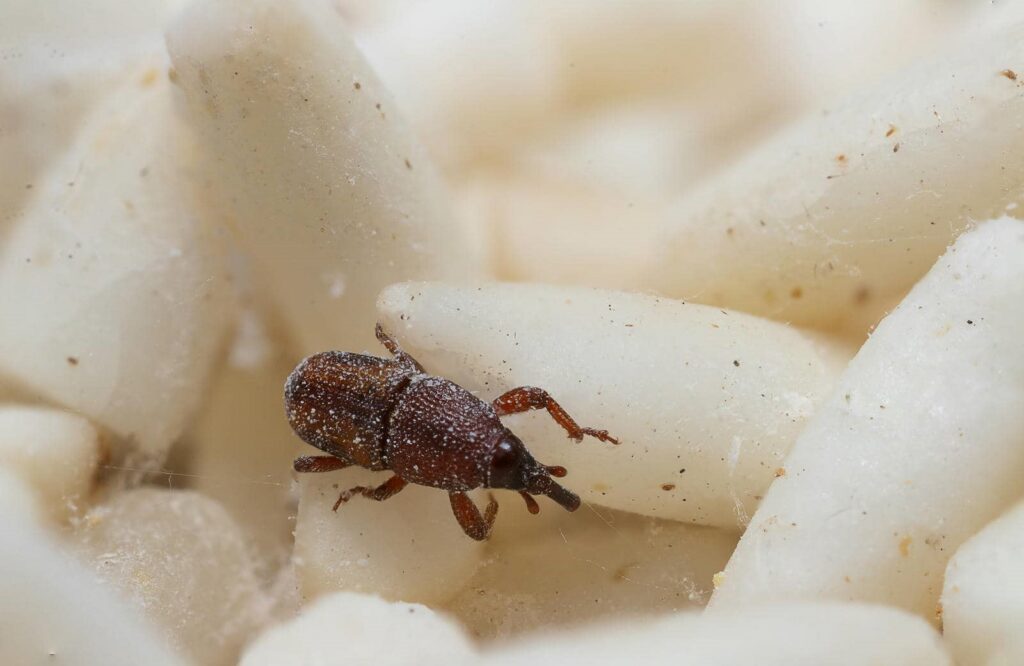
Red flour beetles are small, flattened pantry pests with elongated oval bodies that typically measure about 3 to 4 mm long. You’ll notice a shiny reddish-brown to dark brown exoskeleton, a distinct head, and antennae that gradually widen into a club.
Their thorax looks smooth and rounded, while the wing covers show fine grooves. These red flour beetle characteristics help you separate them from similar storage beetles.
When you examine a specimen, look for the narrow, slightly flattened profile and the uniform body color. You can also check for active legs and a quick, agile gait.
For identifying beetle species, these morphological traits give you a reliable first screen, so you can feel confident you’re recognizing the right insect.
Where Red Flour Beetles Hide in Pantry Foods
You’ll most often find these pantry beetles in dry, starchy foods where they can feed and reproduce unnoticed, including flour, cereal, pasta, crackers, rice, cornmeal, and baking mixes.
They exploit intact packages, torn seams, and settled crumbs in food storage areas. During pantry inspection, check warm shelves, dark corners, and containers with fine powder, webbing, or small brown adults.
- Flour and meal
- Breakfast cereals
- Dry pasta and crackers
- Rice and baking mixes
Because you’re part of a careful, prevention-minded household, inspect bulk goods first and rotate older products forward.
Look for clumped particles, cast skins, and tiny exit holes. These signs indicate hidden infestation and help you identify the source before it spreads to nearby pantry foods.
Remove Red Flour Beetles From Your Pantry
You should identify all infested foods by inspecting dry goods for live adults, larvae, cast skins, and frass.
Remove contaminated packages immediately and seal them in a closed bag for disposal.
Then clean the pantry thoroughly with vacuuming and hot, soapy washing to eliminate residual beetles, eggs, and food debris.
Identify Infested Foods
Begin by inspecting every dry good in the pantry and isolating anything that shows signs of red flour beetle activity, such as live insects, shed skins, eggs, or fine powdery frass. You’re protecting your household’s shared food supply, so move methodically and label each suspect package.
Check infested cereals for clumping, discoloration, and surface movement.
Examine affected grains for larvae, punctured kernels, and altered odor.
Review flour, pasta, and baking mixes under bright light for mobile adults.
Seal any suspect item in a separate container for disposal or later verification.
Use a clean tray to empty small packages and compare contents against uncontaminated stock.
If you spot contamination, treat nearby items as high-risk and keep them apart. This focused triage helps your kitchen stay safe, organized, and ready for the next step.
Clean Pantry Thoroughly
Once contaminated packages are isolated, clean the pantry from top to bottom to eliminate eggs, larvae, and residual frass that can sustain reinfestation.
You should remove every shelf liner, then vacuum cracks, joints, and screw holes with a crevice tool.
Empty shelves, wipe them with hot water and detergent, and follow with a sanitizing solution on food-safe surfaces.
Dry all areas completely, because moisture supports insect survival.
Inspect pantry organization habits as you return intact goods in sealed containers, keeping older items forward and new items behind.
Use dedicated cleaning supplies for this task to prevent cross-contamination.
Afterward, monitor the pantry for live beetles, cast skins, or fine powder.
This method helps your household regain control and stay protected together.
Throw Out Infested Dry Goods Safely
Start by discarding all dry goods that show signs of infestation, including flour, cereal, rice, pasta, spices, and pet food; seal each item in a plastic bag before moving it to an outdoor trash receptacle to reduce the chance of dispersal. This step protects your household and supports effective discarding infested items through safe disposal methods.
Inspect packages for larvae, webbing, and exit holes.
Bag compromised foods separately to limit cross-contamination.
Remove trash from the kitchen promptly.
Wash hands after handling contaminated materials.
You’re joining a practical, prevention-focused routine that reduces beetle resources and helps your pantry recover. Dispose of any opened container with visible contamination, since partial salvage increases reinfestation risk.
Keep only intact, sealed foods for the next cleanup phase.
Vacuum Shelves, Cracks, and Corners
Use a vacuum with a crevice tool to remove red flour beetles, larvae, eggs, and debris from pantry shelves, shelf joints, baseboards, and cabinet corners.
Move slowly so suction reaches recesses where insects hide. Empty the canister or discard the bag outdoors after each pass to prevent reinfestation, and clean the attachment with hot, soapy water.
For effective shelf maintenance, inspect edges, screw holes, and under removable liners, then repeat vacuuming in overlapping strokes.
These vacuum techniques reduce population density by mechanically extracting life stages before they disperse. You’re strengthening a clean, shared food-storage space when you keep surfaces free of flour, crumbs, and dust.
Focus on precision, because even small residues can support beetle activity and delay control.
Seal Gaps to Keep Red Flour Beetles Out
Inspect entry cracks along walls, baseboards, and utility penetrations, because even small openings can support red flour beetle ingress.
You should seal door gaps with tight-fitting sweeps, weatherstripping, or caulk to reduce access pathways.
You should also repair torn window screens promptly, since intact mesh forms a physical barrier against adult beetles.
Inspect Entry Cracks
Even small cracks can give red flour beetles a direct route indoors, so you should examine window frames, door thresholds, baseboards, utility penetrations, and gaps around pipes or vents for openings.
Use inspection tools, including a flashlight, probe, and magnifier, to map likely entry points with precision. You’ll fit in well with a careful routine when you document findings and compare suspect sites across rooms.
- Check joints where materials meet.
- Trace fine fissures along trim and masonry.
- Note powdery residue or shed fragments.
- Measure width and location for follow-up control.
Seal Door Gaps
Once you’ve identified door-frame vulnerabilities, seal the perimeter with materials that block beetles while maintaining proper door function.
You should install compression weather stripping along the jambs and header to eliminate linear gaps that let red flour beetles pass. Choose a resilient profile that restores full contact when the door closes, and verify that it doesn’t increase resistance or misalign the latch.
Add door sweeps to the bottom edge to close the threshold opening; the sweep should lightly contact the floor without dragging. Inspect both sides of the door after installation, because even narrow apertures can support insect movement.
When you tighten these interfaces, you protect your shared food space and reduce the need for repeated intervention. Recheck seals seasonally, since settling can reopen gaps.
Repair Window Screens
Repair damaged window screens by patching tears, replacing bent frames, and sealing any perimeter gaps that let red flour beetles enter. Inspect each screen under bright light, because even 1 mm openings can admit adults.
During routine window maintenance, tighten spline edges and verify that screen materials remain intact, corrosion-free, and correctly tensioned. You’ll protect your shared space when you:
- Measure tears and install fiberglass or aluminum patches.
- Replace warped frames that prevent full contact with the sash.
- Apply weather-resistant sealant around the screen perimeter.
- Recheck after wind, rain, or cleaning.
Use fine-mesh, pest-rated screen materials for high-risk openings, and keep frames aligned so airflow stays high while exclusion stays reliable.
Consistent inspection lowers infestation pressure and supports a cleaner, safer home environment for everyone.
Store Food in Beetle-Proof Containers
Store dry goods in airtight, beetle-proof containers made of glass, metal, or heavy-duty plastic with tight-fitting lids. You protect your pantry by choosing beetle proof materials that block chewing, cracking, and moisture exchange.
Use container types designed for bulk flour, cereal, rice, and pet feed, because narrow seams and warped lids let adults and larvae enter. Transfer foods from original packaging immediately after purchase, and label each container with contents and date for organized rotation.
Keep lids fully seated after each use, and inspect containers for chips, gaps, or deformation. You reduce infestation risk when you store food off the floor, away from heat, and in clean, dedicated storage zones.
This routine helps your household stay aligned, prepared, and confident.
When to Call a Pest Pro
Call a pest professional when beetle activity persists after sanitation, heat treatment, and sealed storage, or when you find widespread infestation in multiple pantry items, wall voids, or adjacent rooms.
You’ll benefit from pest control when signs indicate a population beyond isolated contamination. Professional services can identify the source, quantify pressure, and apply targeted interventions with reduced collateral risk.
Consider help if:
- larvae, cast skins, or adults reappear daily
- you detect feeding damage in stored grains
- insects emerge from cracks, trim, or appliances
- your efforts don’t lower counts within two weeks
You’re part of a community that values evidence-based action, and a technician can restore confidence with precise monitoring and treatment planning.
Prevent Red Flour Beetles From Coming Back
To prevent red flour beetles from returning, you need to eliminate the conditions that support egg laying, larval development, and adult survival.
You should store flour, grains, and pet food in airtight containers, then inspect new products before bringing them home.
Vacuum shelves, cracks, and floor edges frequently to remove residual food particles and eggs.
Practice habitat modification by reducing humidity, sealing gaps, and discarding infested packaging immediately.
Rotate stock using first-in, first-out handling, so older items don’t sit long enough to sustain populations.
Use natural repellents such as bay leaves or cedar only as adjuncts, not primary control.
Monitor pantry zones weekly with pheromone traps and keep records.
When you act consistently, you protect your shared kitchen environment and keep beetles from reestablishing.
Frequently Asked Questions
Can Red Flour Beetles Bite Humans?
No, red flour beetles don’t typically bite humans; you’re unlikely to be injured. Their red flour beetle behavior centers on grain infestation, not biting. For red flour beetle prevention, you should store dry foods airtight and discard infested products.
Do Red Flour Beetles Infest Clean Kitchens?
Yes, even clean kitchens can harbor red flour beetles; spotless counters, hidden crumbs, and sealed seams contrast sharply with infestation signs. You’ll detect prevention methods early by inspecting pantry goods, because these beetles exploit overlooked microhabitats.
How Long Do Red Flour Beetles Live?
You’ll usually see red flour beetles live about six to ten months, depending on temperature and food. Their red flour beetle lifecycle speeds in warmth, so your pest control methods work best early.
Can Freezing Kill Red Flour Beetle Eggs?
Yes—freezing can kill red flour beetle eggs if you maintain a sufficient freezing duration, which reduces egg viability. You’ll protect your shared pantry environment better when you keep infested goods frozen consistently.
Are Red Flour Beetles Harmful to Pets?
Not usually; you’ll rarely see red flour beetles directly harming pets, though their pantry tastes may tempt curious mouths. Their red flour beetle diet targets grains, and pest prevention keeps your household’s shared spaces safer.
Final Thoughts
By removing infested dry goods, vacuuming every shelf seam and corner, and sealing pantry gaps, you reduce red flour beetle populations at the source. Store all remaining food in airtight, beetle-proof containers and inspect regularly. A single female can lay about 400 eggs, so even a small infestation can expand rapidly. If you keep sanitation and exclusion consistent, you’ll greatly reduce the risk of reinfestation and maintain long-term pantry control.
Recent Posts
How Much Does Mice Extermination Cost in West Michigan?
In West Michigan, how much does mice extermination cost can vary significantly from one home
Do Mice Go Away on Their Own? The Honest Answer
You may not realize that mice often stay put even when a home feels busy
Mouse Droppings vs Rat Droppings: Identify Your Intruder
You may not know that droppings can tell you more than just whether rodents are