
Contents
Like the legendary Sisyphus, battling indoor ants can feel endless. Yet, with the right strategies, you can break this cycle. Start by identifying the ant species invading your space, as this knowledge shapes your approach. Next, locate their trails to pinpoint entry points. Understanding these steps is essential for effective control, and there’s more to take into account for a thorough solution.
Key Takeaways
- Keep your home clean by regularly wiping surfaces and storing food in airtight containers to eliminate attractants for ants.
- Identify and seal entry points with silicone caulk, weatherstripping, or steel wool to prevent ants from entering your home.
- Create effective ant baits using honey and borax, placing them near ant trails for optimal results.
- Utilize essential oils like peppermint to repel ants while enhancing your home’s scent.
- Maintain outdoor barriers by trimming vegetation, using diatomaceous earth, and removing debris to deter ants from approaching your home.
Identify the Ant Species
How can you effectively tackle an ant problem if you don’t know what species you’re dealing with? Identifying the ant species is your first step.
Different species exhibit distinct behaviors and characteristics, which can greatly impact your control strategy. For instance, if you’re dealing with carpenter ants, you’ll notice wood shavings near their nesting sites, while sugar ants are attracted to sweet substances.
Observing their foraging patterns can also provide clues; some species tend to travel in straight lines, while others scatter more randomly.
Locate the Ant Trails
To effectively locate ant trails, start by identifying their entry points into your home.
Observe their behavior as they navigate, which will help you track their routes and discover potential food sources nearby.
Mapping these trails is essential for implementing targeted control measures.
Identify Entry Points
Identifying entry points is essential in tackling an indoor ant problem, and one effective method is to locate their trails. Start by following the ants to observe their access routes.
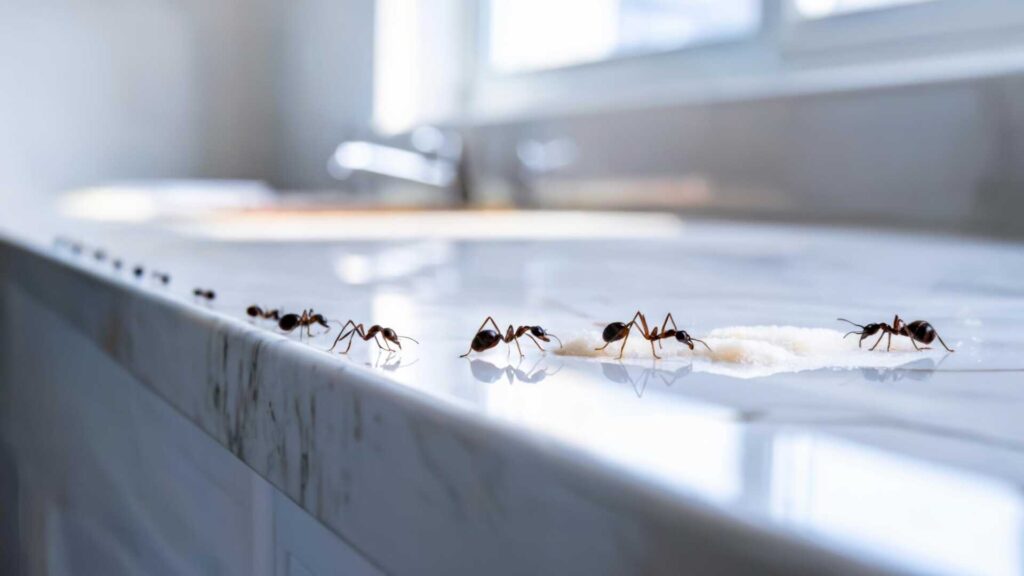
You’ll often find them trailing along walls, countertops, or baseboards, leading you to where they enter your home. Pay attention to any cracks or gaps in windows, doors, and foundations; these are common spots for entry identification.
Additionally, consider food sources—ants will navigate towards them. Once you map these routes, you can take steps to seal off these entry points effectively.
Observe Ant Behavior
While you may notice ants scurrying across your floors or countertops, observing their behavior closely can reveal crucial information about their trails.
Start by watching where the ants go. They often follow pheromone trails laid down by scout ants, an essential part of ant communication. These trails lead from food sources back to their nest location, which helps you identify their pathways.
Pay attention to their patterns—if you see a consistent line of ants, you’ve likely found a major route. Mapping these trails aids in understanding their movement and assists in strategizing your next steps for eliminating the ant problem.
Recognizing these trails fosters a deeper connection to your environment and enhances your ability to create an ant-free home.
Track Food Sources
Tracking food sources is essential for effectively managing indoor ant infestations. Start by observing the ant trails; they’ll lead you to what’s attracting them.
Ants are primarily drawn to food, so check areas where you store food, like pantries and cabinets. Make sure these spaces are sealed properly; use airtight containers for food storage to minimize access.
Next, inspect clean surfaces in your kitchen and dining areas. Crumbs and spills can easily go unnoticed, so wipe down counters and sweep floors regularly. Even small food particles can entice ants.
Seal Entry Points
To effectively reduce the chances of indoor ants invading your space, sealing entry points is essential. Start with thorough entry point identification to locate where ants are entering. Common entry points include gaps around windows, doors, and utility lines.
Use effective sealing methods to close these openings, ensuring a barrier against future invasions.
- Caulk: Apply a silicone-based caulk to seal cracks and gaps.
- Weatherstripping: Install weatherstripping on doors and windows to block potential access.
- Steel Wool: Stuff steel wool into larger holes, preventing ants from squeezing through.
- Expanding Foam: Use expanding foam for larger gaps, providing a strong, long-lasting seal.
Keep Your Home Clean
Keeping your home clean is essential in deterring indoor ants, as these pests are often attracted to food residues and clutter. By adopting clean habits, you can greatly reduce the likelihood of an ant invasion.
Start with regular cleaning routines, focusing on areas where food is prepared and consumed. Wipe down countertops, sweep floors, and promptly clean up spills to eliminate any potential food sources.
Don’t forget about hidden spaces, such as under appliances and in pantry corners, where crumbs can accumulate. Store food in airtight containers to prevent access, and take out the trash regularly to avoid attracting ants.
Additionally, maintain a clutter-free environment; items piled up can provide hiding spots for ants. By committing to these practices, you create a less inviting atmosphere for ants, fostering a cleaner, more welcoming home for you and your family.
Use Natural Ant Repellents
If you’re looking for effective ways to deter ants without resorting to harsh chemicals, natural repellents can be a practical solution.
Utilizing natural ingredients protects your home and fosters a healthier environment. Here are some essential oils and other natural substances you can use:
Peppermint oil: The strong scent repels ants and masks their pheromone trails.
Vinegar: A mixture of equal parts vinegar and water acts as both a cleaner and a repellent.
Cinnamon: Sprinkling cinnamon powder near entry points can deter ants due to its strong aroma.
Lemon juice: The acidity disrupts their scent trails and keeps them at bay.
Create Ant Baits
To effectively create ant baits, you need to select the right ingredients that attract ants while also containing a poison to eliminate them.
Proper placement is essential; position the baits near ant trails and entry points to ensure maximum effectiveness.
Effective Bait Ingredients
When it comes to creating effective ant baits, selecting the right ingredients is essential for attracting and eliminating these pests. A successful bait combines sweet and protein sources with a toxic agent that ants can take back to their colony.
Here are some key ingredients to take into account:
Honey bait: Ants are drawn to the sweetness, making it an excellent base for your bait.
Borax mixture: This acts as a slow-acting poison that disrupts the ants’ digestive systems.
Peanut butter: High in protein, it’s irresistible to many ant species.
Sugar water: A simple solution that enhances the bait’s attractiveness and encourages consumption.
Combining these elements can greatly increase your chances of eradicating indoor ants effectively.
Placement Tips for Success
Proper placement of your ant baits is crucial for maximizing their effectiveness, as ants rely on scent trails to locate food sources.
Start by identifying high-traffic areas where you’ve seen ants, such as near food storage or entry points. For ideal ant placement, position baits close to these trails but away from direct sunlight or moisture, which can deter ants.
Using success strategies, verify baits are easily accessible, allowing ants to feed and transport the bait back to their colony.
Monitor the baits regularly, replacing them as needed to maintain effectiveness. By following these guidelines, you’ll create a more inviting environment for the ants to take the bait, helping you eliminate the problem efficiently.
Employ Essential Oils
How can essential oils help you eliminate indoor ants? These potent natural substances can disrupt ant pheromones, effectively deterring them from your space.
You can explore various essential oil options to create your own ant repellent recipes that suit your home’s needs.
Peppermint Oil: Known for its strong scent, it’s a powerful deterrent.
Tea Tree Oil: Offers antimicrobial properties that ants dislike.
Lemon Oil: Its citrusy aroma disrupts ant trails and is invigorating.
Cinnamon Oil: Acts as both a repellent and a pleasant fragrance.
To use these oils, mix a few drops with water in a spray bottle. Apply it around entry points and infested areas.
By utilizing essential oils, you repel ants and create a more inviting and aromatic environment in your home.
Make these natural solutions part of your indoor ant management strategy!
Maintain Outdoor Ant Barriers
Maintaining outdoor ant barriers is important for preventing these pests from invading your home. Start by evaluating your outdoor landscaping. Trim back any vegetation that touches your house, as it can provide a bridge for ants.
Create natural barriers using materials like diatomaceous earth or cedar mulch, which can deter ants while enhancing your garden’s aesthetic.
Ensure that your yard is free from debris, such as fallen leaves and wood piles, which can serve as nesting sites. Additionally, consider incorporating plants that naturally repel ants, such as mint or lavender, into your landscaping.
Regularly inspect the perimeter of your home for cracks or gaps where ants might enter. Sealing these openings is vital for maintaining those barriers.
Monitor and Repeat Actions
While you take steps to eliminate indoor ants, it’s crucial to monitor the effectiveness of your chosen methods. This ensures that you’re addressing the symptoms and the root cause of the infestation.
Regularly assess your environment and adjust your tactics based on what you observe.
Consider the following strategies for effective monitoring and behavior repetition:
Establish a monitoring frequency: Check areas prone to ant activity weekly.
Document changes: Keep a log of what methods you’ve used and their outcomes.
Observe ant behavior: Note any changes in their movement patterns or food sources.
Reapply methods consistently: Regularly use your chosen solutions to reinforce their effectiveness.
Recap
By following these simple steps, you can effectively rid your home of indoor ants. Keeping your space clean and sealing entry points is like building a fortress against these pesky invaders. Creating homemade baits and using natural repellents will further bolster your defenses. Remember, consistency is key—monitor your efforts regularly and repeat actions as needed. With diligence and the right strategies, you can maintain an ant-free environment in your home.
Recent Posts
Why Treat Indian Meal Moths in Your Home?
If you’ve noticed tiny moths fluttering around your kitchen or found webbing in your food,
Top Spider Control Techniques for Your Home
When it comes to keeping spiders out of your home, understanding their behavior is vital.
3 Best Spider Control Methods for Homes
You might not realize that some common household items can effectively repel spiders. By utilizing