Contents
Wasp extermination demands a clear understanding of wasp behavior and effective removal strategies. You need to identify the signs of an infestation and know when to act. Effective techniques can minimize risk while ensuring safety. But removal is only part of the equation; prevention is essential to avoid future problems. Explore various methods and discover how to keep your environment wasp-free and maintain control over any potential infestations.
Key Takeaways
- Wear protective gear when removing nests and use a commercial wasp spray from a distance for safety.
- Seal entry points and eliminate potential nesting sites to prevent future infestations.
- Keep food covered and clean up spills to reduce attractants for wasps.
- Regularly inspect outdoor areas for nests and promptly remove any found to prevent expansion.
- Utilize natural repellents like peppermint oil or vinegar solutions to deter wasps from your space.
Understanding Wasp Behavior and Nesting Habits
When you understand wasp behavior and nesting habits, you can take effective measures to manage them. Wasps typically begin nesting in spring, using materials like wood fibers and plant matter to construct their homes.
Their seasonal behavior shifts as temperatures rise, leading to increased activity and larger colonies. Recognizing these patterns allows you to anticipate potential nesting sites, often found in sheltered areas like eaves or trees.
As summer progresses, wasps become more aggressive, especially when foraging for food. By monitoring these behaviors, you can identify when to act.
Taking proactive steps, such as removing potential nesting materials and sealing entry points, helps mitigate wasp presence in your environment. Understanding these factors fosters a sense of control and safety in your surroundings.
Identifying Common Wasp Species
Identifying common wasp species is essential for effective management and control. Knowing the specific species helps you understand their wasp anatomy and lifecycle, enabling you to apply targeted strategies for removal and prevention.
Here are a few common wasp species you might encounter:
Yellow Jackets: Recognizable by their black and yellow markings, they often build nests in the ground.
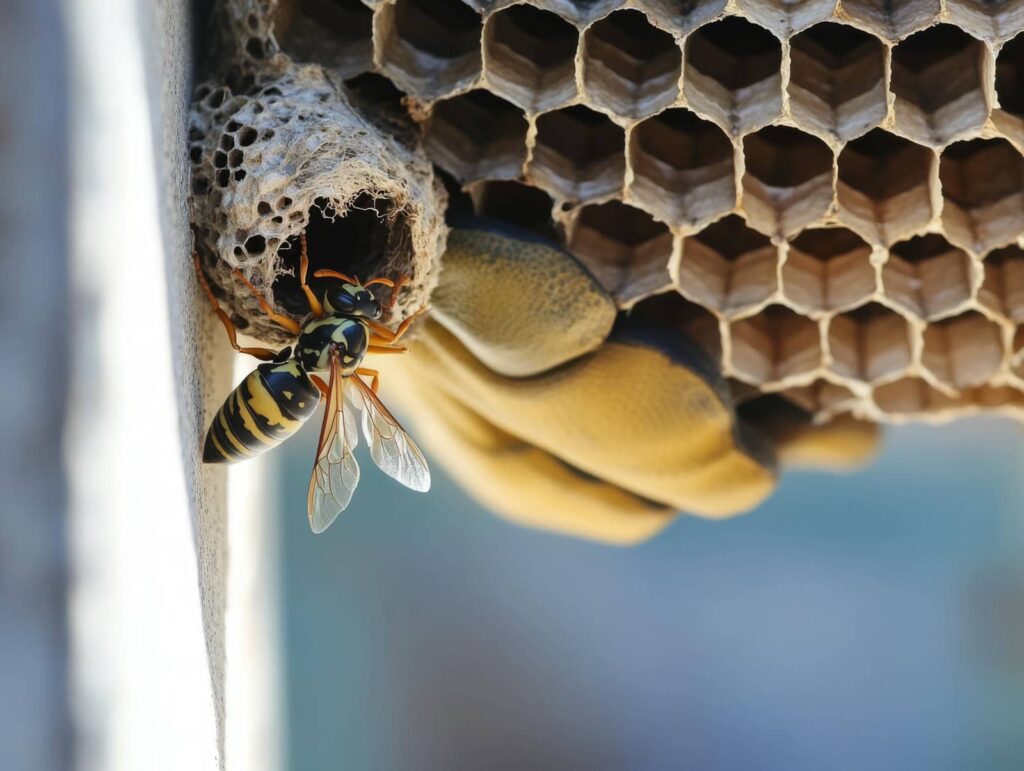
Paper Wasps: Characterized by their long legs and umbrella-shaped nests, they can be found in sheltered areas.
Bald-faced Hornets: These are black with white markings and create large, aerial nests.
Signs of a Wasp Infestation
You can identify signs of a wasp infestation by observing specific indicators around your property.
Look for nests in sheltered locations, increased wasp activity especially during late summer, and noticeable growth in nest size over time.
Recognizing these signs early can help you take timely action to manage the problem.
Nest Location Indicators
Wasp nests often reveal themselves through specific indicators that signal a potential infestation. You should be aware of these signs, especially if you’ve noticed increased wasp activity around your property.
Look for the following nest location indicators:
Nesting materials: Check for bits of chewed wood, paper-like substances, or mud around your home. Wasps use these to build their nests.
Environmental factors: Pay attention to areas with abundant flowering plants or garbage, as these attract wasps.
Nest proximity: Be cautious if you spot nests near eaves, attics, or tree branches, as these are common locations for wasp colonies.
Recognizing these indicators helps you take action before an infestation escalates, ensuring your space remains safe and comfortable.
Increased Wasp Activity
Noticing frequent wasp activity around your property can be a clear sign of an impending infestation.
Pay attention to how their behavior aligns with seasonal patterns; wasps are typically more active during warmer months. Environmental factors, such as nearby food sources or water, can also influence their presence.
Look for wasps hovering around garbage cans, pet food, or fruit trees, indicating potential nesting sites close by. If you see increased numbers, it’s important to act swiftly. Ignoring these signs could lead to a larger problem as wasps are drawn to established nests.
Being proactive helps you reclaim your space and ensures a safer environment for you and your loved ones. Stay vigilant, and take control before they settle in.
Nest Size Growth
A rapid increase in nest size is a key indicator of a wasp infestation. Understanding the nest size factors can help you identify potential problems early on.
Seasonal growth plays a significant role, as wasp colonies typically expand dramatically during late spring and summer.
Keep an eye out for these signs:
- Nest size becomes larger than a golf ball.
- You notice more wasps entering and exiting a specific area.
- The nest appears to have multiple layers or compartments.
If you observe any of these signs, it’s essential to act quickly. Ignoring the issue can lead to a larger infestation, making removal increasingly difficult.
Stay vigilant to protect your space and loved ones from these unwelcome visitors.
Safe Removal Techniques for Wasps
When you encounter wasps around your property, it’s essential to approach their removal with care to avoid provoking them.
Start by wearing protective gear, like long sleeves, gloves, and a face mask, to minimize the risk of stings. Use a flashlight at night, when wasps are less active, to locate their nest safely.
For removal, consider using a commercial wasp spray, following the instructions for chemical safety rigorously. Stand at a distance and aim for the nest’s entrance to minimize exposure.
If you prefer a natural method, you can create a soap and water solution in a spray bottle; it suffocates wasps on contact.
Always prioritize safety and remain calm to reduce the chances of aggression.
When to Call a Professional Exterminator
Successfully removing wasps can sometimes be a straightforward task, but there are situations where calling a professional exterminator is the best option.
You should consider reaching out to an expert when you notice signs of danger, such as:
- Large nests close to your home or in high-traffic areas
- Allergic reactions in household members after being stung
- Difficulty identifying the type of wasp or nest location
In these cases, professionals have the training and tools to safely handle the situation.
Additionally, if you’ve attempted DIY methods without success, it’s wise to seek help.
DIY Wasp Traps and Baits
Creating effective DIY wasp traps and baits can greatly reduce wasp populations around your property.
You’ll want to focus on trap designs that lure wasps in while preventing their escape, and homemade baits that attract them effectively.
Effective Trap Designs
DIY wasp traps can be highly effective in controlling these pesky insects when designed correctly. To maximize your success, consider the following trap materials and ideal trap locations:
Plastic bottles: Cut the top off and invert it to create an entry funnel.
Wooden boxes: These can attract wasps if painted in bright colors or left natural.
Glass jars: Use with a bit of bait at the bottom for effective trapping.
Place your traps in shaded areas where wasps frequently gather, like near garbage cans or flowering plants.
Keep them away from high-traffic zones to avoid attracting wasps to your living space.
Regularly check and maintain your traps for best results, ensuring you’re effectively controlling the wasp population.
Homemade Wasp Baits
Homemade wasp baits can greatly enhance the effectiveness of your traps by luring these insects in with enticing scents.
One popular option is sugar water bait, which combines equal parts sugar and water. Simply dissolve the sugar in warm water, let it cool, and pour it into your trap.
For a more protein-based bait, mix canned tuna or chicken with a bit of water. This bait appeals to wasps looking for protein to feed their larvae.
Place both types of baits in separate traps to attract a wider range of wasps. Regularly check and refresh these baits to maintain their effectiveness, ensuring your traps remain a powerful tool in your wasp extermination strategy.
Preventing Future Wasp Infestations
As you work to keep your outdoor spaces comfortable, understanding how to prevent future wasp infestations is essential. Implementing effective wasp proofing techniques and making strategic environmental modifications can greatly reduce the likelihood of a wasp problem.
Seal cracks and gaps around your home to eliminate potential nesting sites.
Keep food and trash covered and clean up spills promptly to avoid attracting wasps.
Plant wasp-repelling flowers, like mint or geraniums, to create a less inviting environment.
Natural Repellents and Deterrents
While many turn to chemical solutions for wasp control, natural repellents and deterrents can be effective alternatives that are safer for the environment.
One powerful option is peppermint oil, known for its strong scent that wasps find unpleasant. You can mix a few drops of peppermint oil with water in a spray bottle and apply it around your outdoor areas to deter these pests.
Another effective solution is a vinegar solution; simply combine equal parts vinegar and water in a container. Place it near wasp-prone areas, as the strong odor can keep them at bay.
Maintenance Tips for a Wasp-Free Environment
To maintain a wasp-free environment, it’s essential to regularly inspect and manage your outdoor spaces.
Effective landscape management can greatly reduce wasp attraction. Here are some key tips to keep in mind:
Make sure food storage containers are tightly sealed and clean to prevent enticing wasps with leftover scraps.
Regularly check for nests in trees, eaves, and sheds, especially during warmer months.
Keep trash bins covered and dispose of waste frequently to minimize odors that attract wasps.
Frequently Asked Questions
Can Wasps Cause Damage to My Property?
Yes, wasp infestations can cause structural damage to your property. Their nests can weaken materials, and aggressive behavior may deter people from using certain areas, impacting your home’s safety and comfort. Address infestations promptly.
What Time of Year Are Wasps Most Aggressive?
Did you know that wasps can be more aggressive in late summer? Understanding their seasonal patterns and behavior helps you stay alert during this peak period, ensuring your safety outdoors.
Do Wasps Die After Stinging?
Wasps don’t die after stinging like bees do. Instead, they can sting multiple times, leading to more pain and potential allergic reactions. Understanding this wasp behavior helps you take necessary precautions during outdoor activities.
Are There Specific Plants That Attract Wasps?
Yes, certain flowering plants like marigolds and sugary fruits such as berries can attract wasps. If you want to minimize their presence, consider avoiding these plants and fruits in your garden or outdoor spaces.
Can I Relocate a Wasp Nest Safely?
You can relocate a wasp nest safely, but it requires careful planning. Take necessary safety precautions, like wearing protective gear and choosing a calm time, to minimize risks during the nest relocation process.
Recap
Effectively managing wasps demands vigilance and proactive measures. Remember, just as a well-tended garden flourishes, so too will your home thrive when you eliminate attractants and seal potential entry points. By combining safe removal techniques with preventive strategies, you can create a harmonious outdoor space. Don’t wait for a swarm to take over; act now, and ensure your environment remains a sanctuary, free from the threats of wasp infestations.
Recent Posts
Why Use Effective Earwig Removal Techniques at Home?
Earwigs may seem harmless, but they can wreak havoc on your garden and even invade
5 Effective Spider Control Tips for Homeowners
If you’re looking to keep these eight-legged visitors at bay, there are effective spider control
How to Effectively Control Spiders in Your Home
Controlling spiders in your home requires an understanding of their behavior and environmental preferences. By