
Contents
When it comes to indoor insect control, understanding the type of infestation is essential for effective management. You need to maintain cleanliness and seal entry points to prevent pests. Natural repellents can also be beneficial. However, sometimes DIY efforts aren’t enough. Knowing when to seek professional help can make all the difference in your pest control strategy. Let’s explore these methods in detail to equip you with the best practices for a pest-free home.
Key Takeaways
- Regularly clean and vacuum to eliminate food sources and nesting areas for insects, maintaining overall sanitation.
- Seal entry points and cracks around windows, doors, and foundations to prevent insect access.
- Utilize natural repellents like essential oils and vinegar to deter various pests effectively.
- Set traps designed for specific pests, ensuring proper placement and regular replacement for maximum effectiveness.
- Seek professional extermination services when DIY methods fail for targeted treatment and peace of mind.
Identify the Type of Insect Infestation
How can you effectively tackle an insect problem if you don’t first identify the type of infestation? Understanding which common household pests are invading your space is essential.
Start by using insect identification techniques such as observing their size, color, and behavior. For instance, if you notice tiny black ants trailing in a line, you might be dealing with a carpenter ant issue, while tiny, brownish bed bugs could be hiding in your mattress.
Take photos of the insects and compare them to online resources or apps designed for pest identification. You can also collect samples and consult with local pest control professionals.
Maintain Cleanliness and Sanitation
Once you’ve identified the type of insect infestation, maintaining cleanliness and sanitation becomes a vital step in controlling and preventing further problems.
Regular cleaning is essential; it eliminates food sources and nesting areas that pests thrive on. Make it a habit to vacuum floors, wipe down surfaces, and clear out clutter.
Don’t forget to focus on hidden spots like behind appliances and under furniture where crumbs may accumulate.
Proper food storage is equally important. Store food in airtight containers to keep insects at bay. This protects your food and reduces the chances of attracting pests.
Regularly check your pantry for expired items, as they can be an open invitation for unwanted guests.
By committing to these simple practices, you’re not just addressing an infestation; you’re creating a welcoming environment where pests don’t belong.
Take charge of your space, and you’ll foster a healthier home for everyone.
Seal Entry Points and Cracks
To effectively control indoor insect populations, you need to identify vulnerable areas in your home where pests can enter.
Inspect windows, doors, and foundation cracks, as these are common entry points.
Once you pinpoint these areas, use appropriate sealants to close gaps and prevent future infestations.
Identify Vulnerable Areas
Identifying vulnerable areas in your home is essential for effective indoor insect control. Start by locating insect hotspots, which are often near food sources, moisture, or shelter.
Check your kitchen, pantry, and bathrooms—these are common vulnerable zones. Look for cracks or gaps in walls, windows, and doors where pests might enter.
Pay special attention to utility lines and vents, as they can be overlooked entry points. You’ll also want to examine baseboards and corners where insects may hide.
Use Appropriate Sealants
Sealing entry points and cracks is essential in maintaining an insect-free home.
You’ll want to choose the right sealant types, such as silicone, latex, or polyurethane, depending on the surfaces you’re working with. Silicone works well for areas exposed to moisture, while latex is easier to clean up.
When applying, make certain the surface is clean and dry for proper adhesion. Use a caulking gun for precision, and apply steady pressure to create a smooth bead along the crack or gap.
For larger openings, consider expanding foam sealants. Don’t forget to inspect regularly and reapply as needed.
Utilize Natural Repellents
While chemical insecticides can be effective, many homeowners prefer to utilize natural repellents due to their safety and environmental benefits.
You can create a pest-free environment using herbal sprays and essential oils that deter insects and keep your indoor space smelling fresh.
Here are some natural repellents you might consider:
- Peppermint oil: A strong scent that repels spiders and ants.
- Lavender oil: Calming for you, but uninviting for moths and mosquitoes.
- Citrus peels: A fragrant deterrent for various insects, especially flies.
- Eucalyptus oil: Effective against mosquitoes and other biting insects.
- Vinegar: A versatile solution that can repel ants and fruit flies.
Employ Traps and Baits
In addition to using natural repellents, employing traps and baits can effectively target and reduce indoor insect populations.
To maximize trap effectiveness, select traps designed for specific pests, such as sticky traps for flies or bait stations for ants. Proper bait placement is vital; position them in areas where you’ve noticed insect activity, like near walls, entry points, or food sources.
Regularly check and replace traps to ensure they remain effective; a full or old trap won’t catch new pests. Consider using multiple traps in different locations to cover a broader area.
You’ll build an extensive control strategy that helps eliminate current infestations and discourages future ones. By integrating traps and baits into your pest management routine, you create a welcoming environment that fosters comfort and cleanliness, making your home a less inviting space for unwanted insects.
Use Insecticides Safely
Using insecticides can be an effective way to manage indoor pest problems, but it’s crucial to apply them safely to protect your health and the environment.
To ensure a safe application, keep these tips in mind:
Read labels carefully: Understand the specific insecticide types and their intended uses.
Wear protective gear: Gloves, masks, and goggles can prevent exposure to harmful chemicals.
Ventilate your space: Open windows and doors to disperse fumes and improve air quality.
Store safely: Keep insecticides out of reach of children and pets, ideally in a locked cabinet.
Dispose properly: Follow local regulations for disposing of unused or expired products.
Implement Integrated Pest Management
To effectively implement Integrated Pest Management (IPM), you need to start by identifying the specific pest species in your home.
Next, monitor infestation levels to understand the severity of the problem.
Finally, use preventive measures to minimize the chances of future infestations and maintain a pest-free environment.
Identify Pest Species
How can you effectively tackle indoor pest issues without resorting to harsh chemicals?
Start with pest identification techniques to pinpoint the common indoor pests invading your space. Knowing what you’re dealing with is essential in implementing an effective Integrated Pest Management plan.
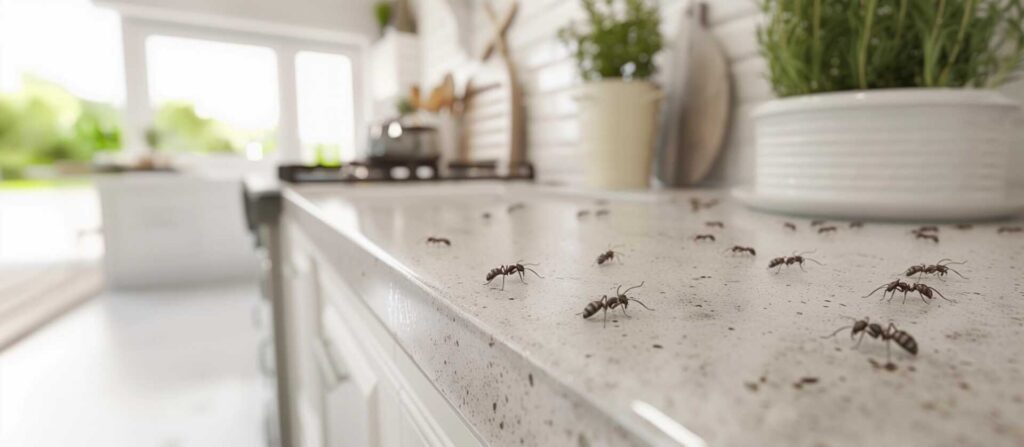
Tiny black ants marching across your kitchen counter
Silverfish scuttling under the bathroom sink
Fruit flies buzzing around your ripening bananas
Bed bugs hiding in your mattress seams
Mice leaving droppings in the pantry
Monitor Infestation Levels
What’s the best way to keep indoor pests at bay effectively? Monitoring infestation levels is essential. By implementing pest tracking and infestation monitoring, you can identify problem areas before they escalate. Regular inspections and tracking can help you stay ahead of infestations.
| Monitoring Method | Frequency |
|---|---|
| Visual Inspections | Weekly |
| Sticky Traps | Monthly |
| Bait Stations | Bi-weekly |
| Pheromone Traps | Monthly |
| Digital Monitoring | Weekly |
Use this table to establish a routine that fits your lifestyle. Being proactive saves you time and effort and fosters a sense of belonging within your home, ensuring it remains a pest-free sanctuary for you and your loved ones.
Use Preventive Measures
Identifying infestation levels is just the beginning; taking preventive measures is key to maintaining a pest-free environment.
Implementing Integrated Pest Management (IPM) involves proactive strategies that help you stay ahead of pests. Regular inspections should be part of your routine, allowing you to catch potential problems early.
Here are some effective pest proofing strategies:
- Seal cracks and crevices to block entry points
- Store food in airtight containers to prevent access
- Keep your living spaces clean and clutter-free
- Dispose of garbage regularly and securely
- Use natural repellents to deter unwanted guests
Consider Professional Extermination Services
When you’ve tried various DIY pest control methods without success, it might be time to contemplate professional extermination services.
These experts bring specialized knowledge and tools that can effectively tackle even the most stubborn infestations. One of the significant extermination benefits is their ability to identify the root cause of your pest problem, ensuring a more permanent solution. They often use targeted treatments that aren’t available over the counter, giving you an edge in eradicating bugs for good.
While service costs can vary, many companies offer free estimates, allowing you to make an informed decision without breaking the bank.
Investing in professional help saves you time and provides peace of mind, knowing that your home is in expert hands. By opting for professional services, you’re taking a proactive step toward a pest-free environment, enhancing your comfort and well-being at home.
Monitor and Prevent Future Infestations
To effectively maintain a pest-free home, it’s crucial to monitor for signs of future infestations regularly. By implementing consistent pest monitoring practices, you can catch problems before they escalate.
Conducting thorough infestation analysis will help you identify areas prone to pests and take preventive measures.
Here are some key steps to keep in mind:
- Inspect cracks and crevices for droppings or signs of nesting.
- Check food storage areas for any signs of pests or damage.
- Monitor moisture levels in your home, as damp areas attract insects.
- Use traps or sticky pads to detect pest presence.
- Regularly review your home’s perimeter for potential entry points.
Wrap-Up
Effectively controlling indoor insect infestations requires a proactive and multifaceted approach. While some might think that professional extermination is too costly, consider it an investment in your home’s health and comfort. By combining cleanliness, sealing entry points, and utilizing natural repellents, you can greatly reduce pest problems. If issues persist, don’t hesitate to seek expert help. Staying vigilant and implementing these strategies will help you maintain a pest-free environment for the long haul.
Recent Posts
Why Treat Indian Meal Moths in Your Home?
If you’ve noticed tiny moths fluttering around your kitchen or found webbing in your food,
Top Spider Control Techniques for Your Home
When it comes to keeping spiders out of your home, understanding their behavior is vital.
3 Best Spider Control Methods for Homes
You might not realize that some common household items can effectively repel spiders. By utilizing