
Contents
You may not realize how quickly red flour beetles can spread from a single hidden source into multiple storage areas. You’ll need more than a surface spray to stop them, because they often breed inside cracks, packaging, and overlooked food residues. Expert control identifies these nesting points, targets all life stages, and helps prevent repeat infestations. That makes the difference between a temporary fix and a lasting solution.
Key Takeaways
- Expert control finds hidden eggs, larvae, and beetles that DIY cleaning often misses.
- Professionals quickly stop fast-spreading infestations before they contaminate more stored food.
- Targeted treatments address breeding sites, not just visible insects on shelves and surfaces.
- Ongoing monitoring and prevention reduce reinfestation risks with traps, logs, and sanitation guidance.
- Expert help protects product quality, storage efficiency, and compliance in homes or facilities.
Why Red Flour Beetles Need Fast Action
Because red flour beetles multiply quickly and spread easily through stored dry goods, a small infestation can become a larger contamination problem in a short time.
You need fast action because their rapid reproduction lets populations surge before you can stabilize storage areas. Once they enter flour, cereal, or grain, they can drive food contamination and reduce product quality.
Acting early helps you protect your inventory, limit waste, and keep your team aligned on clean, controlled handling. You don’t want a minor issue to spread across shelves, bins, or packaged goods.
Expert control gives you a targeted response, so you can restore confidence in your storage environment and stay ahead of avoidable losses.
Signs of a Red Flour Beetle Infestation
Once red flour beetles establish in stored goods, the signs usually show up in both the product and the storage area.
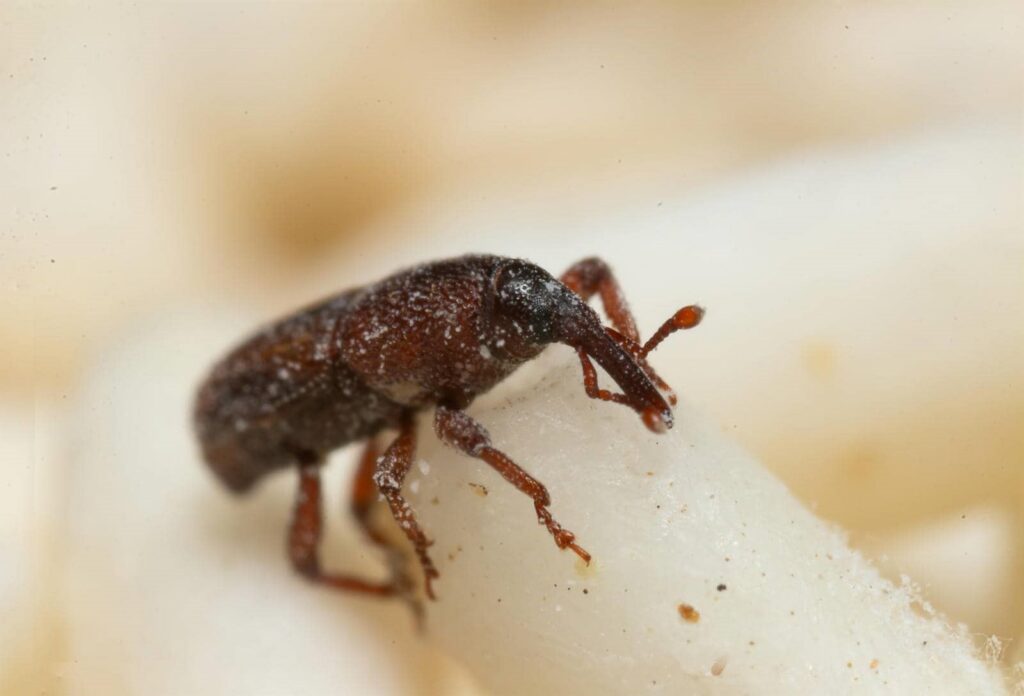
You may notice live beetles, shed skins, or tiny larvae moving through flour, cereal, or spice dust. The product can clump, discolor, or develop a stale odor, and you might see fine powder from feeding activity.
On shelves and in seams, you may find small fragments or dark specks that signal infestation damage.
Red flour beetle behavior also includes rapid spread, so a few insects can indicate a larger issue.
If you spot these cues, treat them as a clear warning. You’re not overreacting; you’re protecting your pantry, your standards, and your home’s shared food supply.
Where Red Flour Beetles Hide in Homes
Red flour beetles hide where food dust, moisture, and warmth overlap. You’ll usually find them in pantry seams, under shelf liners, inside cracked containers, and behind appliances where crumbs collect.
They also use hiding spots in cabinet corners, wall voids near stored grains, and gaps around baseboards or trim. If your home has flour, cereal, pet food, spices, or baking mixes, those food sources can sustain hidden beetles and their larvae.
Check unopened packages, reusable bins, and seldom-moved storage boxes, too. In shared kitchens, they often spread through dry storage areas and utility spaces.
Why DIY Red Flour Beetle Treatment Fails
DIY red flour beetle treatment often fails because you can’t see all infestation sources, especially eggs, larvae, and adults hidden in cracks, stored foods, and packaging.
If you only treat the visible insects, you leave behind enough survivors to restart the infestation. Without targeted inspection and source removal, you’ll also face rapid reinfestation from overlooked harborages.
Hidden Infestation Sources
Even if you clean visible shelves and discard contaminated dry goods, red flour beetles often persist because they hide in overlooked sources such as wall voids, pallet cracks, floor gaps, equipment seams, and packaging debris.
You need more than surface sanitation to protect food storage and support accurate pest identification. These insects can shelter inside bag folds, under dock plates, and within dust buildup where sprays and traps miss them.
You may also overlook tiny kernels, flour residue, and damaged packaging that shelter immature stages. A professional inspection traces these hidden reservoirs, maps harborages, and targets the right entry points.
That approach helps you work with your team, restore control, and keep your operation aligned with technical standards.
Reinfestation Risks
Without a full source-to-site strategy, red flour beetles can rebound quickly from a partial cleanup because eggs, larvae, and adults survive in cracks, equipment, and nearby product streams.
You may wipe visible insects away, but you’ll leave hidden reservoirs intact, and they’ll seed the next generation fast. That’s why DIY efforts often fail: you treat the symptom, not the infestation network.
Effective reinfestation prevention requires deep sanitation, targeted monitoring, and verified access control across receiving, processing, and storage zones.
You also need storage solutions that limit moisture, reduce spillage, and isolate susceptible ingredients.
When you work with experts, you gain a coordinated plan that protects your team, supports compliance, and helps your facility stay confident, connected, and beetle-free.
How Professionals Eliminate Red Flour Beetles
Professionals eliminate red flour beetles by targeting the full infestation, not just the adults you see. You get a site inspection that maps hiding spots, breeding zones, and food sources in cracks, bins, and wall voids.
Your technician uses pest biology to time interventions against eggs, larvae, and active adults, then selects treatment technologies matched to the structure and product risk. You may receive targeted vacuuming, residual applications, dusts, and sealing around entry points to disrupt movement.
Professionals also remove contaminated material and verify moisture and sanitation issues that support survival. This integrated method reduces hidden populations and helps you stay aligned with a trained team that knows how these pests spread, feed, and persist in storage and processing areas.
Benefits of Professional Treatment
Professional treatment gives you an accurate infestation assessment, so you can identify the scope of the red flour beetle problem quickly.
It also applies targeted treatment methods that match the infestation source and activity level.
You’ll gain long-term prevention measures that reduce reinfestation risk and support ongoing control.
Accurate Infestation Assessment
An accurate red flour beetle infestation assessment starts with locating active breeding sites, identifying all affected food-handling areas, and determining how far the insects have spread through stored products, cracks, and equipment.
You gain a clear infestation analysis that shows where contamination is concentrated and where hidden reservoirs still support growth.
Precise pest identification helps you separate red flour beetles from similar pantry pests, so you’re not reacting to the wrong threat.
You also understand which zones need monitoring, sanitation, and exclusion review, letting your team act with confidence.
This disciplined assessment reduces guesswork, aligns everyone around the same findings, and helps you protect product quality, compliance, and trust in your operation.
Targeted Treatment Methods
With the infestation mapped, targeted treatment methods let you address red flour beetles where they’re actually active rather than applying broad, inefficient control across the entire facility.
You’ll work with professionals who place targeted baits, apply precise residuals, and treat crack-and-crevice harborage without disrupting the spaces your team relies on.
This focused approach reduces chemical use, limits product loss, and speeds knockdown in high-risk zones like mills, storage racks, and conveyance points.
By aligning each application with an integrated pest strategy, you get control that’s technically sound and operationally efficient.
You’re not left guessing, and your staff can stay confident that every treatment supports the same goal: restoring a clean, compliant environment where your operation can belong and perform.
Long-Term Prevention Measures
Targeted treatments address the active infestation, but lasting control depends on stopping red flour beetles from reestablishing in the first place.
You’ll protect your facility by sealing entry points, correcting sanitation gaps, and storing dry goods in airtight containers.
Professionals also build sustainable practices into your program, reducing conditions that support recurring infestations without adding unnecessary disruption.
Regular monitoring techniques, including pheromone traps and inspection logs, let you detect low-level activity before it spreads.
When you keep temperatures, humidity, and product rotation under control, you make your site far less favorable to beetles.
This layered approach helps you stay compliant, protect inventory, and maintain confidence with your team.
With expert support, you’re not just reacting—you’re joining a proactive prevention system that keeps problems small.
How to Prevent Red Flour Beetle Reinfestation
To prevent red flour beetle reinfestation, you need to eliminate the conditions that let eggs, larvae, and adults survive between treatments. You can do that by tightening sanitation and sealing access points.
Build infestation barriers around shelves, cracks, and utility gaps, then inspect them routinely. Use disciplined food storage so pests can’t reach flour, grains, or pet feed.
- Store dry goods in airtight containers.
- Clean spills, dust, and debris fast.
- Rotate stock with first-in, first-out control.
- Monitor hidden corners with inspection checks.
When you keep storage areas dry and organized, you protect your team’s shared space and reduce the chance that beetles reestablish themselves.
Consistent habits matter, and your facility stays stronger when everyone follows the same prevention routine.
When to Call a Red Flour Beetle Exterminator
If your red flour beetle activity keeps returning after cleaning, sealing, and storage changes, it’s time to call an exterminator.
You’ve likely reached the point where DIY controls can’t match the infestation timeline or hidden breeding sites. A licensed pro can inspect harborage areas, identify pest behavior, and determine whether eggs, larvae, or adults are cycling through your pantry, feed room, or equipment.
Call sooner if you see repeated webbing, clumped flour, or beetles in multiple containers. You’ll get targeted treatment, source removal guidance, and monitoring that fits your home or facility.
That support helps you regain control and stay part of a prepared, informed group that keeps stored products protected.
Frequently Asked Questions
How Do Red Flour Beetles Enter Packaged Food?
You’ll find red flour beetles enter packaged food through packaging vulnerabilities like tiny tears, loose seals, or contaminated ingredients. They’re especially drawn to storage areas, so your infestation prevention should include inspection, sealing, and rotation.
Can Red Flour Beetles Spread to Neighboring Apartments?
Yes, they can spread to neighboring apartments, through cracks, vents, and shared walls; you’ll need sharp pest identification, strict infestation prevention, and coordinated cleanup to protect your unit and keep your community secure.
Are Red Flour Beetles Harmful to Pets?
Usually, no—you’ll protect pet safety by keeping red flour beetles out of food, not your animals. They don’t bite pets, but you should support pest prevention, since contaminated feed can upset stomachs.
How Long Do Red Flour Beetles Live Indoors?
You’ll usually see red flour beetles live indoors about 3 to 12 months, depending on food, warmth, and moisture. Strong indoor pest management can shorten red flour beetle lifespan by eliminating breeding sites.
What Foods Attract Red Flour Beetles Most?
Flour, cereals, grain-based mixes, pasta, and pet food attract red flour beetles most. You’ll reduce infestations by tightening food storage and using prevention methods. You’re not imagining it; these pests exploit neglected packages and crumbs.
Wrap-Up
If you’ve just noticed tiny beetles in your pantry, don’t dismiss it as a coincidence. The same foods they infest—flour, cereal, spices, and pet food—can hide larvae and eggs beyond reach. That’s why expert red flour beetle control matters. You get a precise inspection, targeted treatment, and prevention that DIY methods can’t match. Act fast, protect your stored goods, and call a professional before a small problem turns into a persistent infestation.
Recent Posts
How Much Does Mice Extermination Cost in West Michigan?
In West Michigan, how much does mice extermination cost can vary significantly from one home
Do Mice Go Away on Their Own? The Honest Answer
You may not realize that mice often stay put even when a home feels busy
Mouse Droppings vs Rat Droppings: Identify Your Intruder
You may not know that droppings can tell you more than just whether rodents are