
Contents
Ants move in when you slip, and they don’t need much. You can keep them out year-round by sealing entry points in spring, disrupting trails in summer, trimming vegetation before fall, and controlling moisture in winter. Tight food storage and routine cleaning reduce the pressure further, but some infestations still outpace basic controls—so knowing when prevention ends and pest management begins matters more than you might expect.
Key Takeaways
- Keep kitchens and pantry areas clean, wiping counters daily and storing food in sealed containers.
- Seal cracks, gaps, and utility openings around windows, doors, pipes, and foundations.
- Remove crumbs, pet food, and sticky residue regularly, especially near sinks, trash, and entry points.
- Use natural repellents or ant bait along trails and foraging routes to disrupt colonies.
- Fix leaks, empty trash, and check recycling and pet bowls to reduce moisture and food sources.
How to Prevent Ants in Spring
As spring temperatures rise, you can reduce ant activity by eliminating the conditions that attract them. Inspect your kitchen, pantry, and entry points for crumbs, moisture, and gaps. Wipe counters daily, store food in sealed containers, and fix leaks quickly.
Seal cracks around windows, doors, and pipes with caulk to block access. Place ant bait near common foraging routes; workers carry it back to the colony, which helps control the source.
Use natural repellents, such as vinegar or peppermint oil, on surfaces where ants scout, but reapply them regularly. Trim vegetation touching your home and keep firewood away from walls.
When you stay consistent, you protect your space and help everyone in your household enjoy a cleaner, calmer spring.
Stop Ant Trails in Summer
When summer heat pushes ants into steady foraging, you can stop trails by removing both the scent marks and the food sources that sustain them.
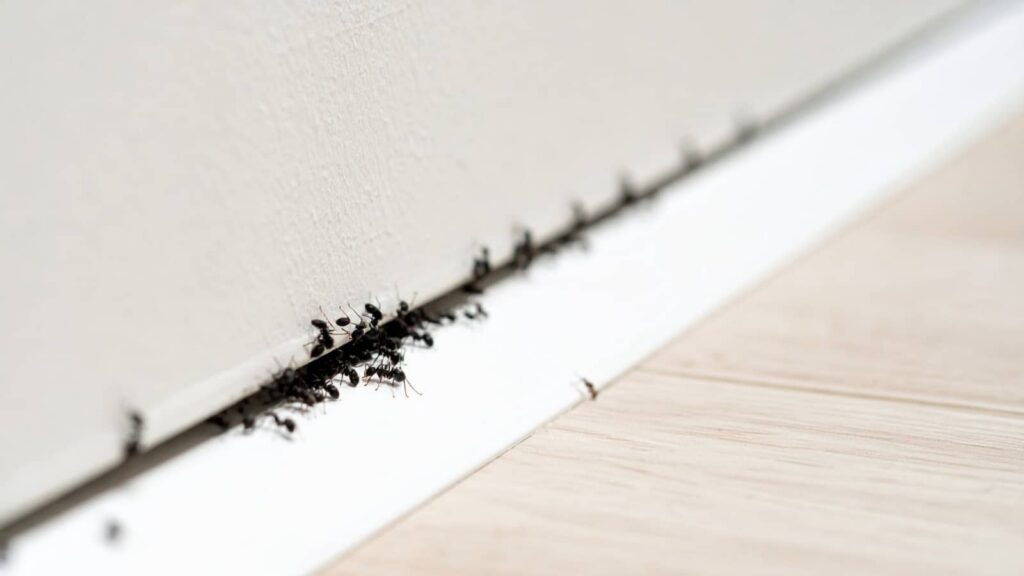
Wipe counters, floors, and baseboards with soapy water or vinegar to break pheromone paths. Then vacuum crumbs, pet food, and sticky residue during your summer cleanup.
Track ant behavior near sinks, trash, and pantry edges so you can target the exact route. Seal opened containers, rinse recyclables, and empty bins often.
If you spot a line, follow it back and clean the entry area right away. You’re not just treating a nuisance; you’re helping your home stay organized and shared space feel comfortable for everyone.
Repeat cleaning daily until the trail disappears, then monitor high-traffic spots.
Keep Ants Out Before Fall
Before fall temperatures drop, you should seal the cracks, gaps, and utility openings that ants use to enter your home. Inspect baseboards, window frames, door sweeps, and pipe penetrations, then apply caulk or weatherstripping where needed.
Outside, trim vegetation away from siding and clear leaf litter that can shelter foraging ants. Keep your kitchen tight by using airtight food storage, wiping counters, and removing crumbs fast.
If you want extra defense, use natural repellents like peppermint oil or vinegar along entry points, but reapply them regularly. Check pet bowls, recycling bins, and pantry shelves each week.
When you and your household stay consistent, you build a cleaner, more secure home that ants don’t easily claim.
Prevent Indoor Ants in Winter
Winter doesn’t stop ants from seeking food and moisture inside your home, so keep sanitation tight after cold weather sets in. You should wipe counters, sweep floors, and clean crumbs right away to cut off attractants.
Seal dry goods in airtight containers and tighten your food storage routine so ants can’t access sugar, pet food, or grease. Empty trash often, rinse recycling, and fix leaks under sinks or near appliances to remove moisture.
Check baseboards, utility gaps, and window frames for entry points, then caulk them. If you share spaces with family or roommates, agree on indoor sanitation habits so everyone helps.
Consistent care keeps your home less inviting and helps your household stay in control all winter.
When to Call Pest Control for Ants
If ant activity keeps returning after sanitation and exclusion efforts, you should call a pest control professional for a targeted inspection.
You’ll need help when trails reappear daily, nests sit inside walls, or you can’t locate the source. A technician can identify ant behavior, confirm the species, and place effective bait where workers actually feed. That matters because misapplied sprays can scatter colonies and worsen the problem.
Call sooner if you see winged ants, multiple entry points, or food contamination in kitchens and pantries. You’ll also benefit from service when home remedies fail or when you want a plan that fits your household and keeps you connected to a pest-free space.
Prompt treatment protects comfort, limits damage, and restores control.
Frequently Asked Questions
Which Ant Species Invade Homes Most Often?
You’ll most often see carpenter ants, sugar ants, pavement ants, odorous house ants, and pharaoh ants indoors; fire ants usually invade less. You can target their food, moisture, and entry points to reduce repeated infestations.
Do Natural Repellents Really Keep Ants Away?
Yes, natural deterrents can reduce ant traffic, but they rarely solve infestations alone. You’ll get the best results by pairing them with effective solutions like sealing entry points, cleaning residues, and eliminating food sources consistently.
How Can I Find the Ants’ Entry Points?
Check likely entry points by following ant trails indoors and outdoors; entry point identification starts with ant behavior observation. You’ll spot tiny gaps, cracks, pipes, and windows where these quiet guests slip in and out.
Are Outdoor Ant Baits Safe for Pets?
Generally, you’ll find outdoor ant baits safe for pets when you place them in tamper-resistant stations, but you should still monitor access. Proper placement boosts bait effectiveness while protecting pet safety and your yard’s comfort.
Why Do Ants Return After Treatment?
You’re seeing ants return because treatment effectiveness depends on colony size, hidden nests, and ant behavior. If you miss the queen or trails, survivors rebuild. Reapply targeted bait, seal entry points, and monitor regularly.
Review
You can stop ant problems before they start, but only if you stay consistent. In spring, seal entry points; in summer, break trails with clean surfaces; in fall, cut back vegetation and close gaps; in winter, fix leaks and control indoor moisture. Quick fixes may look useful, yet steady sanitation works better. If ants keep returning despite your efforts, don’t wait—call pest control. Prevention is simple, but ignoring small signs can turn a minor nuisance into a larger infestation.
Recent Posts
Mouse Droppings vs Rat Droppings: Identify Your Intruder
You may not know that droppings can tell you more than just whether rodents are
What Attracts Mice to a Clean House? 7 Surprising Culprits
Some homes report some mouse activity each year, and even a spotless house can still
How Do Exterminators Get Rid of Mice? A Look Inside the Process
When you call an exterminator for mice, the process starts with a careful inspection to