
Contents
In Michigan, the quiet bite can carry more than a nuisance. Tick Diseases in Michigan include illnesses that can be transmitted by blacklegged ticks, including Lyme disease, anaplasmosis, and babesiosis. American dog ticks can also transmit Rocky Mountain spotted fever. If you keep your yard trimmed and inspect your skin after outdoor exposure, you can reduce your risk, but signs of infection can be subtle, so knowing what to watch for matters.
Key Takeaways
- Michigan homeowners should watch for Lyme disease, anaplasmosis, babesiosis, and spotted fever rickettsioses after tick exposure.
- Blacklegged ticks are the main Michigan threat, spreading Lyme disease, anaplasmosis, and sometimes babesiosis.
- Early symptoms like expanding rash, fever, fatigue, headache, and muscle aches need prompt medical evaluation.
- Severe illness signs include facial palsy, persistent flu-like symptoms, hemolytic anemia, or extreme fatigue after a tick bite.
- Reduce risk by keeping lawns trimmed, removing leaf litter, limiting brush, and checking people and pets for ticks.
Common Tick Diseases in Michigan
In Michigan, ticks can transmit several clinically significant diseases, including Lyme disease, anaplasmosis, babesiosis, and spotted fever rickettsioses.
When you understand tick diseases in Michigan, you can recognize why each pathogen matters to your household’s risk profile. Blacklegged ticks most often spread Lyme disease and anaplasmosis, while babesiosis can co-occur in the same exposure event.
Dermacentor species may carry spotted fever rickettsioses, though confirmed cases remain less common.
You belong to a community that benefits when you track local tick ecology, use surveillance data, and reduce tick habitat around your yard.
These infections differ in microbial type, transmission efficiency, and clinical severity, but all require prompt medical evaluation after exposure.
Effective prevention starts with informed, shared vigilance.
Lyme Disease Signs Homeowners Should Know
Lyme disease often begins with a subtle but expanding erythema migrans rash, and you may also notice fever, chills, fatigue, headache, myalgias, or arthralgias within days to weeks after a blacklegged tick bite.
You should inspect your skin carefully after outdoor activity, especially at the groin, axillae, scalp, and behind the knees.
- A rash larger than 5 cm strongly suggests early infection.
- Constitutional symptoms can occur even without a visible rash.
- Neurologic signs, such as facial palsy, need prompt evaluation.
- Early diagnosis improves treatment response and lowers complication risk.
If you notice these findings, contact your clinician promptly.
Anaplasmosis, Babesiosis, and Other Tick Diseases
Beyond Lyme disease, you can also contract anaplasmosis, babesiosis, and other tick-borne infections in Michigan.
Anaplasmosis often causes fever, headache, myalgia, and leukopenia, while babesiosis can produce hemolytic anemia, fatigue, and, in severe cases, organ dysfunction.
You should treat any post-tick illness as a potential systemic infection and seek prompt clinical evaluation.
Anaplasmosis Symptoms And Risks
Although anaplasmosis is less common than Lyme disease, it can cause significant illness after a bite from an infected blacklegged tick. You may develop fever, headache, muscle aches, chills, and marked fatigue within 1 to 2 weeks.
Clinicians often note leukopenia, thrombocytopenia, and elevated liver enzymes, which reflect systemic infection and help distinguish it from other tickborne illnesses. If you delay treatment, your risk of dehydration, respiratory distress, and neurologic complications rises.
Protect your household by checking skin after outdoor activity, removing ticks promptly, and reducing tick habitat near your home.
Stay alert for:
- sudden fever
- severe myalgia
- profound fatigue
- laboratory abnormalities
Babesiosis And Other Threats
Babesiosis is another tickborne infection you should know about in Michigan, and it can occur alongside Lyme disease and anaplasmosis after a bite from an infected blacklegged tick.
You may also face ehrlichiosis, Rocky Mountain spotted fever, tularemia, or Powassan virus, depending on tick species and exposure.
Babesiosis is caused by Babesia parasites that infect red blood cells, so you can develop fever, chills, fatigue, anemia, and dark urine. Severe disease is more likely if you’re older, immunocompromised, or asplenic.
Because co-infections can overlap, you should report any persistent flu-like illness after a tick bite and seek prompt testing.
Which Michigan Ticks Spread Disease?
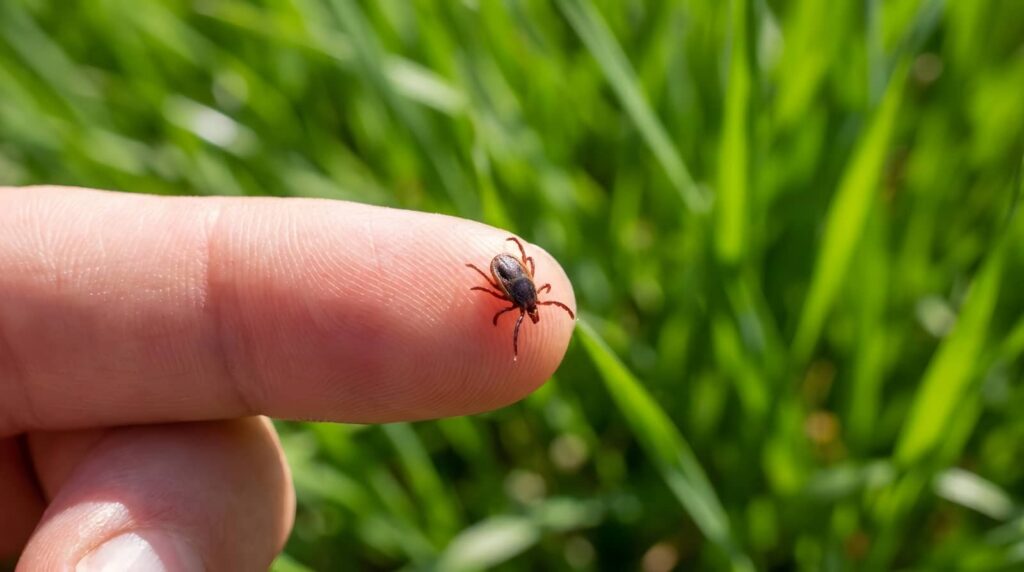
In Michigan, the blacklegged tick, also called the deer tick, is the primary vector for Lyme disease, anaplasmosis, babesiosis, and Powassan virus. You’ll most often encounter it in wooded edges, brush, and leaf litter.
The lone star tick can transmit ehrlichiosis and may trigger alpha-gal syndrome, while the American dog tick can spread Rocky Mountain spotted fever and tularemia.
- Blacklegged tick: highest disease burden
- Lone star tick: expanding range
- American dog tick: common in grassy sites
- Tick species matter for your risk profile
You belong in the group that checks every attached tick carefully, because species identification helps you gauge exposure and report accurate details to your clinician.
How Yard Tick Control Reduces Risk
Reducing tick habitat around your home lowers the chance that blacklegged ticks, lone star ticks, and American dog ticks will encounter you, your family, or pets.
You can cut exposure by keeping grass short, removing leaf litter, and trimming brush at lawn edges, fence lines, and woodpile borders.
Create dry, sunlit barriers with gravel or mulch between wooded areas and play or sitting spaces, because ticks desiccate faster in low-humidity sites.
Keep deer, rodents, and stray hosts out with fencing and sealed garbage, since they transport immature ticks into yards.
Store firewood neatly, elevate it off soil, and place picnic or rest areas away from dense vegetation.
When you work together on these controls, you build a safer, shared outdoor environment with fewer tick-host contacts and lower pathogen transmission risk.
When to Check for Ticks and Get Help
Even with strong yard tick control, you should check yourself, children, and pets after time outdoors, especially after brushing through tall grass, leaf litter, or wooded edges.
Inspect skin, hairline, ears, armpits, waistband, behind knees, and between toes within two hours. Use fine-tip tweezers to remove attached ticks promptly.
- Save the tick in a sealed bag for identification.
- Watch for fever, rash, headache, joint pain, or fatigue.
- Seek care if the tick was attached long, engorged, or hard to remove.
- Contact a clinician if symptoms appear within 30 days.
Early evaluation matters because Lyme disease, anaplasmosis, and babesiosis respond best when treated quickly.
You’re part of a safer Michigan community when you check consistently and act fast.
Frequently Asked Questions
Can Pets Bring Ticks Indoors?
Yes, pets can bring ticks indoors. You’ll reduce that risk by checking fur, collars, and paws after outdoor time, using vet-approved prevention, and vacuuming frequently to remove hitchhiking ticks before they attach.
Are Tick Diseases in Michigan Treatable?
Yes, you can treat many tick diseases, though symptoms and severity vary; Lyme often responds to antibiotics, while anaplasmosis needs prompt care. You’ll protect your household best by acting early, staying informed, and seeking diagnosis quickly.
Do All Tick Bites Cause Illness?
No, you won’t get sick from every tick bite; many ticks aren’t infected, and transmission usually requires attachment time. You should remove ticks promptly, then watch for rash, fever, or flu-like symptoms.
What Clothing Helps Prevent Tick Bites?
You’ll want long sleeves, long pants, light-colored clothing, tucked socks, and permethrin-treated fabrics; they reduce tick attachment and improve detection. Staying one step ahead keeps you in the loop and lowers exposure.
How Often Should Yard Inspections Be Done?
Inspect your yard weekly during peak tick season, and after rain or landscaping changes. You’ll reduce habitat quickly, spot hotspots early, and keep your family’s exposure lower through consistent, shared vigilance and prompt action.
Conclusion
As you step back inside from the yard, think of Michigan ticks as silent hitchhikers waiting in grass, leaf litter, and shaded edges. By mowing regularly, clearing debris, and checking your skin and clothing after outdoor time, you sharply reduce exposure to Lyme disease, anaplasmosis, babesiosis, and Rocky Mountain spotted fever. Early detection matters. If you notice fever, rash, fatigue, or a tick attached, seek medical care promptly and protect your household.
Recent Posts
Does Mosquito Spraying Really Work? Separating Fact From Fiction
If you’re wondering whether mosquito spraying really works, the answer is yes, but only under
How to Get Rid of Ticks in Your Yard Before They Find Your Family
If you want to keep ticks away from your family, you need to make your
When Does Mosquito Season Start in Michigan? A Month-by-Month Timeline
If you live near a marsh in Grand Rapids, you might notice mosquito bites in