
Contents
Dealing with wasps doesn’t have to drain your wallet. By focusing on simple, effective wasp control strategies, you can manage these pests without overspending. First, you’ll want to identify and locate their nests. Then, consider using natural deterrents and DIY traps. Keeping your outdoor space clean is also essential. Interested in discovering more about professional inspections and how they fit into your budget-friendly approach?
Key Takeaways
- Identify and locate wasp nests by observing their activity and checking sheltered areas around your home for nests.
- Use natural deterrents like essential oils or vinegar solutions to repel wasps without chemical treatments.
- Create DIY traps from plastic bottles filled with sweet baits to catch and reduce wasp populations.
- Schedule professional inspections for thorough assessments and tailored control methods that fit your budget.
- Maintain a clean outdoor environment by disposing of food scraps and securing trash to prevent attracting wasps.
Identify and Locate Wasp Nests
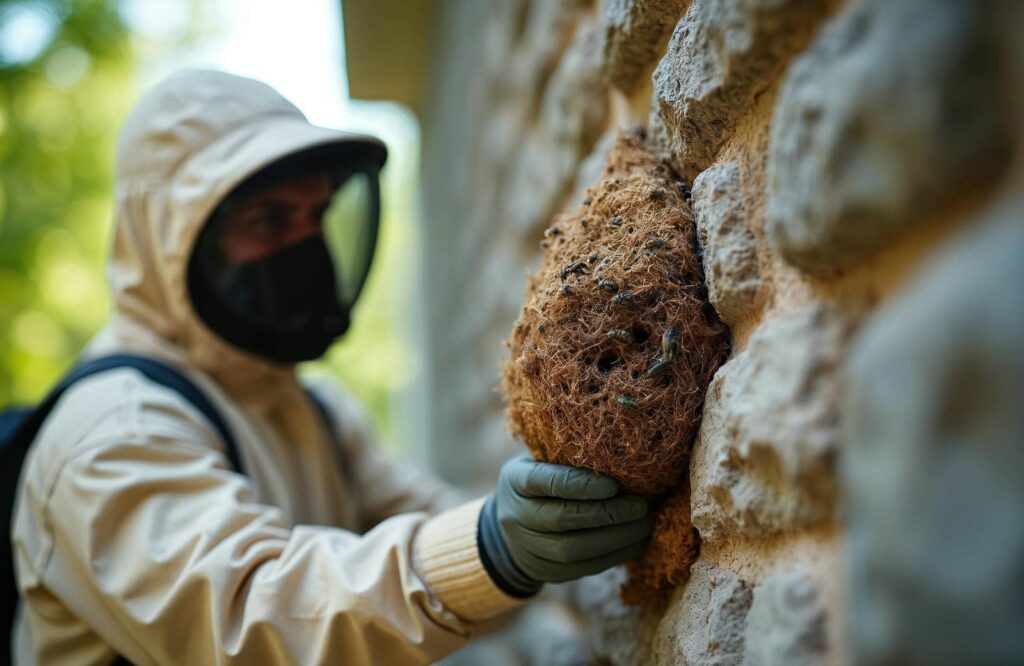
When it comes to wasp control, identifying and locating nests is essential. Start by observing wasps around your home; they’re often seen flying to and from their nests.
Look for nest locations in sheltered areas, such as under eaves, in attics, or within dense shrubbery. Wasp nests are typically grey and papery, resembling a football-shaped structure.
During the day, you’ll notice increased activity near the nest, so pay attention to these signs. Conducting thorough nest identification helps you determine the best approach for removal or control.
Use Natural Deterrents
While you may want to avoid harsh chemicals in your garden, using natural deterrents can effectively keep wasps at bay. One of the best options is essential oils like peppermint, clove, or lemongrass.
Mix a few drops with water in a spray bottle and apply it around areas where you’ve spotted wasps. Another powerful solution is vinegar. Create a vinegar solution by mixing equal parts vinegar and water in a spray bottle.
This repels wasps and disrupts their nesting behavior. You can also soak cotton balls in the vinegar solution and place them around your garden.
Apply DIY Traps
To effectively manage wasp populations in your outdoor spaces, consider applying DIY traps that you can easily make at home.
Homemade traps are a cost-effective solution and can be surprisingly simple to create. Start with a plastic bottle; cut it in half and invert the top half into the bottom. Fill the bottom with effective baits like a mixture of sugar water, fruit juice, or even a bit of vinegar.
Wasps are drawn to these scents, ensuring they enter but can’t escape. Place these traps in shaded areas where wasps are active, and check them regularly.
Schedule Professional Inspections
After you’ve set up your DIY traps, it’s wise to contemplate scheduling professional inspections to further secure your wasp control efforts are effective.
Regular inspections can help you identify potential nests before they become a problem.
Consider the following:
Choose a pest control company with a solid reputation in your area.
Discuss inspection frequency that suits your needs—monthly or quarterly, depending on your wasp activity.
Ask about their methods to confirm they align with your values and preferences.
Request a follow-up plan to monitor the situation after initial treatments.
Maintain a Clean Outdoor Environment
A clean outdoor environment is essential for effective wasp control. To keep wasps at bay, prioritize outdoor cleanliness by regularly picking up fallen fruit, food scraps, and garbage.
Make certain your trash cans are tightly sealed, preventing wasps from being attracted to easy food sources. When you’re hosting gatherings, store food in airtight containers and clean up spills immediately.
Avoid leaving pet food outside, as it can also draw in these pests. Regularly check your yard for nests and remove any potential nesting spots, such as old wood or debris.
Frequently Asked Questions
How Can I Tell if a Wasp Is Dangerous?
You can tell if a wasp’s dangerous by observing its behavior and visual identification. Aggressive wasps display darting movements and approach you closely. Look for bright colors, elongated bodies, and distinct patterns to identify them accurately.
What Time of Year Are Wasps Most Active?
Wasps are most active in late summer and early fall due to their seasonal nesting habits. Understanding these wasp behavior patterns helps you avoid encounters, as they become more aggressive when protecting their nests.
Can Wasps Return to Previously Treated Nests?
Yes, wasps can return to previously treated nests. In fact, some nests remain active after treatment. Proper wasp nest maintenance and timely nest relocation can help minimize their return and keep your space safe.
Do Wasp Stings Require Medical Attention?
Wasp stings don’t always require medical attention, but if you experience severe sting symptoms or allergic reactions, seek help immediately. It’s better to be safe, ensuring you get the care you need.
Are There Any Home Remedies for Wasp Stings?
Yes, you can use natural treatments like a paste of baking soda and water or apply cold compresses for soothing remedies. These methods help reduce pain and swelling from wasp stings effectively and affordably.
Summary
By taking control of your outdoor space, you’re not just keeping wasps at bay; you’re cultivating a peaceful haven. Think of your home as a garden, where each step—identifying nests, using natural deterrents, and maintaining cleanliness—nurtures a harmonious environment. Just as flowers flourish in the right conditions, so too will your outdoor enjoyment. With a little effort and these tips, you can reclaim your space without straining your wallet, transforming your yard into a serene retreat.
Recent Posts
Mouse Droppings vs Rat Droppings: Identify Your Intruder
You may not know that droppings can tell you more than just whether rodents are
What Attracts Mice to a Clean House? 7 Surprising Culprits
Some homes report some mouse activity each year, and even a spotless house can still
How Do Exterminators Get Rid of Mice? A Look Inside the Process
When you call an exterminator for mice, the process starts with a careful inspection to