
Contents
Think of your home as a fortress, where any breach invites unwanted guests like indoor ants. These tiny invaders can disrupt your peace, but natural solutions exist to reclaim your space. By understanding their behavior and employing effective remedies, you can create a hostile environment for them. What strategies can you implement to repel these pests and prevent their return? Let’s explore practical methods to keep your fortress secure.
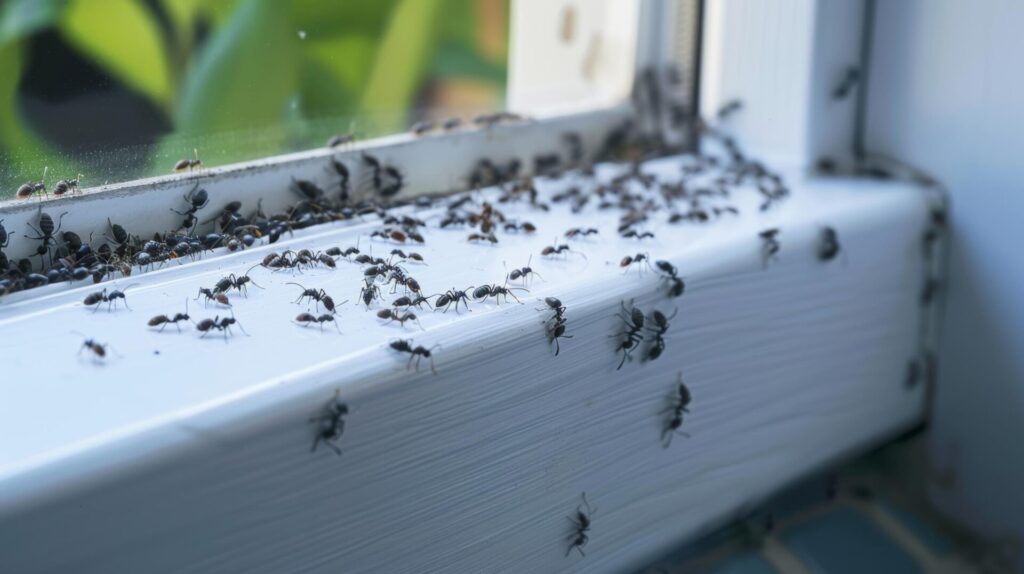
Indoor ants can quickly become a nuisance, invading your living spaces and searching for food. It’s essential to take proactive steps to manage indoor ants effectively.
Key Takeaways
- Use essential oils like peppermint or tea tree mixed with water to disrupt ant pheromone trails and repel them.
- Create a vinegar solution with equal parts vinegar and water to clean surfaces and deter ants.
- Sprinkle diatomaceous earth in areas of ant activity, as it dehydrates and eliminates ants safely.
- Make homemade ant bait using a 3:1 ratio of sugar to borax to attract and poison ants effectively.
- Seal entry points with caulk and weather stripping to prevent ants from entering your home.
Understanding Ant Behavior and Attraction
While it might seem puzzling why ants invade your home, understanding their behavior and attraction can provide valuable insights into prevention.
Ants live in colonies, working together to locate food and water sources. When one ant finds a potential food source, it releases pheromone trails, signaling others to follow. This collective behavior can lead to a rapid influx of ants in your space.
To deter these unwanted visitors, you need to disrupt their pheromone trails. Start by cleaning surfaces thoroughly to remove any scent markers.
Seal entry points and eliminate food and water sources that attract them. You might also consider using barriers, like diatomaceous earth, to impede their movement.
Essential Oils as Natural Repellents
Essential oils can be a powerful ally in your battle against indoor ants. These natural repellents help with pest control and enhance your home’s atmosphere through aroma therapy. Oils like peppermint, tea tree, and citrus are particularly effective; their strong scents disrupt ant pheromone trails, making it harder for them to navigate.
Identifying the presence of indoor ants can help you take swift action to address the issue.
To use essential oils, mix a few drops with water in a spray bottle and apply it around entry points and areas where you’ve spotted ants. This method deters these unwanted guests and leaves your space smelling fresh.
To combat indoor ants, set up barriers to prevent their entry and movement around your home.
Embracing essential oils as part of your pest control strategy fosters a sense of belonging in your home environment, ensuring it’s a safe and pleasant place for you and your family.
Using natural repellents can significantly reduce the presence of indoor ants in your home.
Indoor ants can be deterred by regularly applying these essential oil mixtures.
Vinegar Solutions for Ant Control
If you’re looking for an effective way to control indoor ants, vinegar solutions can be a game changer.
Being vigilant about indoor ants can help keep your living space free from these pests.
Mixing vinegar with water creates a potent spray that disrupts ant trails and deters future invasions. This simple yet powerful solution addresses the problem and helps maintain a cleaner environment.
Indoor ants often lead to more significant infestations if not addressed promptly.
Vinegar and Water Mixture
Using a vinegar and water mixture can be an effective and natural way to deter indoor ants from invading your space. This simple solution combines the vinegar benefits of acidity with the cleansing power of water, creating a potent cleaning solution that disrupts ants’ pheromone trails.
To make it, mix equal parts of vinegar and water in a spray bottle. Spray areas where you notice ant activity, focusing on entry points and potential nests. Not only does this solution tackle ants, but it also leaves your surfaces clean and fresh.
Utilizing vinegar solutions can be a natural way to manage indoor ants effectively.
Vinegar as Deterrent
While many commercial ant repellents rely on harsh chemicals, vinegar serves as a potent, natural deterrent that can effectively disrupt ant behavior.
Regularly spray your vinegar solution to deter indoor ants from entering your home.
The vinegar benefits extend beyond mere repulsion; its strong scent masks the pheromone trails ants leave behind, making it harder for them to navigate.
You can easily implement vinegar applications by mixing equal parts vinegar and water in a spray bottle.
Spray this solution around entry points and areas where you’ve spotted ants. Regular use will reinforce its effectiveness, creating an unwelcoming environment for these pests.
By opting for vinegar, you’re choosing a safer solution and fostering a healthier home for yourself and your loved ones.
Indoor ants can also be controlled by applying diatomaceous earth in affected areas.
Monitoring areas for indoor ants is crucial for maintaining an ant-free environment.
Embrace this natural alternative and reclaim your space!
Diatomaceous Earth: A Natural Insecticide
Diatomaceous earth (DE) stands out as a powerful, natural insecticide that can effectively tackle indoor ant infestations. When you apply DE, you’re utilizing tiny, sharp particles that penetrate the exoskeleton of ants, leading to dehydration and death.
Creating effective bait is essential in addressing indoor ants and their trails.
One of the key diatomaceous earth benefits is its safety for humans and pets, making it a preferred choice for households seeking eco-friendly solutions.
For successful insecticide application, sprinkle DE in areas where you’ve spotted ants, like entry points and trails. Confirm you cover these areas lightly; a little goes a long way.
Using this bait can greatly reduce the number of indoor ants in your space.
It’s vital to reapply after cleaning or damp conditions, as moisture diminishes its effectiveness. By incorporating diatomaceous earth into your pest control strategy, you’re addressing the immediate issue and fostering a healthier living environment.
Enjoy the satisfaction of reclaiming your space while embracing a natural approach to pest management.
Ingredients You’ll Need
When dealing with indoor ants, creating an effective homemade bait can be surprisingly simple and cost-effective. You’ll need just a few ingredients to get started. The combination of sugar and borax acts as a powerful attractant, luring ants to the bait while serving as a natural repellent for other pests. Here’s a quick look at what you’ll require:
| Ingredient | Purpose |
|---|---|
| Sugar | Natural attractant for ants |
| Borax | Ant bait and repellent |
| Water | To dissolve the sugar and borax |
| Ant repelling herbs | Additional deterrent |
| Container | For mixing and storing bait |
Mixing Instructions
Place the bait strategically to attract indoor ants effectively.
Creating an effective homemade ant bait using sugar and borax is a straightforward process that can yield impressive results in your fight against indoor ants.
Start by mixing a 3:1 ratio of sugar to borax; this effective combination entices ants while delivering a slow-acting poison. For instance, blend three tablespoons of sugar with one tablespoon of borax.
Regular cleaning is vital to prevent attracting indoor ants into your home.
To enhance efficacy, add a few drops of water to form a paste. This consistency allows the bait to stick to surfaces and be more attractive to ants.
Place your bait in small containers or on pieces of paper in areas where ant activity is noticeable.
With these mixing ratios, you’re well on your way to reclaiming your space from unwanted pests.
Application Tips
Indoor ants are likely to invade if food remains are not cleaned up promptly.
Identifying all potential entry points is essential to keep indoor ants out.
Sealing these areas effectively can prevent indoor ants from entering your living space.
While you’ve successfully mixed your homemade ant bait, applying it effectively is essential for maximizing its impact.
Start by identifying the ant trails, the pathways ants use, which are often marked by pheromone signals. Place small amounts of your bait along these trails, ensuring it’s easily accessible to the ants. This encourages them to take the bait back to their colony, where it can do the most damage.
Avoid using too much bait; a little goes a long way. Replenish the bait every few days to maintain its effectiveness. Remember, consistency is key.
Keeping Your Home Clean to Prevent Infestations
To effectively prevent indoor ant infestations, maintaining a clean and organized home is essential. Start by prioritizing dust removal, as ants are attracted to the food particles and residues that accumulate in hidden corners.
Regularly vacuum and wipe surfaces to eliminate potential food sources.
Next, focus on food storage. Keep all food items sealed tightly in airtight containers to deter ants from finding their next meal. This includes pantry staples and even pet food.
Don’t overlook your kitchen and dining areas; crumbs and spills can create an inviting environment for ants.
After cooking or eating, quickly clean up any mess to reduce the chance of attracting these pests.
Sealing Entry Points to Keep Ants Out
Even the cleanest home can fall victim to ants if entry points aren’t properly sealed. Start with entry point identification; inspect your walls, windows, and doors for cracks or gaps. These small openings can be highways for ants, allowing them easy access to your living space.
Once you’ve pinpointed these vulnerabilities, employ effective sealing methods. Use caulk to fill in cracks, weather stripping for doors, and mesh screens for windows.
Don’t forget about utility lines and plumbing; these can also serve as entry points.
Final Thoughts
By combining these natural methods, you can keep indoor ants at bay like a well-guarded fortress. Essential oils, vinegar solutions, and homemade baits work together to disrupt their trails and eliminate food sources, while regular cleaning and sealing entry points create a barrier against future infestations. Stay vigilant and consistent in your efforts, and soon you’ll find your home ant-free, allowing you to enjoy your space without unwanted visitors.
Recent Posts
Seasonal Elder Bug Control Tips
When box elder bugs gather on your home like a weather signal, you’re seeing a
7 Expert Tips for Bug Extermination
If bugs are making themselves a little too comfortable, you’ve got a problem to sort
5 Tips for Nearby Box Elder Bug Treatment
If you’re dealing with box elder bugs near your home, start by locating their hot