Contents
When dealing with wasp infestations, understanding expert removal techniques is essential. You need to recognize wasp behavior and identify nests accurately. Safety precautions are paramount, as improper handling can lead to painful stings. Professional exterminators employ targeted chemical treatments while taking measures to ensure your safety. However, there’s more to effective removal than just extermination; preventative strategies play an important role. Let’s explore these techniques further to ensure a safe and wasp-free environment.
Key Takeaways
- Professionals assess the infestation level and nest location to determine the safest and most effective removal approach.
- Specialized protective gear is worn to minimize sting risks during the removal process.
- Chemical insecticides are applied during low activity times for immediate extermination and long-lasting barriers.
- Natural remedies like vinegar traps and herbal repellents may be used to complement chemical treatments.
- Experts follow strict safety protocols, ensuring effective removal while minimizing risks for individuals and families.
Understanding Wasp Behavior
To effectively manage wasp removal, it’s vital to understand their behavior. Wasps communicate through pheromones, which serve as signals for various activities, including nest building. When a wasp detects a threat, it releases alarm pheromones, alerting others to the danger. This rapid communication can escalate a situation quickly, making it essential to approach wasp nests with caution.
Additionally, wasps are methodical builders, constructing nests from chewed wood fibers mixed with saliva. This unique material makes their nests quite durable.
Understanding these behaviors helps you avoid provoking them and informs your strategy for safe removal. By respecting their communication methods and nest-building instincts, you can minimize risks and ensure a more effective removal process.
Identifying Wasp Nests
Although wasp nests can vary in appearance, you can typically identify them by their distinct papery texture and the specific locations where they’re built.
To enhance your nest identification skills, observe these common traits:
Shape: Nests often resemble an upside-down teardrop or a football.
Texture: The surface appears smooth and layered, resembling paper.
Color: Most nests are light gray or brown, blending with surroundings.
Location: Look for nests in sheltered areas, often high up in trees, attics, or under eaves.
Activity: Notice wasp activity; high traffic indicates a nearby nest.
Safety Precautions for Removal
When preparing for wasp removal, wearing the right protective gear is essential to your safety.
You’ll also want to take into account any personal allergies, as even a single sting can trigger severe reactions.
Taking these precautions can greatly reduce the risk of injury during the removal process.
Protective Gear Essentials
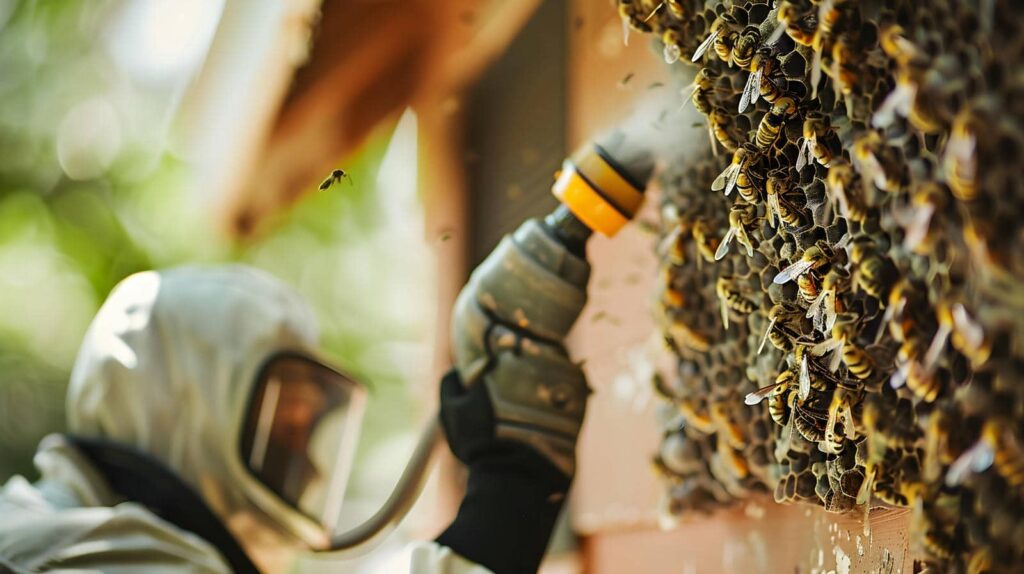
As you prepare for wasp removal, wearing the right protective gear is crucial for your safety. Adhering to safety standards protects you and enhances your confidence in the task.
Here’s a list of must-have protective equipment:
- Bee suit: A full-body suit to prevent stings.
- Gloves: Thick, long gloves to shield your hands and forearms.
- Face shield: A clear shield to protect your face and eyes.
- Respirator mask: To avoid inhaling any chemicals or allergens.
- Sturdy boots: High, durable boots to protect your feet.
Equipping yourself with this protective gear ensures you minimize risks during wasp removal, allowing you to focus on the job at hand.
Avoiding Allergic Reactions
How can you ensure your safety while removing wasps, especially if you’re prone to allergies? First, familiarize yourself with common allergy symptoms, such as swelling, hives, or difficulty breathing.
Always keep an epinephrine auto-injector on hand if you have a known allergy. Before starting the removal process, inform someone nearby about your plans and potential risks, making sure they can assist in an emergency response.
Wear protective gear, including a mask and gloves, to minimize exposure. Approach the nest cautiously, ideally at dusk when wasps are less active.
If you experience any allergy symptoms during removal, retreat immediately and administer your epinephrine if needed. Prioritize safety to ensure your well-being throughout the process.
Chemical Treatments for Wasp Extermination
When it comes to wasp extermination, chemical treatments offer effective solutions.
You’ll encounter various methods, including insecticide spray applications for immediate results, residual treatment methods for prolonged effects, and baiting techniques that attract and eliminate wasps over time.
Understanding these options will help you choose the best approach for your specific situation.
Insecticide Spray Applications
Insecticide spray applications are among the most effective chemical treatments for wasp extermination, particularly when dealing with nests that are difficult to reach.
You’ll want to employ precise insecticide application techniques to ensure safety and effectiveness. Here are some effective spray methods to take into account:
- Choose a high-quality insecticide labeled for wasp control.
- Use a long-range sprayer to maintain a safe distance.
- Apply during dusk or dawn when wasps are less active.
- Target the nest directly for maximum impact.
- Wear protective clothing to minimize the risk of stings.
Residual Treatment Methods
After you’ve applied insecticide sprays, considering residual treatment methods can enhance your wasp extermination efforts.
These methods focus on creating a long-lasting barrier that ensures residual effectiveness against any returning wasps. By using specially formulated residual insecticides, you can achieve treatment longevity, reducing the need for frequent reapplications.
Focus on areas where wasps are likely to nest or forage, such as eaves, overhangs, and fence lines. Apply the residual treatment according to the manufacturer’s instructions, ensuring even coverage for ideal results.
Remember to monitor the treated areas regularly, as this will help you identify any resurgence and maintain control. With careful application, you’ll create a safer environment while effectively managing wasp populations.
Baiting Techniques Explained
Baiting techniques provide an effective chemical treatment option for wasp extermination, targeting these pests directly at their source.
By understanding bait types and strategic bait placement, you can enhance your success in eliminating wasps.
- Protein-based baits attract wasps during their nesting phase.
- Sugar-based baits are ideal for late summer when they seek sweet food.
- Liquid baits allow for easy consumption and faster results.
- Granular baits can be placed near nests for targeted action.
- Disguised baits help in luring wasps away from human activity.
To maximize effectiveness, place baits in shaded areas away from high traffic zones.
Natural Remedies and Alternatives
While you may prefer chemical solutions for wasp removal, natural remedies and alternatives can effectively deter these pests without harmful side effects. One popular option is to use herbal repellents, such as mint, eucalyptus, or citronella. These plants emit scents that wasps find unappealing, encouraging them to stay away from your space.
Additionally, vinegar traps serve as a simple yet effective method. By mixing equal parts of vinegar and water in a container, you can attract and trap wasps. The acidity of vinegar disrupts their ability to escape, effectively reducing their numbers.
Incorporating these natural techniques fosters a safer environment for you and your loved ones and promotes a sense of belonging to a community that values eco-friendly practices.
Preventative Measures to Avoid Infestations
To prevent wasp infestations, it’s crucial to take proactive measures around your home and yard.
As seasons change, wasps become more active in seeking nesting materials. Here are some effective strategies to keep them at bay:
Seal entry points: Inspect and close gaps in windows and doors.
Remove food sources: Keep outdoor trash cans tightly sealed and clean up spills promptly.
Trim vegetation: Regularly cut back bushes and trees to limit potential nesting sites.
Store materials properly: Keep firewood and building supplies covered to deter nesting.
Monitor nests: Regularly check for early signs of wasp activity in hidden areas.
When to Call a Professional Exterminator
When should you consider calling a professional exterminator for wasp removal? If you notice signs of infestation, such as increased wasp activity around your home or visible nests, it’s time to intervene.
Wasps can become aggressive, especially when their nests are disturbed, posing a risk to you and your family. If you’re allergic to wasp stings or have young children, hiring an expert is crucial for safety.
Additionally, if the infestation is large or the nest is located in a hard-to-reach place, professional removal is recommended.
Don’t wait until the problem escalates; swift action can prevent further complications. Trusting trained professionals ensures effective and safe removal, allowing you to reclaim your space without fear.
Frequently Asked Questions
Can Wasps Return to a Previously Treated Nest?
Yes, wasps can return to a previously treated nest if it isn’t properly removed or destroyed. Their behavior might lead them to investigate, but effective removal encourages nest abandonment and reduces the likelihood of return.
How Long Does It Take for Chemical Treatments to Work?
Chemical treatments usually take 24 to 48 hours to show effectiveness against wasps. Since a wasp nest can last several weeks, timely application is essential to ensure complete elimination before the nest’s lifespan ends.
What Time of Day Is Best for Wasp Removal?
For effective wasp removal, tackle them early morning or late afternoon when they’re less active. Imagine a homeowner successfully eliminating a nest at dawn, greatly reducing the risk of aggressive encounters during the day.
Are There Any Pets That Attract Wasps?
Yes, certain pet behaviors can attract wasps. Pets that leave food scraps or have sweet-smelling treats can draw them in, making it essential to manage leftovers and clean up promptly to reduce wasp attractants.
Can Wasps Survive Winter in Their Nests?
Yes, wasps can survive winter in their nests through clever hibernation strategies. They often abandon the nest, leaving behind only the queen, who finds shelter to ensure winter nest survival. Isn’t nature fascinating?
Final Thoughts
Effective wasp removal requires understanding their behavior, identifying nests, and prioritizing safety. While chemical treatments can swiftly eliminate them, exploring natural alternatives is also viable. Remember, an ounce of prevention is worth a pound of cure; implementing preventative measures can save you from future infestations. If the situation feels overwhelming, don’t hesitate to call a professional. They have the expertise to handle wasps safely and efficiently, ensuring your peace of mind.
Recent Posts
The Best Pet Safe Mouse Repellent Options, Ranked by a Pro
You probably don’t know that many “mouse repellents” fail because they target the mouse instead
How Much Does Mice Extermination Cost in West Michigan?
In West Michigan, how much does mice extermination cost can vary significantly from one home
Do Mice Go Away on Their Own? The Honest Answer
You may not realize that mice often stay put even when a home feels busy