
Contents
Did you know that Indian meal moths can infest grains, and dried fruits, nuts, and spices? These pests often go unnoticed until they’ve caused significant damage to your pantry. To prevent this, it’s essential to take proactive moth control steps to control their population. By understanding effective strategies, you can safeguard your food supply and maintain a pest-free environment. Let’s explore some top tips for managing these unwelcome intruders.
Key Takeaways
- Store all grains, nuts, and dried fruits in airtight containers to prevent Indian meal moth access and contamination.
- Regularly inspect pantry items for signs of infestation, such as webbing, larvae, and adult moths.
- Utilize pheromone traps to monitor and reduce Indian meal moth populations effectively.
- Clean shelves with soapy water to eliminate larvae and eggs after disposing of any infested food.
- Seek professional pest control assistance for severe infestations and expert long-term prevention strategies.
Identify Infestation Sources
Identifying the sources of an Indian meal moth infestation is essential for effective control. Start by looking for infestation signs such as webbing, larvae, and adult moths in your pantry.
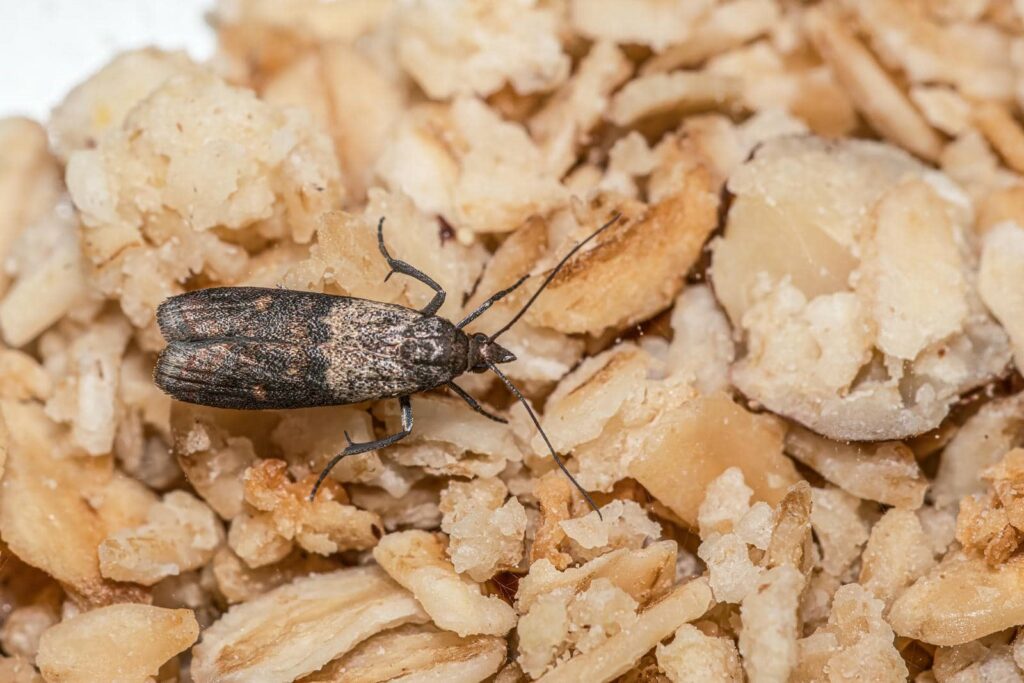
These pests often hide in grains, nuts, and dried fruits, so check these items first. When you spot small, brownish moths fluttering around, you’re witnessing pest identification in action.
Inspect packaging for tiny holes or frayed edges, which indicate a potential infestation. Don’t forget to examine lesser-used items, as they can harbor pests without your knowledge.
Properly sealing food in airtight containers can help prevent future issues. If you find signs of infestation, act quickly; removing affected products is vital to stopping the spread.
Clean and Declutter Your Pantry
To effectively control Indian meal moths, start by removing any expired food items from your pantry.
Once you’ve cleared out the old food, vacuum and wipe down shelves to eliminate any larvae or eggs that might be lurking.
Finally, organize your food storage containers to create a tidy space that’s less inviting to pests.
Remove Expired Food Items
One of the most effective ways to combat Indian meal moth infestations is by removing expired food items from your pantry. Expired food doesn’t just clutter your space; it can also become a major attraction for pests.
Check your pantry regularly and dispose of any items that have passed their expiration dates. This includes grains, nuts, and dried fruits, as these are particularly enticing to moths.
As you clean, take the time to organize your food, ensuring that newer items are placed behind older ones. This practice reduces pest attraction while fostering a sense of belonging in your kitchen, creating a space that’s inviting and safe for your family.
Keeping your pantry fresh is key!
Vacuum and Wipe Surfaces
Start tackling your Indian meal moth problem by vacuuming and wiping down all surfaces in your pantry. This cleaning technique helps eliminate any eggs or larvae that might be hiding.
Use the following steps to ensure thorough cleaning across various surface materials:
- Vacuum corners and shelves: Focus on hard-to-reach areas where eggs might be lurking.
- Use a damp cloth: Wipe down all shelves and surfaces with a solution of water and mild detergent.
- Remove and clean containers: Take out any food storage containers and clean them separately.
- Dispose of vacuum contents: Empty the vacuum bag or canister outside to prevent a reinfestation.
This process cleans and declutters your pantry, creating a fresh environment free of pests.
Organize Food Storage Containers
After vacuuming and wiping down your pantry, it’s time to tackle your food storage containers. Start by sorting through them based on container types—glass, plastic, or metal.
Discard any damaged or unusable containers to create a clutter-free environment. Opt for airtight containers to keep pests like Indian meal moths at bay.
Label each container clearly for easy food organization, ensuring you know exactly what you have on hand. Group similar items together, such as grains, pasta, and snacks, to streamline your cooking process.
This helps prevent pest infestations and fosters a sense of belonging as you maintain a clean, inviting pantry space that reflects your culinary lifestyle.
Use Airtight Containers for Food Storage
To protect your food from Indian meal moths, using airtight containers is essential.
By sealing your food securely, you greatly reduce the risk of pest infestation.
Make it a habit to transfer grains, cereals, and snacks into these containers to keep your pantry safe and pest-free.
Seal Food Securely
One of the most effective ways to keep Indian meal moths at bay is by sealing your food securely in airtight containers. Proper food packaging protects your items and plays a vital role in pest prevention.
Here are four tips to ensure your food is sealed effectively:
Choose sturdy containers: Opt for glass or heavy-duty plastic that can withstand wear and tear.
Check seals: Verify lids fit snugly and are free from cracks or damage.
Label containers: Keep track of contents and use them before expiration dates.
Store in cool, dark places: Moths prefer warm, light spaces, so minimize exposure.
Prevent Pest Infestation
While it might seem simple, using airtight containers for food storage is an essential step in preventing pest infestations, particularly from Indian meal moths.
These containers create an effective barrier, blocking pests from accessing grains, cereals, and other food items. When you adopt this food safety practice, you protect your pantry and enhance your overall pest prevention strategies.
Choose glass or heavy-duty plastic containers with tight-fitting lids for the best results.
Label each container with the contents and date of storage to help you keep track. By implementing these small changes, you’ll create a welcoming space that’s free from pests, fostering a sense of belonging in your home.
Employ Traps for Monitoring and Control
Employing traps is a highly effective way to monitor and control Indian meal moth populations in your home.
By using the right trap types and proper trap placement, you can greatly reduce infestations and gain peace of mind.
Here are some tips for effective trapping:
Choose Pheromone Traps: These attract male moths, helping to break the breeding cycle.
Position Traps Strategically: Place them near pantry shelves, cabinets, or areas where you’ve noticed moth activity.
Check Traps Regularly: Inspect them weekly to gauge moth populations and replace as needed.
Combine with Other Methods: Use traps alongside cleaning and food storage practices for thorough control.
Consider Natural Repellents
To further enhance your control efforts against Indian meal moths, consider using natural repellents. Herbal solutions like dried lavender, mint, or rosemary can deter these pests effectively.
Placing sachets of these herbs in your pantry or storage areas provides a pleasant aroma and keeps moths at bay.
Essential oils are another powerful option. Oils such as peppermint, eucalyptus, and tea tree have natural insect-repelling properties.
Create a spray by mixing a few drops of these oils with water in a spray bottle, and lightly mist your shelves and food containers.
Make sure to refresh these natural repellents regularly for maximum effectiveness.
By incorporating these methods, you protect your food and create a welcoming, pest-free environment in your home.
Embracing these natural solutions allows you to feel empowered in your fight against Indian meal moths.
Seek Professional Assistance if Necessary
If you’ve tried various DIY methods to control Indian meal moths without success, it might be time to seek professional assistance. Consulting a professional pest control service can save you time, effort, and frustration.
Here are some reasons to evaluate expert advice:
Thorough Inspection: Professionals can identify the source of the infestation, ensuring you address the root problem.
Targeted Treatments: They have access to specialized products and techniques not available to the average homeowner.
Long-Term Solutions: Experts can provide preventative measures to avoid future infestations.
Peace of Mind: Knowing that a trained professional is handling the situation can reduce your stress and worry.
Don’t hesitate to reach out for help if the situation feels overwhelming. A professional pest control expert can guide you on effective strategies and provide the support you need to reclaim your home.
Summary
By taking these proactive steps, you can reclaim your pantry from the clutches of Indian meal moths. Picture your shelves, free from unwanted guests, where every canister is a fortress against pests. With diligent cleaning, proper storage, and a sprinkle of natural defenses, you’ll create an environment that’s inhospitable to these intruders. If the battle feels overwhelming, don’t hesitate to call in the cavalry—professional pest control can provide the expertise you need for lasting peace of mind.
Recent Posts
Smart Spider Control Techniques for Homeowners
Managing spider populations in your home requires a strategic approach. By understanding spider behavior and
5 Best Spider Control Methods for Homes
If you’re dealing with spider issues in your home, it’s essential to adopt effective control
Guide to Eco-Friendly Pest Control Strategies
When it comes to managing pests, we often prefer to think of it as guiding