
Contents
When it comes to managing the unwelcome presence of Indian meal moths, you’ll find that various effective treatments exist to restore harmony in your pantry. From natural repellents to targeted chemical solutions, understanding these options can make a significant difference. Knowing how to identify infestations and implement preventive measures is essential. Let’s explore the most effective strategies to tackle these pests and safeguard your food supplies.
Key Takeaways
- Use essential oils like peppermint, lavender, and eucalyptus in sprays or cotton balls to naturally repel Indian meal moths.
- Set vinegar traps with apple cider vinegar to attract and catch adult moths effectively.
- Apply diatomaceous earth in affected areas to dehydrate and disrupt the lifecycle of moths and larvae.
- Choose chemical insecticides specifically designed for pantry pests, ensuring they are safe for food storage areas.
- Utilize pheromone traps to monitor and capture male moths, helping to disrupt mating and assess infestation levels.
Understanding Indian Meal Moths
When you encounter Indian meal moths, understanding their biology and behavior is essential for effective management.
These pests undergo a complete life cycle, which includes egg, larval, pupal, and adult stages. Female moths lay hundreds of eggs in food sources like grains, nuts, and dried fruits. Once hatched, the larvae feed voraciously, often creating webbing and frass as they consume your stored products.
Their feeding habits can lead to significant contamination, making prompt action vital. The larvae are particularly destructive, as they can flourish in various conditions, making them a common household pest.
Understanding the life cycle helps you identify the right moment for intervention, ensuring you disrupt their development effectively. By recognizing their feeding habits, you can take proactive steps to safeguard your pantry and prevent future infestations.
Stay informed and engaged, and you’ll foster a pest-free home environment.
Identifying Infestations
Identifying infestations of Indian meal moths early is essential to effective pest control. Start by looking for infestation signs like webbing, larvae, and adult moths in your pantry or food storage areas.
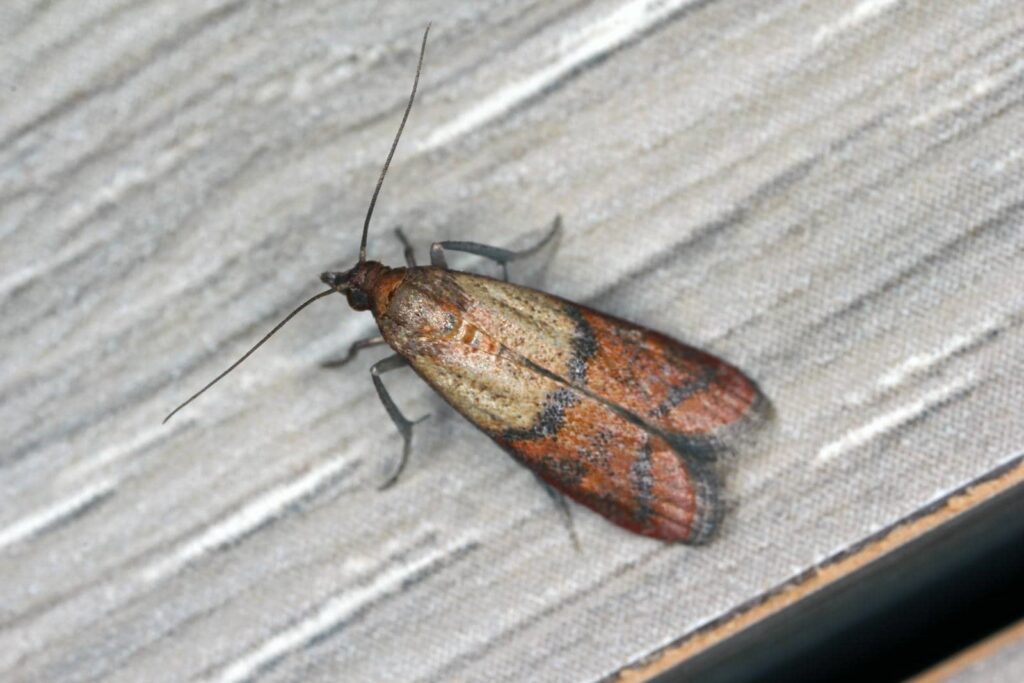
These moths are small, typically about 1/2 inch long, with a distinctive reddish-brown color. You might notice small, silken webs in food containers or corners, indicating pest behaviors of nesting and feeding.
Check for small holes in packaging or scattered frass (insect droppings) around your stored grains, nuts, and dried fruits. If you see adult moths flying around, it’s a clear signal of an established infestation.
Remember, the sooner you catch these signs, the easier it’ll be to manage. Connecting with others who’ve faced similar issues can provide insights and support in your efforts to eliminate these pests.
Stay vigilant, and you’ll help keep your home moth-free.
Prevention Techniques
Once you’ve identified signs of Indian meal moth infestations, taking preventive measures can help protect your home from future problems.
Start by using airtight storage solutions for grains, flours, and other susceptible food items. This keeps pests out and maintains the freshness of your food.
Regularly inspect your pantry and kitchen areas, looking for any signs of moths or their larvae. If you notice any infested items, dispose of them immediately to prevent further spread.
Always clean up spills and crumbs promptly, as these can attract moths.
Additionally, consider using pheromone traps to monitor for any re-infestations. These traps can help you catch moths early and take action before they multiply.
Cleaning and Decluttering
To effectively combat Indian meal moths, start by decluttering your food storage areas.
Remove expired items and organize your pantry to minimize hiding spots for these pests.
Establish a regular cleaning routine to eliminate any food particles and prevent future infestations.
Declutter Food Storage Areas
Cleaning and decluttering your food storage areas is essential for preventing infestations of Indian meal moths. Start by removing all items from your pantry and cabinets, checking expiration dates, and discarding any expired or damaged products.
This process aids in food organization and helps you identify potential hiding spots for pests. Use clear, airtight storage solutions for dry goods like grains and cereals to minimize exposure.
Group similar items together to maintain order and enhance accessibility. Regularly inspect your food storage areas for signs of infestations and keep a checklist of what you have.
Regular Cleaning Routines
Maintaining a regular cleaning routine is essential for keeping Indian meal moths at bay. Start by thoroughly cleaning your kitchen, focusing on areas where food particles may accumulate, such as countertops, shelves, and the insides of cabinets.
Use a vacuum to remove any potential eggs or larvae from these hidden spots. Regular cleaning enhances kitchen hygiene and helps you identify and eliminate any infested items promptly.
Make it a habit to wipe down surfaces with a mild detergent and check food containers for signs of contamination. By incorporating these practices into your routine, you foster a welcoming space that minimizes the risk of moths and promotes a sense of belonging in your home.
Vacuuming and Disposal
Vacuuming effectively eliminates Indian meal moths and their eggs from your home. By using specific vacuuming techniques, you can target areas where moths typically hide, such as pantry shelves, cracks, and corners.
Make sure to use a vacuum with a HEPA filter to capture the tiny eggs and larvae. After vacuuming, immediately dispose of the vacuum bag or empty the canister outside to prevent reinfestation.
In addition to vacuuming, consider employing thorough disposal methods for contaminated food items. Seal any infested grains or snacks in airtight containers before discarding them, ensuring that pests can’t escape or spread.
Regularly vacuuming and promptly disposing of infested materials helps eliminate existing moths and prevents future outbreaks. By incorporating these practices into your routine, you create a safer, pest-free environment for your family, fostering a sense of belonging in your home.
Natural Remedies
Natural remedies can be effective in managing Indian meal moth infestations.
You can use essential oils to repel moths, create vinegar traps to catch them, or apply diatomaceous earth to disrupt their lifecycle.
Each of these options offers a non-toxic approach to pest control in your home.
Essential Oils Benefits
While many people seek effective solutions for managing Indian meal moth infestations, essential oils offer a promising natural remedy.
These oils, such as peppermint, lavender, and eucalyptus, act as natural repellents, disrupting the moths’ ability to navigate and reproduce. You can easily incorporate them into your pest control strategy by mixing a few drops with water in a spray bottle and targeting areas where you suspect infestations.
Additionally, placing cotton balls soaked in essential oils in your pantry can deter these pests. Not only do essential oils provide a non-toxic alternative, but they also leave a pleasant fragrance behind.
Vinegar Traps Effectiveness
Vinegar traps are an effective and straightforward method for controlling Indian meal moth populations in your home.
These traps utilize the natural moth attraction to vinegar, specifically apple cider vinegar, which serves as a lure. To create a vinegar trap, simply fill a small bowl with vinegar and add a few drops of dish soap. The soap breaks the surface tension, ensuring that the moths sink when they land.
Place the traps in areas where you’ve noticed moth activity, like pantries or cupboards. Regularly check and replace the vinegar to maintain effectiveness.
Diatomaceous Earth Application
If you’re looking for a natural solution to combat Indian meal moths, diatomaceous earth (DE) is an excellent option. This natural powder, made from fossilized algae, works by dehydrating pests upon contact.
To effectively apply diatomaceous earth, sprinkle it in areas where you’ve noticed moth activity, such as pantry shelves, cracks, and crevices. Use application methods like a dust applicator for hard-to-reach spots or a simple hand-held shaker for larger areas.
Make sure the DE remains dry to maintain its effectiveness, reapplying as necessary after cleaning. Regularly check for moths to track progress.
Chemical Treatments
When dealing with Indian meal moths, you can effectively utilize chemical treatments to eliminate infestations and prevent future occurrences.
Chemical insecticides are a powerful option, specifically formulated to target these pests. When choosing a product, look for those labeled for use against pantry pests, ensuring it’s safe for your food storage areas.
Before applying pesticides, always read the label for proper instructions. You’ll want to follow guidelines for pesticide application closely, including recommended dosages and safety precautions.
Spraying around entry points and potential hiding spots can enhance effectiveness.
Remember that while chemical treatments can be effective, they should complement other methods for the best results.
Combining these insecticides with thorough cleaning and sealing food storage can help you create a thorough pest management strategy, ensuring your home remains a moth-free zone.
Traps and Monitoring
To effectively manage Indian meal moths, using traps is essential for monitoring their presence.
You’ll find various trap types, such as pheromone traps, that attract and capture these pests, helping you assess infestation levels.
Regularly checking these traps can provide valuable data to determine if further action is needed.
Effective Trap Types
Effective traps play an essential role in monitoring and controlling Indian meal moth populations. When choosing traps, you should consider their effectiveness in attracting and capturing these pests.
Pheromone traps are particularly efficient, as they mimic the natural scents that lure male moths, disrupting their mating cycle. Place these traps near potential infestation sources, like pantries or grain storage areas, to maximize trap placement impact.
Additionally, regularly check and replace traps to maintain their trap effectiveness. By strategically positioning traps and being proactive in monitoring, you create an environment that discourages further infestations.
You’ll feel empowered knowing you’re taking significant steps towards managing Indian meal moths in your home.
Monitoring Infestation Levels
After setting up traps, monitoring infestation levels becomes essential for effective pest management.
You need to understand how to evaluate and respond to these levels to prevent a full-blown infestation.
Here are three key monitoring methods to take into account:
Trap Counts: Regularly check your traps for moth counts. This helps you identify whether you’re above infestation thresholds.
Visual Inspections: Look for signs of larvae or webbing in stored products. Early detection is vital.
Environmental Monitoring: Assess humidity and temperature levels, as these can influence moth activity and reproduction.
Professional Extermination Services
When you face a persistent infestation of Indian meal moths, turning to professional extermination services can be a vital step in regaining control of your space.
These experts provide tailored pest control solutions that effectively target the root of the problem, ensuring thorough elimination of these pests. Their training and experience allow them to identify infested areas that you may overlook.
Moreover, professional exterminators offer valuable expert advice on prevention techniques and treatment options. They’ll guide you on how to seal food sources and maintain a moth-free environment.
By utilizing advanced tools and methods, they can tackle large infestations more efficiently than DIY approaches.
Choosing professional services saves you time and enhances your peace of mind. You’ll feel empowered knowing that skilled technicians are handling your pest problem, allowing you to reclaim your home and enjoy a safe, comfortable living space once again.
Ongoing Maintenance and Monitoring
Even with professional extermination, ongoing maintenance and monitoring are key to preventing future Indian meal moth infestations.
To ensure your home remains pest-free, you’ll need to implement a strategy focused on ongoing vigilance and routine inspections.
Regular inspections: Check pantry staples and food storage areas every month for signs of moths or larvae.
Sealed storage: Use airtight containers for all grains, cereals, and dried foods to limit access for moths.
Cleanliness: Maintain a clean kitchen environment. Wipe down shelves and vacuum corners regularly to remove potential food sources.
Conclusion
In your quest to eliminate Indian meal moths, you might find it ironic that the very snacks you love could be harboring these pests. But with a combination of vigilant cleaning, effective traps, and targeted chemical treatments, you can reclaim your pantry. Regular inspections and ongoing maintenance ensure these unwelcome guests don’t return. So, while you savor your favorite treats, remember to keep them safe from those pesky intruders lurking in the shadows.
Recent Posts
Identifying Weevils in Your Pantry: Key Signs
Have you ever wondered what might be lurking in your pantry? Identifying weevils requires keen
7 Signs You Have Weevils in Your Pantry
If you suspect weevils in your pantry, it’s important to recognize the signs early on.
Why Notice Signs of Spider Infestations?
Did you know that over 30% of households report spider sightings each year? Noticing the