
Contents
Did you know that over 30% of households report spider sightings each year? Noticing the signs of spider infestations is essential for maintaining a safe living space. Early detection, like spotting webbing or egg sacs, can prevent larger issues down the line. Ignoring these signs might lead to more than just discomfort; it could threaten your home’s integrity. So, what are the specific signs you should be on the lookout for?
Key Takeaways
- Noticing signs of spider infestations helps identify breeding populations, allowing for timely control measures to prevent larger infestations.
- Recognizing webbing and egg sacs can indicate active spiders nearby, aiding in maintaining a spider-free environment.
- Unusual bites or skin irritations from spiders may require prompt medical attention, thus fostering health and safety.
- Increased sightings of spiders can signal a rise in other pests, which disrupts home peace and necessitates effective pest control.
- Awareness of seasonal patterns of spider activity helps in implementing preventive strategies to minimize infestations.
Webbing in Corners and Ceilings
Have you noticed fine, silken threads in the corners of your rooms or along the ceilings? These threads are often signs of spider activity. Different webbing types indicate various species, such as the classic orb web or the tangled cobweb.
You’ll typically find these webs in webbing locations like window sills, door frames, and ceiling corners, which offer spiders protection while they hunt for food.
Identifying these webs is essential for understanding your home’s spider population. If you see fresh webbing, it suggests active spiders are nearby, while old, dusty webs indicate a long-standing presence.
Regularly inspecting these areas can foster a sense of control over your living space. If you’re keen on maintaining a spider-free environment, take action by cleaning these webbing locations. Knowing what to look for empowers you to create a more comfortable home for yourself and your loved ones.
Presence of Egg Sacs
When inspecting your home for signs of spider infestations, the presence of egg sacs can be a clear indicator of a breeding population. Recognizing these sacs is vital for effective pest management. Here’s how to guarantee accurate egg sac identification:
Location: Check hidden areas like corners, behind furniture, or in basements. Egg sacs often blend into their surroundings.
Appearance: Look for small, round, or oval-shaped sacs that can vary in color from white to brown. They may appear smooth or textured.
Quantity: One egg sac can contain hundreds of eggs. If you find multiple sacs, it suggests significant spider reproduction activity.
Identifying these sacs early can help you take the necessary steps to control spider populations in your home.
Don’t ignore their presence; it’s a sign that action may be needed to maintain a comfortable living space.
Sightings of Spiders
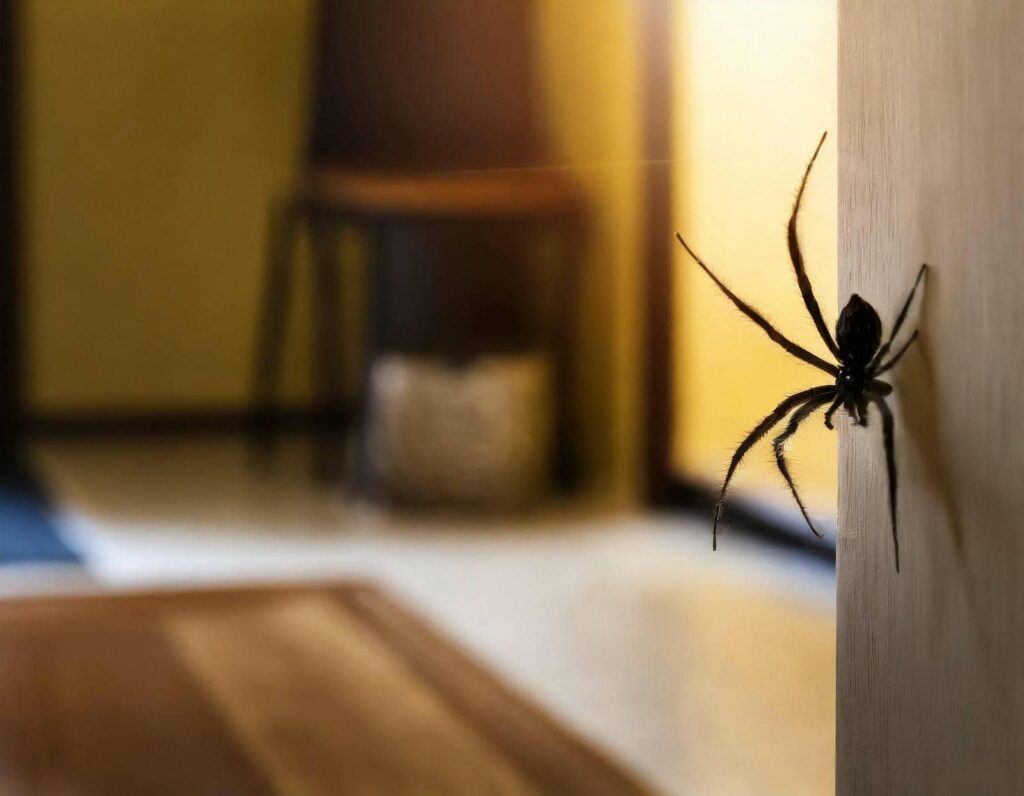
Noticing spiders in your home can be unsettling, but it’s an essential sign of an infestation. Understanding spider behavior is key to addressing this issue effectively. When you spot a spider, it’s not just a random occurrence; it often indicates that your home offers an inviting environment for these pests.
Spiders typically thrive in areas with ample food sources, like other insects, and shelter from disturbances.
If you regularly see spiders, it’s time to take action. You might want to contemplate pest control measures to eliminate not just the visible spiders but also their hidden webs and potential breeding grounds.
Regular inspections and maintaining cleanliness can help deter them. By recognizing these signs, you’re not only protecting your home but also fostering a sense of community and safety for those who share your space.
Don’t ignore those sightings; they’re your first clue in combating a potential infestation.
Unusual Bites or Skin Irritations
If you notice unusual bites or skin irritations, it’s essential to identify their source.
Spider bites can present various symptoms, including redness, swelling, and pain.
Understanding these signs can help you determine if you’re dealing with a spider infestation in your home.
Identifying Spider Bites
How can you tell if that unusual bite or skin irritation is from a spider? Recognizing symptoms early is essential for effective bite treatment.
Here are three signs to look for:
-
Redness and Swelling: If you notice a red area expanding around the bite, it might indicate a spider bite.
-
Pain or Itching: Persistent pain or intense itching can signal a reaction, often associated with spider bites.
-
Blistering or Necrosis: Development of blisters or skin breakdown is a serious symptom that requires immediate attention.
Skin Irritation Symptoms
Spider bites can sometimes lead to unusual skin irritations that mimic other conditions. You might notice a skin rash or swelling around the bite area, often accompanied by itching or discomfort.
These symptoms could indicate an allergic reaction to the venom or secondary infections. It’s important to pay attention, as not all rashes are the same; some may appear as red welts, while others could develop into blisters.
If you experience increasing pain, fever, or the rash spreads, seek medical advice promptly. Understanding these symptoms helps you differentiate between benign reactions and more serious health issues.
Staying informed empowers you to protect yourself and your loved ones from potential spider infestations.
Shed Exoskeletons
Shed exoskeletons are a clear indicator of spider infestations in your home. When you come across these remnants, it’s essential to understand their significance. Shed identification helps you recognize the presence of spiders, indicating they may be breeding in your space.
Here are three reasons to pay attention to shed exoskeletons:
-
Population Growth: A higher number of exoskeletons suggests a growing spider population, which could lead to an infestation.
-
Species Identification: Different spiders leave distinct exoskeletons, helping you identify what type you’re dealing with.
-
Preventive Action: Recognizing these signs allows you to take action before the situation worsens, fostering a safer environment for you and your family.
Increased Insect Activity
When you notice an uptick in insect activity around your home, it’s a clear signal that spiders mightn’t be far behind.
Identifying common insects and their breeding habitats can help you understand the factors attracting spiders to your space.
Pay attention to seasonal activity patterns, as some insects may draw spiders in during specific times of the year.
Identifying Common Insects
As the weather warms up, you may notice an increase in insect activity around your home, which can signal potential infestations.
Identifying these common insects early can help you take action before they become a larger problem. Here are some effective ant identification techniques to take into account:
-
Observe Their Color: Ants can range in color from black to red or brown. Their hue can help you determine the species.
-
Notice Their Size: Measuring ants can reveal significant details; some species are tiny, while others are more robust.
-
Watch Their Behavior: Notice their movement patterns—are they foraging, nesting, or swarming? Understanding insect behavior patterns can guide your next steps.
Breeding Habitats Observed
While you’re enjoying the warmer weather, it’s important to be aware of the breeding habitats where insects thrive, as increased insect activity could signal an impending infestation.
These pests often seek ideal breeding conditions, such as damp areas, decaying organic matter, and cluttered spaces. Understanding their habitat preferences helps you identify potential problem areas around your home.
For instance, basements, attics, and gardens can become hotspots for insect reproduction. By addressing these breeding habitats proactively, you create a less inviting environment for spiders and other pests.
Regularly cleaning and organizing these spaces not only reduces food sources but also disrupts the breeding cycle, helping you maintain a pest-free home.
Stay vigilant and protect your space!
Seasonal Activity Patterns
Understanding seasonal activity patterns is essential for homeowners, especially since increased insect activity often signals the potential for spider infestations.
As the seasons change, various climatic influences can lead to fluctuations in insect populations. Here are three key points to evaluate:
-
Spring Awakening: As temperatures rise, insects emerge, attracting spiders seeking food sources.
-
Summer Surge: Peak insect activity occurs during summer months, markedly increasing spider sightings in and around homes.
-
Autumn Retreat: As temperatures drop, spiders may seek shelter indoors, leading to potential infestations.
Dark, Hidden Areas
When you examine your home for signs of spider infestations, dark, hidden areas often reveal the most activity. Spiders thrive in dark corners and tucked-away spaces where they can build their webs undisturbed.
These spots are typically overlooked during routine cleaning, making them prime locations for spider habitation.
Check behind furniture, inside closets, and beneath sinks for any signs of webbing or egg sacs.
You might also want to inspect your basement, attic, and garage, as these hidden spaces often provide the perfect environment for spiders to multiply.
Deterioration of Fabrics or Materials
If you notice unusual fraying or holes in your fabrics, it could be a sign of spider activity.
Spiders often use materials for building webs, leading to deterioration over time.
Ignoring these indicators may result in further damage and material weakening, so it’s important to investigate.
Fabric Damage Indicators
Several signs can indicate spider infestations, particularly when it comes to fabric damage.
If you notice any of the following indicators, it’s vital to act promptly to prevent further harm to your fabrics:
-
Webs on fabric types: If you see webs forming on your curtains or upholstery, spiders are likely present.
-
Holes or fraying: Check for small holes or fraying edges, especially in delicate materials like silk or lace.
-
Stains or discoloration: Unexplained stains on your fabrics can indicate a spider’s activity, which might lead to further deterioration.
Identifying these fabric damage indicators is essential for effective damage prevention.
Stay vigilant to protect your beloved materials from unwanted pests!
Material Weakening Effects
Although you may not immediately notice it, spider infestations can lead to significant material weakening effects on your fabrics.
Over time, the presence of spiders and their webs can result in material deterioration, compromising the structural integrity of your textiles. These pests often leave behind silk that can bind to fabrics, causing them to fray or tear more easily.
You might find that your once-sturdy curtains or upholstery start to show signs of wear much sooner than expected. Ignoring these signs not only diminishes the aesthetic appeal of your living space but also affects the longevity of your possessions.
Unpleasant Odors
When you notice an unpleasant odor in your home, it could signal a spider infestation lurking in the shadows.
These unpleasant smells often stem from spider webs, feces, and even their decaying bodies. Identifying these odor sources is essential for maintaining a healthy living environment.
Here’s what to look for:
-
Webbing: Accumulated webs can trap moisture and start to decay, leading to foul odors.
-
Feces: Spider droppings, often resembling tiny black dots, can create unpleasant smells as they build up.
-
Dead Spiders: The decay of dead spiders can lead to a distinct odor that indicates a larger infestation.
Recognizing these signs early can help you take action and reclaim your space.
Don’t ignore those smells; they could be a clear indication that spiders have made themselves at home in your walls.
Take charge and make certain your home stays fresh and inviting.
Frequent Sightings of Other Pests
If you’ve noticed unpleasant odors in your home, it’s important to stay vigilant for other signs of pests. Frequent sightings of insects or rodents can signal more serious issues, including a potential infestation.
If you see ants marching in lines, cockroaches scurrying, or even mice darting across your floor, it’s time to take action. These pests not only disrupt your peace but can also lead to health risks and damage to your property.
Effective pest control is vital for maintaining a safe and comfortable living environment. By addressing these sightings promptly, you can greatly enhance your infestation prevention efforts.
Ignoring these signs might lead to more severe problems, making it imperative to act quickly. Remember, a proactive approach can save you time, money, and stress down the line.
Stay observant, and don’t hesitate to consult with a pest control professional if needed. Your home deserves to be pest-free.
Conclusion
By staying alert for signs of spider infestations, like webbing or unusual bites, you’re not just protecting your home but also your health. Coincidentally, these indicators often signal other pest issues lurking nearby. The sooner you notice them, the quicker you can act to prevent larger problems. So, keep an eye out for those hidden egg sacs or shed exoskeletons, and you might just save yourself from a much bigger headache down the line!
Recent Posts
3 Signs You Have a Spider Infestation
If you’ve noticed webs in corners or behind furniture, you might be facing a spider
3 Best Signs of Spider Infestations at Home
If you’ve noticed webs in the corners of your home or spot spiders more often,
7 Best Early Signs of Pest Infestations
Pest infestations can feel like an invasion of your home, turning your sanctuary into a