Contents
If you want to keep ants out all year, you need to treat prevention as a seasonal task, not a one-time fix. You can block entry points, cut off food and water, and watch for changes in ant activity as temperatures shift. The details matter because what works in spring won’t always solve a fall or winter problem. A few overlooked gaps can make the difference.
Key Takeaways
- Seal cracks, gaps, and utility openings around the foundation to block ant entry year-round.
- Keep kitchens, pet areas, and trash zones clean to remove food and water attractants.
- Trim vegetation, branches, and mulch away from walls to reduce outdoor ant trails.
- Fix leaks, damp spots, and standing water because moisture often draws ants indoors.
- Watch for trails, winged swarmers, or repeated infestations, and call a professional if problems persist.
Ant Prevention Starts at the Foundation
Before ants become a visible problem, you need to eliminate the conditions that let them enter and survive in the first place.
Start with foundation maintenance: inspect the slab, sill plate, and crawlspace vents for cracks, gaps, and moisture. Seal openings with an appropriate exterior caulk or mortar patch, and replace damaged weatherstripping where utility lines enter.
Keep soil, mulch, and stored items away from the foundation so ants can’t bridge directly to the structure. If you notice settling, pooling water, or crumbling concrete, address it quickly to protect structural integrity.
You’re building a barrier that works year-round, and that’s what keeps your space stable. When you stay proactive, you reduce access points and make your home less inviting to foragers.
Ant Prevention Tips for Kitchens and Yards
In kitchens, you should eliminate food and water sources that attract foragers by wiping counters after meals, storing pantry items in sealed containers, cleaning spills immediately, and emptying trash regularly.
In yards, trim vegetation away from walls, remove fallen fruit, and keep mulch thin near patios.
Use ant baiting strategies along trails so workers carry treatment back to the colony, and place baits away from children and pets.
For low-risk deterrence, apply natural repellents such as peppermint oil or vinegar to entry points and outdoor surfaces.
Seal gaps around doors, windows, and utility penetrations to block access.
Check both areas weekly, because consistent sanitation and exclusion help you protect your home and keep your household comfortable, coordinated, and ant-free.
Fall Ant Prevention Before They Move Indoors
As fall temperatures drop, you should seal cracks, gaps, and other entry points so ants can’t move indoors.
Remove outdoor food sources, including pet food, fallen fruit, and trash residue, to cut off their foraging sites.
Trim moisture attractants by fixing leaks, clearing wet debris, and reducing damp spots near your foundation.
Seal Entry Points
When fall temperatures drop, ants often slip indoors through tiny gaps you may not notice. So seal cracks around windows, doors, utility lines, vents, and foundation joints with caulk or weatherstripping.
Start with entry point inspections: check interior and exterior walls, then mark any gaps wider than a credit card. Apply weather stripping to doors that don’t close tightly, and use silicone caulk for static cracks.
Around pipes and cables, choose a pest-rated sealant that stays flexible as temperatures shift. Inspect screens, thresholds, and siding seams too.
When you close these openings, you help protect your home and keep your space comfortable for everyone inside. Recheck seals after storms or freeze-thaw cycles, because small shifts can reopen gaps ants use.
Remove Outdoor Food Sources
Clear outdoor food sources before ants start scouting indoors. You’ll cut off their easiest trail when you store pet bowls, grill crumbs, and snack wrappers promptly.
Use sealed food storage for birdseed, compost scraps, and pantry overflow in garages or sheds.
After meals outside, handle picnic cleanup right away: wipe tables, sweep decks, and rinse sticky containers so scent trails don’t linger.
Check trash lids, recycling bins, and coolers for leaks or residue, then empty them often.
If you keep feeders or harvest fruit, collect dropped bits daily.
These small steps help your household stay united against fall invaders. When ants can’t find a dependable buffet, they’re far less likely to recruit others and push toward your doors.
Trim Moisture Attractants
Fixing moisture problems quickly can keep fall ants from treating your home like a reliable water source. Check under sinks, behind appliances, and around crawl spaces for leaks, drips, and condensation.
Seal gaps where pipes enter walls, and replace damaged caulk so ants can’t exploit hidden moisture sources. In bathrooms and kitchens, run exhaust fans long enough to lower humidity levels after showers and cooking.
Outdoors, clean gutters, extend downspouts, and move mulch away from the foundation so water drains away from entry points. Don’t leave pet bowls, wet rags, or standing water out overnight.
When you control damp areas, you make your space less inviting and keep your household on the same prevention team.
Winter Ant Prevention Around Heat and Moisture
In winter, you should seal gaps around vents, pipes, and utility lines near heat sources to block ant access.
You also need to control indoor moisture by fixing leaks, drying condensation, and ventilating damp areas.
Then check entry points around foundations, basements, and warm wall voids so you can catch new ant activity early.
Heat Source Sealing
As winter sets in, seal gaps around furnaces, boilers, water heaters, vents, and utility lines, since these heat sources can create warm, humid pathways that draw ants indoors.
Inspect insulation gaps and heat leaks with a flashlight, then use fire-rated caulk or expanding foam where appropriate. You’ll protect your space and help your household stay unified against pests.
- Check pipe penetrations and conduit openings for crisp edges or dust trails.
- Tighten loose access panels and replace worn door sweeps near equipment rooms.
- Reinspect after maintenance so new openings don’t become ant routes.
Focus on sealed connections, not visible nest sites. When you keep warm air inside the system and outside the walls, ants lose the cue that leads them in.
Moisture Control Tactics
Even in winter, you should keep condensate, leaks, and runoff under control, because excess moisture gives ants a reliable water source and supports hidden travel routes near heat.
Check pipes, water heaters, and sump areas for dampness, then dry them fast. Use dehumidifying basements to lower humidity and reduce the scent trails ants follow.
If you see persistent wet spots, fix drainage and insulate cold surfaces so they stop sweating.
Outside, make landscaping adjustments that move snowmelt and roof runoff away from the foundation; keep mulch and soil from staying saturated against the wall.
You’ll help your household stay less inviting to foragers when you remove the water they need to survive and navigate.
Winter Entry Checks
Before temperatures drop further, inspect every likely winter entry point where heat and moisture meet, because ants often follow those gradients indoors.
Check window frames, pipe penetrations, baseboards, and door thresholds for gaps, condensation, and soft insulation. Tighten seals with caulk or weatherstripping, and repair damaged winter insulation so warm air doesn’t leak and attract foragers.
Keep entryway maintenance routine and precise: dry damp mats, clear debris, and confirm exterior lights aren’t drawing insects toward cracks.
- Trace utility lines for hidden openings.
- Test doors for light leaks at edges.
- Monitor warm areas after snowmelt or thaw cycles.
When you stay on these checks, you protect your space and help your household feel secure through the cold season.
Ant Prevention Tips That Work All Year
Ant prevention works best when you stay consistent across every season, because ants only need small access points and reliable food or water to keep coming back.
You should seal cracks, screen vents, and repair door sweeps before pests find a route inside. Keep counters, floors, and pet areas clean, then store food in tight containers.
Fix leaks fast and dry sinks, tubs, and basements nightly. Trim branches touching your home, since outdoor trails often start there.
Watch seasonal behaviors, because some ant species forage more aggressively during warm spells and shift indoors during rain or cold.
If you stay on top of these habits, you’ll protect your space and feel confident your home is part of a well-defended, pest-aware community.
When to Call an Ant Exterminator
If ants keep returning after you’ve sealed entry points, cleaned food sources, and corrected moisture problems, it’s time to call an ant exterminator. You’re likely dealing with a hidden colony, and DIY prevention methods won’t reach it.
Identify the ant species: carpenter, odorous, or pavement ants need different treatment options.
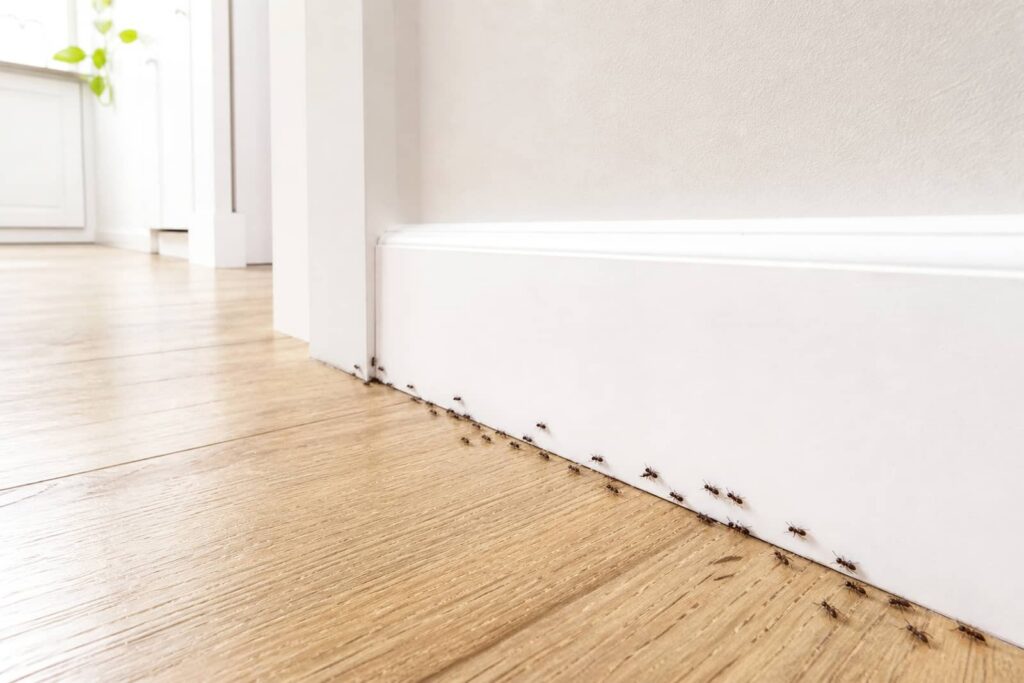
Watch infestation signs: trails, nests, winged swarmers, and wall void activity mean the problem’s spreading.
Call sooner if you see multiple rooms affected or food contamination.
A pro can inspect, locate nesting sites, and apply targeted treatment options that protect your home and keep your household in the loop.
You don’t have to manage repeated invasions alone; expert help gives you a clearer path to lasting control and peace of mind.
Frequently Asked Questions
How Do I Identify the Ant Species Invading My Home?
You identify the ant species invading your home by noting ant characteristics like size, color, and waist shape, then observing species behavior, such as trail patterns, nesting sites, and preferred foods, to narrow the match.
Are Ant Baits Better Than Sprays for Long-Term Control?
Bait beats spray for long-term control: ants carry it home, so you attack the colony. You’ll usually get better bait effectiveness and less spray longevity. Like a chain, your best link is patience and placement.
Can Ant Colonies Survive Inside Wall Voids Year-Round?
Yes, you can expect ant colonies to survive inside wall voids year-round if moisture, warmth, and food persist. You’ll need to understand ant colony behavior and wall void survival to target hidden nesting sites effectively.
What Signs Show Ants Have Already Nested Indoors?
You’ll spot nesting indicators like repeated indoor trails, sawdust-like debris, and winged ants. They’re often near food sources and moisture attraction points. Check wall voids, baseboards, and cabinets for persistent activity.
How Long Does Professional Ant Treatment Usually Last?
Professional ant treatment usually lasts weeks to months, depending on infestation severity and follow-up care. Your pest control provider should explain treatment duration clearly, and you’ll get better results when you keep monitoring and sealing entry points.
Conclusion
If you think ants only become a problem in summer, you’re missing the pattern. They follow heat, moisture, and access points year-round. Seal foundation cracks, keep kitchens clean, manage yard debris, and reduce indoor moisture to cut off their routes. In fall and winter, watch for shelter-seeking activity near warm, damp areas. If infestations keep returning, you’ll need a professional ant exterminator to break the cycle and protect your home.
Recent Posts
Do Mice Go Away on Their Own? The Honest Answer
You may not realize that mice often stay put even when a home feels busy
Mouse Droppings vs Rat Droppings: Identify Your Intruder
You may not know that droppings can tell you more than just whether rodents are
What Attracts Mice to a Clean House? 7 Surprising Culprits
Some homes report some mouse activity each year, and even a spotless house can still