
Contents
You want springtails gone, you want moisture controlled, and you want the problem to stay gone. Top rated springtail pest control starts with finding the damp source, identifying entry points, and applying targeted treatment where the insects live and breed. You’ll also need sanitation, ventilation, and sealing work to prevent reinfestation. The key is not just killing visible pests, but correcting the conditions that keep them coming back—and that’s where the process gets specific.
Key Takeaways
- Top-rated springtail pest control starts with identifying springtails and confirming moisture as the main cause.
- Effective treatment targets damp areas like bathrooms, crawl spaces, drains, and foundation edges.
- The best control methods include fixing leaks, improving ventilation, and lowering indoor humidity below 60%.
- Professional exterminators inspect entry points, standing water, and hidden moisture sources before applying targeted treatments.
- Long-term prevention relies on sealing gaps, removing wet mulch, and keeping indoor spaces dry and clean.
What Is Springtail Pest Control?
Springtail pest control is the process of identifying, reducing, and preventing springtail infestations in and around your home using targeted sanitation, moisture control, exclusion, and, when necessary, insecticidal treatment.
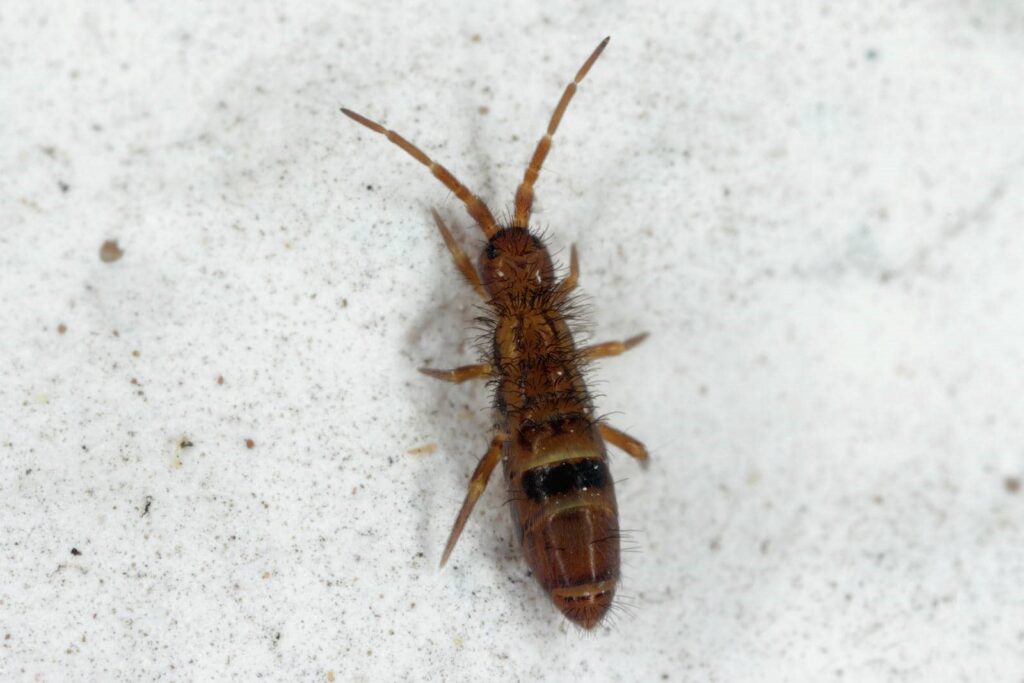
You start with pest identification, because springtails look like tiny jumping specks and often share springtail habitats such as damp soil, mulch, drains, and bathroom edges.
Next, you remove organic debris, dry wet surfaces, and seal gaps that let them enter.
If populations persist, you may need a labeled residual product applied to active areas.
This approach works best when you treat the source, not just the visible insects.
With the right method, you can keep your home cleaner, more comfortable, and better protected.
Why Springtails Keep Showing Up Indoors
Even after you clean up visible activity, springtails can keep reappearing indoors because the conditions that attract them often remain in place. You’re likely dealing with ongoing indoor moisture, which supports their survival and movement.
Springtail behavior is simple: they seek damp, stable microclimates near foundations, crawl spaces, bathrooms, and planters, then drift inside when humidity rises. If you’ve got condensation, leaks, wet mulch, or poorly vented areas, you’re giving them a reliable route and habitat.
They don’t need food scraps to persist; they need moisture gradients and shelter. When your space stays humid, new springtails can enter, settle briefly, and keep cycling through the same access points, which is why the issue can feel familiar and persistent.
Signs You Need Springtail Control Now
You need springtail control now when you keep seeing tiny, hopping insects along baseboards, in bathrooms, around drains, or near windows after cleaning.
These repeated sightings point to active indoor moisture, not random intrusion. Use springtail identification to confirm the pests: they’re small, soft-bodied, and often jump when disturbed.
If you notice clusters after mopping, leaks, or humid weather, your home’s conditions are supporting them. Effective monitoring helps you track where they appear, how often they return, and whether numbers are increasing.
Check thresholds near sinks, tub edges, crawlspaces, and window tracks. If you’re seeing them daily, you’re not dealing with a one-off event.
At that point, you belong in the group that acts quickly to stop the problem before it spreads.
How Exterminators Treat Springtails
Exterminators treat springtails by first locating and correcting the moisture source that’s allowing them to survive indoors.
You’ll get a focused inspection of crawl spaces, bathrooms, basements, window frames, and other damp zones where springtail behavior signals hidden humidity problems.
They then identify entry points, standing water, and material decay that support the infestation.
Using targeted extermination techniques, they may apply residual treatments to cracks, voids, and perimeter areas while minimizing exposure in living spaces.
They also recommend ventilation and drainage fixes so your home stays less inviting to future activity.
Because springtails don’t feed on structure, the goal is control through habitat correction and precise treatment, helping you feel confident that the problem is being handled by people who know what they’re doing.
Best Ways to Get Rid of Springtails at Home
The best way to get rid of springtails at home is to eliminate the moisture they depend on, then remove the conditions that let them enter and hide. You should fix leaks, run exhaust fans, and keep indoor humidity below 60%.
Vacuum visible clusters, then empty the canister outdoors. Seal gaps around windows, doors, pipes, and vents with caulk or weatherstripping. Remove wet mulch, leaf litter, and damp cardboard near the foundation.
Use natural remedies like diatomaceous earth in dry entry points, but keep it dry for it to work. These preventive measures help you protect your home and feel in control with your household.
If springtails keep returning, inspect crawl spaces, basements, and potted plants for hidden moisture sources and correct them promptly.
What Happens During Treatment Visits?
During a springtail treatment visit, a technician inspects the affected rooms, identifies moisture sources, and confirms where springtails are entering or aggregating.
You’ll get a focused treatment process that starts with measurement, not guesswork, so you know exactly what’s being addressed. The technician may apply targeted products to cracks, baseboards, and exterior entry points, then adjust the plan based on activity levels.
You can ask questions at any point, and a good customer experience includes clear explanations, estimated timing, and respectful service.
Your technician should document findings, note hotspots, and explain any follow-up needed. This visit is designed to reduce current activity efficiently while keeping you informed and confident, like you’re working with a team that understands your home’s needs.
How to Keep Springtails Out
Keeping springtails out starts with removing the conditions they need to survive, especially excess moisture around your home. You should inspect foundations, crawl spaces, and bathrooms for leaks, then seal them fast.
Run dehumidifiers where humidity stays high and improve ventilation in basements and attics. Keep gutters clear, extend downspouts, and grade soil away from walls so water doesn’t pool.
Inside, dry sinks, tubs, and laundry areas after use. Outdoors, trim dense mulch, leaf litter, and ground cover that create springtail habitats near entry points.
Tighten door sweeps and caulk gaps around pipes and vents. With consistent moisture management, you’ll protect your space, reduce pest pressure, and keep your home comfortable for everyone who lives there.
Frequently Asked Questions
How Much Does Professional Springtail Control Usually Cost?
You’ll usually pay $100–$300 for professional springtail control, depending on infestation size and treatment scope. Technicians use springtail identification techniques and effective prevention methods, so you’ll feel confident your home fits a protected community.
Are Springtail Treatments Safe for Pets and Children?
Yes, when you choose targeted treatments and follow labels, you can protect pets and children. As the saying goes, an ounce of prevention’s worth a pound of cure. Understand springtail behavior and favor natural remedies.
Do Springtail Exterminators Offer Same-Day Service?
Yes, you can often get same-day service from springtail exterminators. You’ll need quick pest identification and an understanding of springtail behavior so they can target moisture sources fast, helping you feel confident, informed, and included.
How Long Does Springtail Pest Control Take to Work?
You’ll usually see springtail control work within 24-72 hours, though full results may take 1-2 weeks, depending on springtail behavior and treatment effectiveness. You’ll notice fewer sightings first, then steady decline as hidden populations die.
Can Springtails Damage Furniture or Clothing?
No, you’re usually in the clear. Springtails don’t chew furniture or clothing, but springtail infestations can signal excess moisture. Focus on damage prevention: dry damp areas, seal gaps, and remove organic debris promptly.
Summary
Top-rated springtail pest control gives you a fast, precise fix for a tiny problem that can look like a full-scale invasion. You tackle moisture first, then seal entry points, improve airflow, and apply targeted treatments where springtails live. When you combine inspection, sanitation, and prevention, you don’t just reduce them—you shut down the conditions they explode in. With the right plan, your home goes from damp springtail runway to dry, controlled, and protected.
Recent Posts
What Ant Prevention Works Year-Round?
You seal cracks, you cut off food, and you dry out moisture, and ants lose
7 Tips for Springtail and Flour Beetle Control
Springtails and flour beetles often return because hidden moisture and tiny food spills keep feeding
5 Ways to Control Springtails and Red Flour Beetles
If you’re seeing springtails or red flour beetles, you need to act on both moisture