Contents
If you run food service in Michigan, pest control requirements go beyond reacting to a pest problem after it appears. You’re expected to control pests through a written, practical system that includes routine inspections, documented corrective actions, staff trained to report signs early, and treatments that fit food code limits. Miss one link, and an inspector may identify a broader sanitation failure. The real question is whether your kitchen would still meet requirements if a pest showed up tonight.
Key Takeaways
- Maintain a written pest control plan with daily and weekly inspections, assigned duties, and documented corrective actions.
- Seal entry points, keep doors closed, screen openings, and fix sanitation, storage, and waste issues promptly.
- Train staff to spot and report pest signs immediately, including droppings, gnaw marks, and live insects.
- Use only food-code-compliant treatments, such as approved traps or baits, and follow pesticide labels exactly.
- Keep pest logs, service reports, and maintenance records on site to stay inspection-ready in Michigan.
Michigan Food Code Pest Rules?
Michigan’s food code requires you to keep your food service operation free of pests and to prevent conditions that attract or allow them to enter, live, or breed.
You must follow pest control requirements for food service in Michigan by maintaining tight self-inspection habits, sealing entry points, and correcting sanitation, storage, and waste-handling issues quickly.
Keep doors closed when possible, screen openings, and service traps or devices according to a written plan.
If you use a licensed pest management provider, keep service reports, invoices, and corrective actions on site.
You’ll stay inspection-ready when you document what you found, what you fixed, and when you verified the fix.
That record shows you’re part of a compliant kitchen community that takes prevention seriously and protects guests, staff, and your license.
Common Pests to Prevent
The pests you’re most likely to face in a Michigan food service operation include rodents, cockroaches, flies, ants, and stored-product insects. You need to prevent each one because inspectors look for conditions that let them enter, feed, and breed.
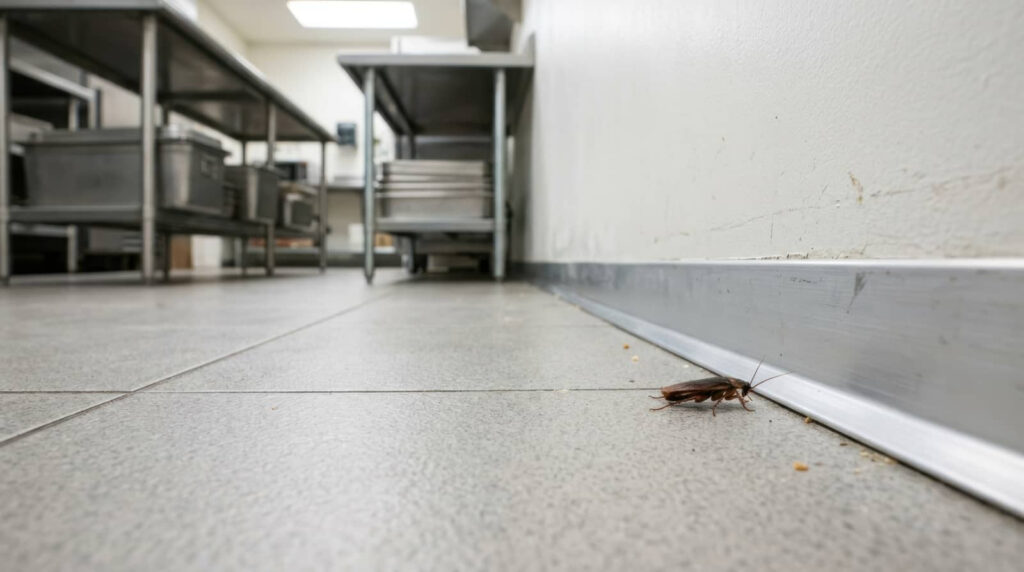
Rodents contaminate food and surfaces, while cockroaches signal harborage in warm, hidden areas. Flies can transfer pathogens from waste to prep zones, and ants often track to sugary or greasy residues. Stored-product insects may infest flour, grains, and dry goods before you notice damage.
You and your team should treat every sign seriously, because recurring activity can indicate a sanitation or structural issue. When you recognize the common targets, you protect compliance, support your staff, and help keep your operation inspection-ready year-round.
Build a Kitchen Pest Control Plan
Build a kitchen pest control plan by assigning clear prevention tasks, setting inspection frequencies, and documenting every corrective action.
You should map who checks doors, drains, storage, and waste areas, then hold each person accountable with written logs. Inspect high-risk points daily and broader service areas weekly, so you can catch activity before it becomes a citation.
Keep records of sightings, cleanup steps, repairs, and supervisor reviews in one file that’s easy to show during an inspection. Train your team to report droppings, gnaw marks, or entry gaps immediately.
When everyone knows the routine, you strengthen compliance and build a crew that protects the kitchen together. Review the plan after any pest event, layout change, or seasonal shift to keep it current and inspection-ready.
Choose Food-Code-Compliant Treatments
Once you’ve documented pest activity and corrected the source, choose treatments that fit food code limits and won’t contaminate food, equipment, or single-service items.
You should rely on approved methods such as targeted baits, traps, crack-and-crevice applications, and nonchemical controls when they’re appropriate.
Keep pesticides out of food-prep and storage areas unless the label and food code clearly allow it.
Always follow the product label, because the label is the law, and use only formulations meant for commercial food settings.
Protect utensils, linens, and packaging before treatment, and schedule applications so you can clean, sanitize, and resume service without risk.
When you select compliant tools, you help your team stay aligned, confident, and ready to meet Michigan expectations together.
What Inspectors Want to See
Inspectors want to see current pest control records, treatment logs, and any corrective-action documentation ready for review.
You should also keep visible pest prevention measures in place, such as sealed entry points, clean storage areas, and properly maintained traps or monitors.
If you can show both organized documentation and clear on-site prevention, you’re more likely to meet inspection expectations.
Inspection-Ready Documentation
A complete pest control file helps you stay ready for Michigan food safety inspections at any time. You should keep records organized, current, and easy to hand over, because inspectors expect proof of ongoing compliance, not promises.
Your file should include:
- service dates and technician names
- treatment reports with target pests
- corrective actions and follow-up notes
- trap maps, if your program uses them
- invoices and communication logs
When you can show a clean, consistent paper trail, you signal that you belong to a facility culture that takes sanitation seriously.
Keep signatures, timestamps, and findings aligned across documents. If you use a licensed pest management provider, retain every report they issue.
This documentation helps you answer questions quickly, reduce confusion, and support your food safety plan with confidence.
Visible Pest Prevention
With your pest control records organized, you also need the facility itself to show active prevention measures that Michigan inspectors can verify on sight.
You should seal gaps around doors, pipes, and utility penetrations, and keep door sweeps intact. Inspectors expect clean, dry floors, no standing water, and tightly fitted lids on waste containers.
Store food, packaging, and utensils off the floor and away from walls so you can clean and inspect behind them. You’ll also need screened windows, self-closing doors where required, and intact traps or monitoring devices placed according to your pest management plan.
If you see droppings, gnawing, or insects, act immediately and document corrective steps.
When your kitchen looks maintained and organized, you show your team and inspectors you belong among operators who take compliance seriously.
Train Staff to Spot Pest Signs
Train your staff to spot pest signs early so you can act before a minor issue turns into a food safety violation. You need a shared checklist, brief coaching, and clear reporting steps that fit your Michigan food code routine.
When everyone knows what to watch for, your team feels capable, connected, and ready.
- Droppings in storage, prep, or service areas
- Gnaw marks on packaging, labels, or paper goods
- Live or dead insects near lights, drains, or shelving
- Unusual odors, shed skins, or nesting debris
- Tracks, grease smears, or damaged product containers
Require immediate reporting, document each sighting, and verify follow-up. That consistency helps you stay inspection-ready and keeps your crew confident, accountable, and aligned.
Seal Entry Points and Remove Food Sources
Close every gap pests can use, from broken door sweeps and torn screens to unsealed pipe chases, wall penetrations, and gaps around utility lines. You’ll also want to fit tight lids on waste containers, keep exterior doors closed, and repair damaged weather stripping before insects or rodents find a path inside.
Inside, remove standing crumbs, grease, and spilled ingredients from floors, shelving, drains, and under equipment, because pests feed on what’s left behind. Store dry goods in sealed containers and rotate stock so you don’t leave forgotten product to spoil.
Clean mop sinks, dumpster areas, and prep spaces on a set schedule, and move recyclables out promptly. When you control access and food, you help your team stay aligned, protected, and audit-ready.
Stay Inspection-Ready Year-Round
You need ongoing pest monitoring with documented findings so you can spot trends before they become violations.
Keep a maintenance checklist for traps, drains, doors, and storage areas, and verify each item on a set schedule.
Train staff to report droppings, gnaw marks, live pests, or damaged screens immediately so you can correct issues before an inspection.
Ongoing Pest Monitoring
Ongoing pest monitoring keeps your food service operation inspection-ready by catching activity early and documenting the control measures you use throughout the year.
You protect your team, guests, and reputation when you track trends, verify contractor findings, and respond before minor issues become violations. Use a consistent routine that fits your operation and supports Michigan food code expectations.
- You notice droppings, gnaw marks, or live pests sooner.
- You reduce the chance of recurring citations.
- You strengthen your records for inspectors.
- You show your staff that vigilance matters.
- You build confidence in a compliant workplace.
When you stay alert, you’re part of a professional standard that values cleanliness, accountability, and shared responsibility.
Maintenance Checklists
A well-built maintenance checklist helps your food service operation stay ready for Michigan inspections by turning pest prevention into routine work.
You should verify door sweeps, screens, seals, and self-closing hardware each shift, because small gaps invite pests. Check drains, grease traps, and floor areas for standing water, debris, and cracks that need repair.
Inspect storage rooms for tight-fitting lids, elevated product, and clear spacing from walls so you can clean and observe easily. Confirm lights, dumpsters, and exterior entry points stay functional and tidy.
Log each task, note corrective actions, and assign a completion date. When you follow the same checklist every week, your team builds a shared standard, protects compliance, and keeps your operation inspection-ready year-round.
Staff Reporting Routines
When staff spot pest activity or sanitation issues, they should report it immediately so managers can investigate before it becomes a compliance problem.
You need a clear, no-delay routine that fits Michigan food code expectations and keeps your team aligned. Use one channel, one log, and one follow-up owner so nothing slips.
- See droppings, gnawing, or live insects? Report it now.
- Find spills, trash overflow, or standing water? Log it.
- Notice damaged screens, gaps, or doors? Flag it.
- Tell supervisors where, when, and what you observed.
- Confirm corrective actions and record completion.
This routine protects your license, supports inspections, and helps your team feel accountable together.
Make reporting normal, and you’ll stay ready year-round.
Frequently Asked Questions
Who Must Keep Pest Control Records in a Michigan Food Service Operation?
You must keep pest control records if you run the food service operation; you’re responsible for documenting treatments, inspections, and corrective actions. Your pest management provider should also give you reports to retain for inspections.
How Long Should Pest Control Documentation Be Retained for Inspections?
You should retain pest control documentation as long as your records policy or local inspector requires; keep it readily available, complete, and organized so you can show compliance, answer questions, and stay inspection-ready year-round.
Are Professional Pest Control Services Required for All Michigan Restaurants?
No, you don’t need a professional pest control service for every Michigan restaurant, but you do need an effective, documented pest management program, prompt corrective action, and conditions that keep inspections satisfactory and compliant.
What Licenses Should a Pest Control Provider Have in Michigan?
You should verify Michigan’s pesticide applicator credential, pest-control business license, and any required commercial categories; your provider should also carry insurance, follow label law, and keep documentation so you’ll stay compliant, confident, and inspection-ready.
How Often Should a Written Pest Management Plan Be Updated?
You should update your written pest management plan whenever conditions change, and at least annually. Review it after inspections, pest findings, renovations, or service changes so you stay compliant, prepared, and inspection-ready year-round.
Review
So, yes, your kitchen can’t run on hope and a sticky trap. To stay compliant in Michigan, you’ll keep a written pest control plan, train staff to report droppings and live pests fast, and use only food-code-compliant treatments. Seal cracks, store food properly, document everything, and don’t wait for an inspector to discover your “surprise tenants.” If you stay consistent, you’ll protect your license, your guests, and your reputation.
Recent Posts
How Often Should a Business Have Pest Control? Service Schedules by Industry
You may not realize that pest control frequency isn’t just about sightings; it’s often tied
Pest Control for Restaurants: Passing Inspections and Protecting Your Reputation
If you run a restaurant, pest control is about more than stopping bugs and rodents.
Commercial Pest Control: Protecting West Michigan Businesses
Like a silent leak in a warehouse, pests can spread trouble before you notice. If