
Contents
If you’ve noticed small moths fluttering around your kitchen, it’s likely you’re dealing with Indian meal moths. These pests can quickly infest your pantry, feeding on various dry goods. Identifying their presence early is vital to preventing a larger problem. By understanding common sources of infestation and effective treatment methods, you can regain control of your home. Let’s explore the best strategies to tackle this issue effectively.
Key Takeaways
- Regularly inspect pantry items for signs of Indian meal moths, such as webbing, larvae, and fecal pellets.
- Store dry goods in airtight containers to prevent infestations and protect from existing moths.
- Use homemade traps with apple cider vinegar and dish soap to effectively reduce moth populations.
- Maintain cleanliness by vacuuming pantry areas and promptly disposing of old or expired food items.
- Seek professional extermination if infestations persist or health risks arise from contamination.
Identifying Indian Meal Moths in Your Home
How can you tell if you have an Indian meal moth infestation in your home? Start by observing their behavioral patterns. These pests typically fly in a zigzag manner, often visible near food sources, especially in kitchens or pantries.
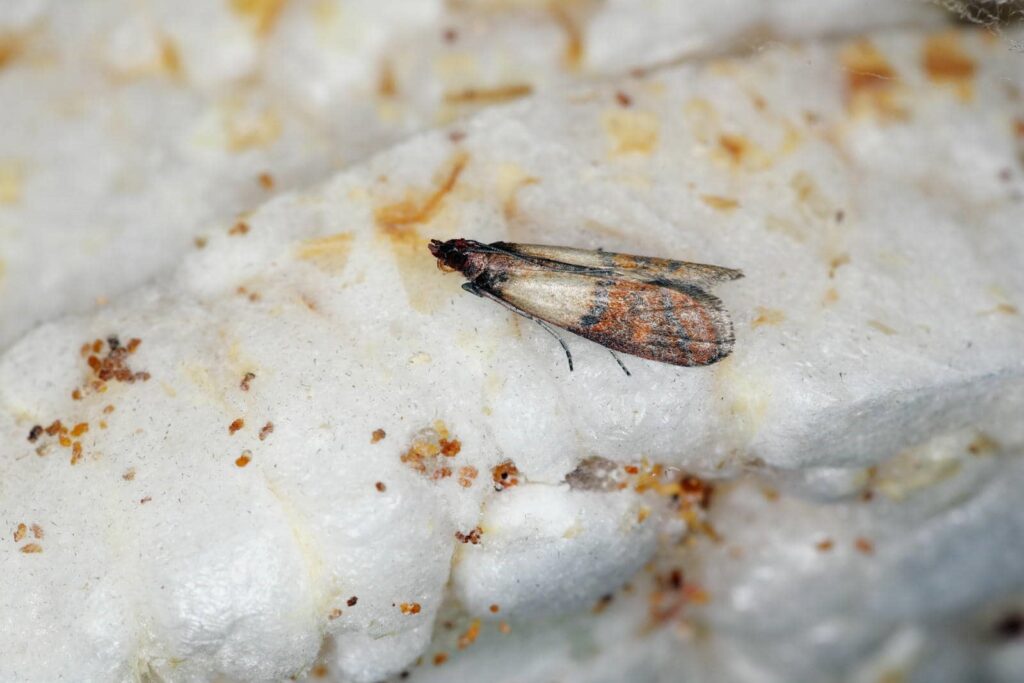
For visual identification, look for adult moths measuring about 1/2 inch long, featuring a distinctive coppery-brown color on their wings. You might also notice their larvae, which are small, white caterpillars that spin webbing in food containers.
Infestation signs include tiny holes in packaging or fecal pellets resembling black pepper.
If you spot these indicators, it’s vital to act promptly. Addressing an Indian meal moth infestation early can prevent it from spreading and help maintain a healthy home environment.
Common Sources of Infestation
Indian meal moths often invade homes through various common sources, making it vital to identify and address these entry points.
You may find these pests lurking in your kitchen, particularly in common pantry items like grains, flour, and dried fruits. Infested food sources can be difficult to spot, as the larvae often feed inside sealed packages. Inspect all food items regularly, especially those that have been open for a while.
Additionally, check for signs of infestation in pet food, birdseed, and other stored goods.
Remember that Indian meal moths can also enter your home through open windows or doors, so maintaining proper sealing is essential.
Effective Prevention Strategies
To effectively prevent an Indian meal moth infestation, you should focus on maintaining a clean and organized pantry. Start by regularly inspecting your stored food items, particularly grains, nuts, and dried fruits. Discard any infested products immediately and check for hidden larvae or webbing.
Implementing prevention tips like sealing containers with tight-fitting lids can greatly reduce the risk of infestation. Additionally, consider using airtight storage bins for all dry goods.
Keep your pantry dust-free and vacuum regularly to eliminate any eggs or larvae that may be present. Proactive measures also include monitoring your pantry’s temperature and humidity levels, as moths thrive in warm, moist environments.
Finally, establish a routine to review and rotate your pantry items, ensuring you use older products first. By following these steps, you’ll create an inhospitable environment for Indian meal moths, fostering a sense of security in your home.
Natural Remedies for Treatment
While traditional pest control methods can be effective, many homeowners prefer natural remedies for treating Indian meal moth infestations.
One of the most popular approaches involves herbal treatments. You can use essential oils like peppermint or lavender, which repel moths and create a pleasant aroma in your kitchen. Simply mix a few drops with water in a spray bottle and apply it to areas where you’ve noticed moth activity.
Another useful strategy is creating homemade traps. You can easily make a trap using a jar filled with apple cider vinegar and a few drops of dish soap. The vinegar attracts the moths, while the dish soap breaks the surface tension, causing them to drown.
Place these traps in problem areas to reduce the moth population effectively. By implementing these natural remedies, you can reclaim your space while minimizing chemical exposure and fostering a healthier home environment.
Chemical Solutions and Their Applications
When dealing with Indian meal moth infestations, many homeowners find that chemical solutions can provide a swift and effective means of eradication. Specifically, insecticides designed for pantry pests often yield high treatment effectiveness.
You should look for products containing pyrethrins or neonicotinoids, as these compounds target adult moths and larvae while minimizing risks to your food supply.
To apply these chemical solutions, ensure you follow the manufacturer’s instructions closely. Spraying in areas where moths are commonly found, such as cupboards and pantry shelves, can be particularly beneficial.
Additionally, using pheromone traps alongside chemical applications can enhance your control efforts by disrupting mating patterns.
Remember to ventilate the treated areas well after application, ensuring a safe environment for you and your family.
Cleaning and Maintenance Tips
Regular cleaning and maintenance are essential in preventing and controlling Indian meal moth infestations.
Start by establishing a cleaning frequency that suits your home environment, ideally weekly for high-risk areas like kitchens and pantries. Use a maintenance checklist to ensure you’re covering all bases.
Focus on vacuuming corners, cracks, and crevices where moths might hide, and don’t forget to clean behind appliances.
Check food items regularly for signs of infestation; discard any infested products immediately.
Wipe down surfaces with a mixture of vinegar and water to deter further pest activity.
Additionally, store dry goods in airtight containers to limit moth access.
When to Call a Professional Exterminator
If you notice signs of a severe infestation, such as a sudden increase in moths or larvae, it’s time to contemplate professional help.
Persistent recurrence after DIY treatments indicates that the problem may be more extensive than you can handle alone.
Additionally, if you’re concerned about health risks related to contamination, calling an exterminator is an essential step.
Severe Infestation Signs
Recognizing the signs of a severe Indian meal moth infestation is essential for effective management.
When you notice these indicators, it’s vital to assess infestation severity and proceed with a damage assessment.
Here are three signs to watch for:
Visible larvae: Spotting small caterpillars crawling in your pantry or on food packaging indicates a significant problem.
Webbing or silk threads: Finding webbing in food items or corners of cabinets is a clear sign of an advanced infestation.
Increased adult moth activity: Seeing large numbers of adult moths flying around your kitchen suggests that immediate action is necessary.
If you observe these signs, don’t hesitate to call a professional exterminator to handle the situation effectively.
Persistent Reoccurrence Issues
Although you may have taken steps to eliminate Indian meal moths, persistent reoccurrence issues can signal that your efforts aren’t enough.
If you’re noticing reoccurrence patterns despite your treatment, it’s essential to assess your approach. These pests have specific infestation cycles, and if not fully eradicated, they can reappear quickly.
Look for signs such as continued webbing, adult moth sightings, or larvae in food storage areas.
If you’ve followed DIY methods without success, it might be time to call a professional exterminator. They possess the expertise and tools necessary to identify hidden breeding grounds and implement targeted strategies.
Don’t let these pests take over your home; reaching out for help can restore your peace of mind.
Health Risk Concerns
Indian meal moths can pose significant health risks, especially if infestations are left untreated.
These pests compromise food safety by contaminating your pantry items, leading to potential health issues. Here are three key concerns to take into account:
Allergic Reactions: Some individuals may develop allergies to moth larvae or their droppings, leading to respiratory issues.
Food Contamination: Moths can infest grains, cereals, and other food products, making them unsafe to consume.
Bacterial Growth: Decomposing moths can introduce harmful bacteria into your food supply.
If you notice signs of a severe infestation, it’s essential to call a professional exterminator.
They can ensure effective removal and help mitigate any health risks associated with your home’s food safety.
Recap
By taking proactive steps, you can tackle Indian meal moth infestations before they take over your pantry. Remember, an ounce of prevention is worth a pound of cure—regular cleaning and careful storage go a long way. Utilize natural remedies to manage any lingering issues, but don’t hesitate to call in a professional if the problem persists. With diligence and the right strategies, you can keep your home moth-free and your pantry safe.
Recent Posts
Mouse Droppings vs Rat Droppings: Identify Your Intruder
You may not know that droppings can tell you more than just whether rodents are
What Attracts Mice to a Clean House? 7 Surprising Culprits
Some homes report some mouse activity each year, and even a spotless house can still
How Do Exterminators Get Rid of Mice? A Look Inside the Process
When you call an exterminator for mice, the process starts with a careful inspection to