
Contents
Indian meal moths can lay hundreds of eggs, often going unnoticed until they become a significant problem. To effectively combat these pests, it is crucial to understand their behavior and the best management practices. By implementing a few expert tips, you can address current infestations and prevent future ones. Let’s explore the key strategies that can protect your pantry from these persistent invaders.
Key Takeaways
- Seal all dry foods in airtight containers to prevent Indian meal moth access and reproduction.
- Maintain a clean pantry by regularly vacuuming shelves and removing food debris.
- Inspect new food purchases for signs of moths before bringing them home.
- Use pheromone traps to monitor and reduce moth populations effectively.
- Deep clean pantry areas, eliminating eggs and larvae, and reorganize food storage for better protection.
Identifying Indian Meal Moths
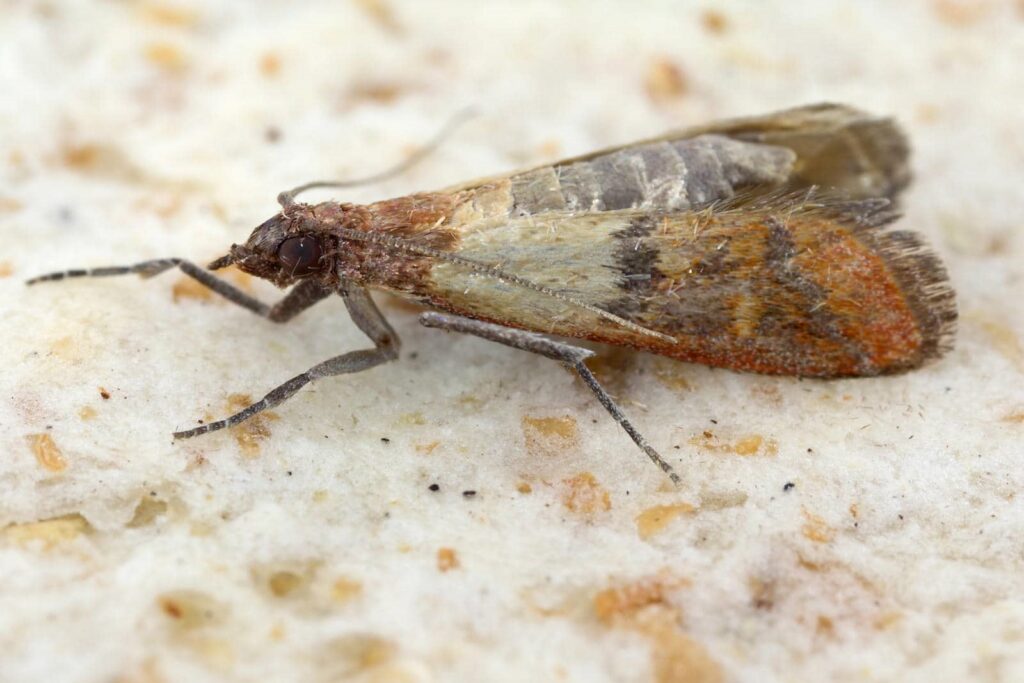
To identify Indian meal moths, you should first look for their distinctive appearance. These pests typically have a wingspan of about ½ to ¾ inch, with forewings that are reddish-brown or gray, often marked with a coppery sheen. The hindwings are lighter and more delicate.
During the moth lifecycle, you’ll notice that larvae are small, caterpillar-like creatures that can range in color from creamy white to greenish. Pest identification is essential, as these larvae are the main offenders, infesting your stored grains and food products. You might find them in flour, cereals, or dried fruits.
Additionally, look for webbing or fine silk threads, which indicate their presence. Regularly checking your pantry can help you catch them early. Understanding their characteristics ensures you’re equipped to recognize and address any potential infestations effectively, fostering a pest-free environment in your home.
Preventative Measures to Avoid Infestation
While it may seem challenging to keep Indian meal moths at bay, implementing effective preventative measures can substantially reduce the risk of infestation. By focusing on smart food storage and proactive pest control, you can create an environment that deters these pests.
Seal Food Properly: Use airtight containers for all grains and dry foods to keep moths out. This limits their access to potential food sources.
Maintain Cleanliness: Regularly clean your pantry and kitchen. Remove any spilled food, and vacuum shelves to eliminate eggs and larvae.
Inspect New Purchases: Before bringing home any food, inspect packages carefully for signs of moths or damage. This helps prevent introducing them into your home.
Effective Trapping Techniques
Even with preventative measures in place, you may still encounter Indian meal moths. To effectively manage their presence, consider using trapping devices equipped with pheromone lures. These lures mimic the natural scents released by female moths, attracting males and disrupting their breeding cycle.
Choose traps designed specifically for Indian meal moths; they’re easy to use and can be placed in areas where you’ve spotted activity. Position them near food sources, pantry shelves, or entry points to maximize effectiveness.
Regularly check and replace traps as needed, ensuring they remain effective. It’s also beneficial to monitor the number of moths captured, helping you gauge the infestation level.
Safe Removal and Cleanup Strategies
Although discovering Indian meal moths in your pantry can be unsettling, safe removal and cleanup are crucial for restoring a pest-free environment.
Follow these steps to ensure an effective process:
Empty your pantry: Remove all items, checking for signs of infestation. Discard any affected food, sealing it in a plastic bag to prevent spreading.
Deep clean: Use a mixture of water and vinegar or natural remedies like essential oils to wipe down shelves, corners, and any cracks. This helps eliminate eggs and larvae.
Reorganize and store: Once everything is clean and dry, store food in airtight containers to deter future infestations.
Long-term Management and Monitoring Solutions
To effectively manage Indian meal moths in the long term, it’s essential to implement proactive monitoring and prevention strategies.
Start by regularly inspecting your pantry and food storage areas for any signs of infestation. Use traps specifically designed for Indian meal moths to monitor populations and identify potential hotspots.
Adopt sustainable practices by sealing food in airtight containers and maintaining cleanliness to eliminate potential breeding grounds.
Consider integrating pest control measures that emphasize non-toxic options, such as diatomaceous earth or natural repellents. This approach addresses the current issue and fosters a healthier environment.
Engage with your community by sharing experiences and solutions, as a collaborative effort often yields better results.
Wrap-Up
By embracing these expert strategies, you can gracefully reclaim your pantry from the unwelcome presence of Indian meal moths. With a little vigilance and a proactive approach, you’ll create a serene space free from these pesky intruders. Remember, it’s not just about getting rid of them; it’s about crafting a lasting environment that deters them from returning. Your pantry will be clean and a haven for your food, allowing you to store it with confidence.
Recent Posts
Mouse Droppings vs Rat Droppings: Identify Your Intruder
You may not know that droppings can tell you more than just whether rodents are
What Attracts Mice to a Clean House? 7 Surprising Culprits
Some homes report some mouse activity each year, and even a spotless house can still
How Do Exterminators Get Rid of Mice? A Look Inside the Process
When you call an exterminator for mice, the process starts with a careful inspection to