
Contents
If you’re dealing with Indian meal moth infestations, understanding effective natural solutions is essential. These pests can quickly compromise your stored food, making immediate action necessary. Exploring methods like essential oils, vinegar traps, and homemade deterrents can be both eco-friendly and efficient. Each approach has its strengths and weaknesses, and knowing which options work best can greatly impact your success. Consider the various strategies available and how they can be tailored to your specific situation.
Key Takeaways
- Essential oils like peppermint, lavender, and eucalyptus can repel Indian meal moths and disrupt their navigation with their strong scents.
- Vinegar traps, using apple cider vinegar and dish soap, effectively capture adult moths and disrupt pheromone trails.
- Create homemade traps with equal parts water and vinegar, covered with plastic wrap and small holes for moth entry.
- Dried bay leaves placed in the pantry act as a natural deterrent against moths while also adding flavor to dishes.
- Regular cleaning and inspection of pantry items, along with using airtight containers, help prevent infestations and protect food supplies.
Understanding Indian Meal Moths
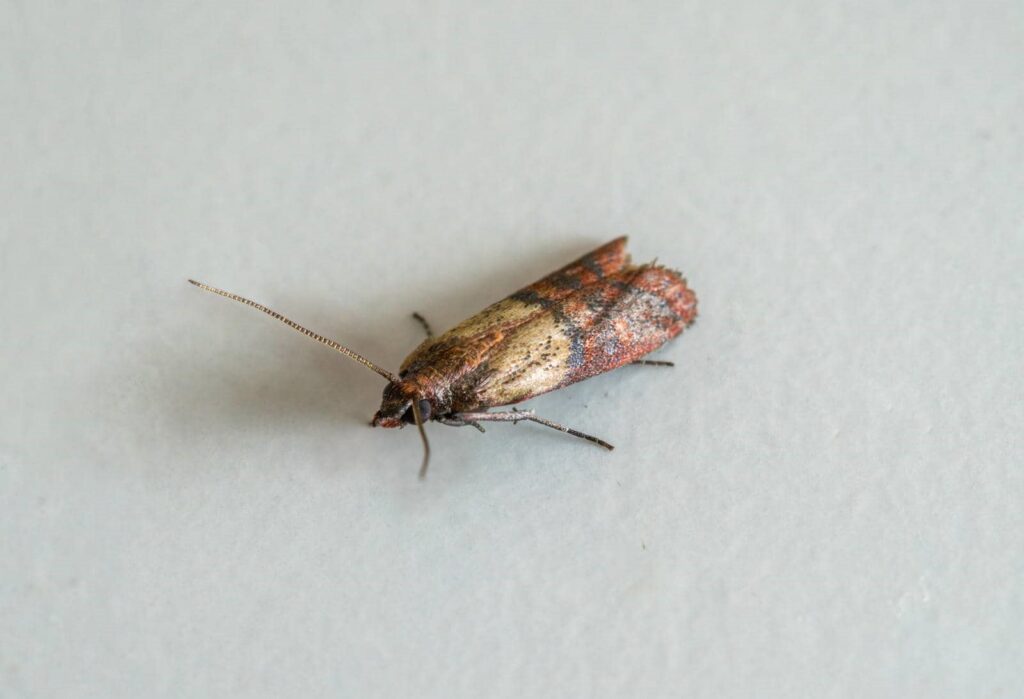
Although you may not notice them at first, Indian meal moths (Plodia interpunctella) can quickly become a significant pest in your pantry. Understanding their moth lifecycle is essential for effective management.
Adult moths lay eggs in food sources, often in grains or dried fruits. Once the larvae hatch, they feed voraciously, leaving behind webbing and frass, which can contaminate the food.
Their pest behavior is characterized by the larvae’s ability to thrive in various conditions, making them resilient. They tend to prefer warmer temperatures and can complete their lifecycle in as little as 30 days.
By recognizing these patterns, you can take proactive measures, such as proper food storage and regular pantry inspections.
This knowledge fosters a sense of belonging within your community, as sharing tips on pest management can help others maintain pest-free homes. Understanding Indian meal moths is the first step in reclaiming your pantry.
Identifying Signs of Infestation
To effectively identify an Indian meal moth infestation, you’ll need to look for specific visual clues, such as webbing or larvae in your food products.
Common food sources include grains, flour, and dried fruits, which are often targeted by these pests.
Additionally, observing adult moth behavior—like their flight patterns—can provide further insight into the severity of the infestation.
Visual Clues of Infestation
How can you effectively spot an Indian meal moth infestation in your pantry? Recognizing infestation signs is essential for managing these pests. Pay attention to the following visual clues:
Adult moths: Small, brownish-gray moths fluttering around your pantry.
Larvae: Tiny, white caterpillars often hidden in food packages.
Silken webs: Fine webs in corners or inside food containers indicating larvae presence.
Frass: Small, dark specks resembling pepper that indicate larvae activity.
Damaged food: Unusual holes or a powdery residue in stored items.
Understanding the moth lifecycle can help you identify these signs early.
Common Food Sources
Identifying common food sources is essential in managing Indian meal moth infestations. These pests thrive on various common pantry items, including grains, cereals, flour, and nuts, which serve as their favorite food sources.
If you notice webbing, larvae, or adult moths near these items, you may have an infestation. Pay close attention to sealed packages; even small openings can allow moths to infest the contents.
Inspect your pantry regularly, and consider storing susceptible foods in airtight containers to prevent access. By recognizing these food sources and potential signs of infestation, you’ll be better equipped to tackle the problem effectively and protect your kitchen from these unwanted pests, fostering a sense of belonging within your home.
Adult Moth Behavior
One of the clearest indicators of an Indian meal moth infestation is the behavior of the adult moths themselves. Observing these behaviors can help you identify an infestation early on.
Pay attention to the following signs:
- Moths fluttering erratically near lights, especially at night.
- Increased sightings of moths around food storage areas.
- Moths congregating in corners or along walls, indicating potential nesting.
- Evidence of moth mating, such as increased activity during warmer months.
- Finding small, silky webs or cocoons in food packages or storage.
Preventive Measures to Avoid Infestations
While it may seem challenging to keep your pantry free from Indian meal moth infestations, implementing preventive measures can greatly reduce the risk.
Start with regular inspections of your food items, checking for any signs of moths or larvae. Look closely at your grains, flours, and dried fruits, as these are common targets.
Next, utilize airtight storage containers for all susceptible foods. This protects your items from moths and keeps them fresh longer.
Make certain to clean your pantry thoroughly, removing any spilled food or debris that could attract pests.
Additionally, consider rotating your pantry items regularly, using the oldest products first. This helps ensure that nothing sits long enough to become a host for moths.
Essential Oils as Natural Repellents
If you’re looking for effective natural repellents against Indian meal moths, essential oils can be a powerful ally. Their aromatic properties create a pleasant environment and deter these pests.
When using essential oil blends, consider the following options:
Peppermint Oil: Known for its strong scent, it disrupts moth navigation.
Lavender Oil: Its calming aroma repels moths while providing a soothing atmosphere.
Eucalyptus Oil: The potent fragrance masks food smells that attract moths.
Cedarwood Oil: This oil smells great and acts as a natural insecticide.
Tea Tree Oil: Renowned for its antimicrobial properties, it can enhance your pest control efforts.
To implement these oils effectively, mix them with water in a spray bottle and apply them in areas where moths are likely to invade.
You’ll create a barrier that promotes both comfort and protection against infestations.
Diatomaceous Earth for Pest Control
Diatomaceous earth (DE) offers a unique and effective solution for controlling Indian meal moth infestations, as it works by dehydrating pests upon contact.
One of the key diatomaceous earth benefits is its safety for humans and pets, making it an ideal choice for households concerned about chemical pesticides.
To apply DE effectively, first identify areas where moths are active, such as pantries or storage spaces. Lightly dust DE in these locations, ensuring you cover all surfaces, including crevices and corners where moths may hide.
Reapply the powder after cleaning or if it becomes damp, as moisture reduces its efficacy. Regular monitoring helps you gauge the effectiveness of your application techniques and adjust as needed.
Using Vinegar to Eliminate Moths
Using vinegar can be an effective strategy for eliminating Indian meal moths.
You can implement the vinegar trap method to capture adult moths, while a vinegar spray solution can deter them from infesting your space.
Both methods leverage the strong scent of vinegar, making it a natural yet potent option for pest control.
Vinegar Trap Method
Though you may find it challenging to deal with an Indian meal moth infestation, employing a vinegar trap can effectively help eliminate these pests.
To maximize vinegar effectiveness, consider these key factors for trap placement:
- Use a shallow dish filled with apple cider vinegar.
- Add a few drops of dish soap to break the surface tension.
- Place traps in areas where you’ve noticed moth activity, like pantries or corners.
- Regularly check and replace traps to maintain effectiveness.
- Make certain traps are away from food sources to attract moths more effectively.
Vinegar Spray Solution
After employing vinegar traps to capture Indian meal moths, you might want to explore another effective method: a vinegar spray solution.
This solution utilizes vinegar’s effectiveness as a natural insect repellent. To create your spray, mix equal parts water and vinegar in a spray bottle. Apply it directly to areas where moths are prevalent, focusing on cracks, crevices, and potential entry points.
The acetic acid in vinegar disrupts the moths’ pheromone trails, making it harder for them to navigate. For ideal results, reapply the spray weekly or after cleaning surfaces.
This straightforward spray application complements your vinegar traps, enhancing your overall pest control strategy and fostering a sense of community by sharing these natural solutions with others facing similar challenges.
Creating Homemade Traps
If you’re dealing with an Indian meal moth infestation, creating homemade traps can be an effective and economical solution.
By utilizing simple trap materials and homemade bait, you can reduce moth populations without harsh chemicals. Here’s how to create your own traps:
- Use small jars or bowls as the trap base.
- Mix equal parts of water and apple cider vinegar for the bait.
- Add a few drops of dish soap to break the surface tension.
- Cover the jar opening with plastic wrap, securing it tightly.
- Poke small holes in the wrap to allow moths in but prevent their escape.
Place these traps in areas where you’ve spotted moths or their larvae.
Regularly check and replace the bait as needed.
This method captures adult moths and helps monitor the infestation’s severity, providing you with actionable insights for further pest control measures.
The Role of Bay Leaves in Pest Deterrence
Bay leaves serve as a natural deterrent against various pests, including the Indian meal moth. Their potent aroma contains compounds that disrupt the sensory receptors of these insects, thereby discouraging them from infesting your pantry.
Utilizing bay leaves can enhance your pest control strategy without resorting to chemical solutions. By placing dried bay leaves in your pantry or storage areas, you harness their natural deterrent properties effectively. This method protects your food supplies and offers bay leaf benefits, such as adding flavor to dishes when you’re not battling pests.
When you choose bay leaves, you align your pest management approach with eco-friendly practices, fostering a sense of belonging to a community that prioritizes natural solutions.
Implementing this simple yet effective strategy can considerably reduce the likelihood of moth infestations, allowing you to maintain a healthier, pest-free environment.
Maintaining a Clean Pantry Environment
Maintaining a clean pantry environment is essential for preventing Indian meal moth infestations, as clutter and food debris provide ideal breeding grounds for these pests.
Effective pantry organization and regular cleaning are key components in safeguarding your food storage.
To achieve this, consider the following practices:
- Declutter regularly: Remove expired items and consolidate storage.
- Store food properly: Use airtight containers to minimize exposure.
- Wipe surfaces: Clean shelves and corners to eliminate crumbs and spills.
- Check for signs: Regularly inspect for webbing or larvae that signal an infestation.
- Keep the pantry well-ventilated: Good airflow can deter moths from settling in.
Recap
In your quest to banish Indian meal moths, you might find that the most effective solutions are those that don’t involve harsh chemicals or complicated gadgets. Ironically, the key to pest control lies in simple, natural methods—like vinegar traps and essential oils—that protect your pantry and promote a healthier living environment. By embracing these eco-friendly strategies, you’ll defeat these pesky invaders and become an unwitting champion of sustainable pest management.
Recent Posts
Mouse Droppings vs Rat Droppings: Identify Your Intruder
You may not know that droppings can tell you more than just whether rodents are
What Attracts Mice to a Clean House? 7 Surprising Culprits
Some homes report some mouse activity each year, and even a spotless house can still
How Do Exterminators Get Rid of Mice? A Look Inside the Process
When you call an exterminator for mice, the process starts with a careful inspection to