
Contents
You may not know that red flour beetles can survive deep inside packaged food, not just on open shelves. If you’re seeing tiny reddish-brown insects in your pantry, the real problem is often a hidden source you can’t spot right away. Top exterminators don’t just spray; they trace infestation routes, treat all life stages, and cut off reinfestation before it spreads further.
Key Takeaways
- Choose exterminators who identify the infestation source, not just visible red flour beetles.
- Look for pest control professionals with proven pantry pest and stored-product insect experience.
- Ask for a written plan including inspection, sanitation, monitoring, and follow-up visits.
- Verify certifications, targeted treatment options, and clear explanations of chemical and nonchemical methods.
- Read reviews for repeat-service complaints and prioritize fast response to stop spread and reinfestation.
What Red Flour Beetles Look Like
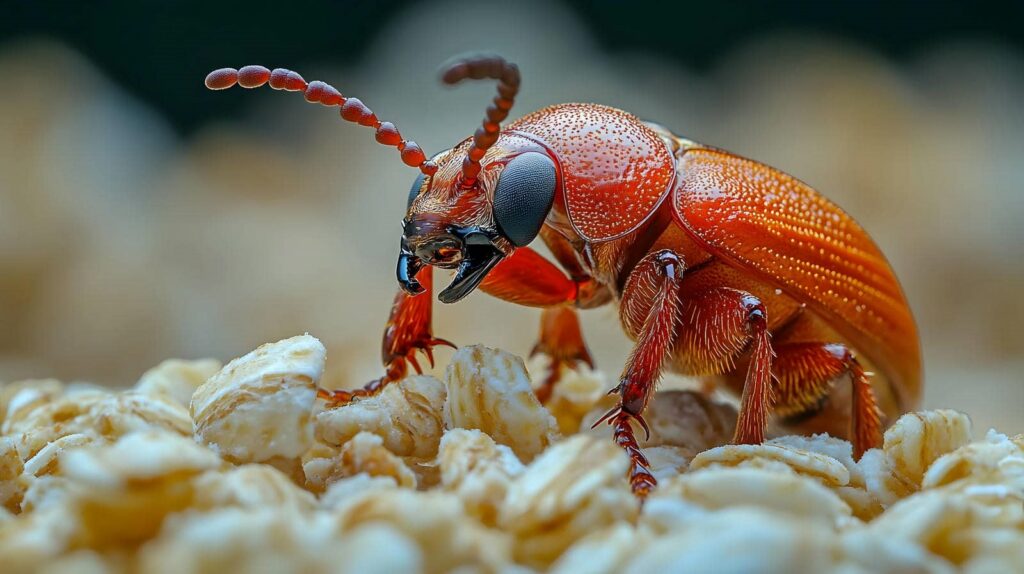
Red flour beetles are small, reddish-brown pantry pests with flat, elongated bodies and antennae that end in a gradual club. You can identify them by their physical characteristics: adults measure about 3 to 4 millimeters long, with smooth, narrow bodies and a shiny, hard shell.
Their color variations range from deep red-brown to lighter brown, depending on age and lighting. You’ll notice the head is visible from above, unlike some other pantry beetles, and the antennae are distinctly segmented.
Their legs are short and built for rapid movement across stored grains and flour. When you know these details, you can spot them quickly and feel more confident protecting your kitchen from infestation.
How Red Flour Beetles Enter Pantries
Red flour beetles usually enter your pantry in infested dry goods like flour, cereal, grains, and pet food.
They can also slip through tiny gaps around package seals, shelf cracks, and cabinet seams.
Once inside, they’ll spread quickly if you keep susceptible foods exposed.
Infested Dry Goods
Even if your pantry looks clean, red flour beetles can still arrive inside infested dry goods like flour, cereal, pasta, rice, spices, and pet food. You may bring them home already hidden in sealed or opened packages, and they can spread quickly once the product sits on your shelf.
For infestation prevention, inspect every bag or box before you store it. Look for live beetles, cast skins, clumped powder, webbing, or tiny moving specks.
Use airtight food storage containers to isolate vulnerable items and reduce access to fresh food. If you buy in bulk, portion supplies into smaller containers and check them often.
When you discard contaminated goods promptly, you protect your pantry and help your household stay in control together.
Tiny Entry Gaps
Tiny cracks around pantry doors, baseboards, window frames, and utility penetrations can give red flour beetles an easy route indoors. You need to inspect these seams closely, because adults slip through openings you might barely notice.
Focus on entry point identification by checking gaps near trim, unsealed pipes, torn screens, and damaged weatherstripping. Once you find them, seal each opening with caulk, mesh, or door sweeps to support pest entry prevention.
Keep stored grains in airtight containers, since beetles often spread after they gain access. Vacuum shelf edges and monitor sticky traps to catch early activity.
If you stay systematic, you’ll protect your pantry and keep your food space secure, clean, and confidently under control.
Signs Of A Red Flour Beetle Infestation
When you inspect stored grains, flour, or cereal, look for small reddish-brown beetles, shed skins, and fine powdery debris, since these are common signs of a red flour beetle infestation.
You may also notice a stale, musty odor, clumped product, or live adults crawling near packaging seams. These infestation symptoms often appear in warm, dry storage areas where pest behavior includes hiding in cracks and feeding on broken kernels.
Check nearby shelves, drawers, and lids, because beetles spread quickly from one container to another. If you belong to a household or business that stores dry foods, monitoring these cues helps you act early.
Frequent sightings, larvae, or damaged packaging mean you’re dealing with an active problem that needs prompt attention.
Best Ways To Kill Red Flour Beetles
First, you should identify and discard any infested food, since red flour beetles spread quickly through contaminated dry goods.
Next, seal cracks, store ingredients in airtight containers, and sanitize shelves, cabinets, and pantry surfaces to remove eggs and residue.
Then apply targeted treatments, such as approved insecticides or professional pest control, to eliminate remaining beetles and prevent reinfestation.
Identify Infested Food
Inspect your pantry and discard any food that shows live beetles, larvae, shed skins, or fine powdery frass, since red flour beetles infest grain-based products most often. You’re identifying infested grains before pantry pests spread through your stored foods.
Check flour, cereal, pasta, rice, oats, and baking mixes for movement, clumping, or a stale odor. Then examine pet food, birdseed, and spices, because these items can harbor hidden activity.
- Pour a sample onto a light tray and watch for tiny reddish-brown beetles.
- Sift suspect products to reveal larvae, eggs, and debris.
- Separate damaged packages from clean stock so you can act fast.
When you spot contamination, remove it from your food area immediately. This quick screening helps you protect your kitchen and stay in control together.
Seal And Sanitize
Seal cracks, seams, and food containers to cut off red flour beetles’ access to hidden grain and to keep survivors from reinfesting your pantry.
Then vacuum shelves, corners, and baseboards, and dispose of the bag or canister contents outdoors.
Wipe every surface with hot, soapy water to remove dust, flour, and egg debris. Use sanitation practices that leave no residue, because even small spills support renewed activity.
Inspect package seams, cabinet joints, and wall penetrations, then reinforce sealing gaps with airtight bins, tight lids, and caulk where needed.
Store dry goods in clean, sealed containers and rotate stock so older food doesn’t sit unnoticed.
When you keep storage dry, clean, and closed, you help your home stay beetle-free and protect the pantry you share.
Apply Targeted Treatments
Once you’ve cleaned and sealed the area, apply a targeted insecticide labeled for pantry pests to cracks, crevices, and other harborage sites where red flour beetles hide.
Use targeted pesticides only as directed, and keep the treatment focused so you don’t contaminate food or surfaces. In an integrated pest approach, you’re part of the control system, not just a bystander.
Treat baseboards, shelf joints, and cabinet corners.
Inspect seams, gaps, and stored-product packaging weekly.
Reapply only if the label and infestation level justify it.
Choose formulations that reach hidden zones, then monitor with traps.
You’ll protect the space, support your household’s food safety, and stay aligned with a practical, evidence-based defense against reinfestation.
What Pro Treatment Includes
Professional red flour beetle treatment starts with a targeted inspection to locate active infestations, breeding sources, and conditions that support survival.
You get a structured plan that uses professional methods, including precise dusts, residual insecticides, and direct crack-and-crevice applications where beetles hide.
Technicians may treat shelving, seams, stored-product zones, and nearby voids to interrupt every life stage. They also remove visible insects and debris during service to improve treatment effectiveness and limit reinfestation pressure.
You’ll receive clear service notes so you know what was treated and why.
This approach works because it concentrates control where beetles actually thrive, not where they merely appear.
With expert application and follow-up evaluation, you stay aligned with a team that handles the problem thoroughly and efficiently.
How To Prevent Their Return
To keep red flour beetles from returning, you need to remove the conditions that let them breed and feed. Use preventive measures that target moisture, crumbs, and neglected packaging. You’re part of a community that protects clean storage, so stay disciplined:
Seal grains, flour, and pet food in airtight storage solutions.
Vacuum shelves, baseboards, and corners often; empty the vacuum outdoors.
Rotate older products first, inspect new packages, and discard infested items fast.
Keep pantry humidity low and repair leaks quickly. Wipe spills immediately, because even small residues can sustain hidden activity.
Check cardboard, paper sacks, and cracks where beetles can shelter. If you maintain strict sanitation and tight storage habits, you’ll cut off their food supply and reduce the chance they settle back in.
When DIY Control Fails
If beetle activity continues after repeated cleaning, sealing, and discarding infested food, your DIY control has likely missed a hidden source.
You should inspect cracks, wall voids, and stored-product equipment for larvae, cast skins, and fine flour dust. At this stage, traps and over-the-counter sprays often won’t reach the breeding site.
You can try targeted chemical alternatives only if labels allow food-area use, but they rarely solve an established infestation alone.
Professional strategies focus on source detection, thorough sanitation, and precision treatment that interrupts every life stage. That matters when you want your kitchen or facility to feel controlled again.
If beetles keep appearing, stop guessing and escalate early. Fast intervention limits spread, reduces waste, and restores confidence in your stored food environment.
How To Choose A Pest Pro
When beetle pressure keeps returning, you need a pest pro who can identify the source, not just treat the symptoms. Choose a company that documents inspections, storage risks, and sanitation gaps, so you know they’re solving the whole problem.
Verify pest control certifications and ask which species they target in flour, grain, and pantry zones.
Review exterminator reviews for repeat-service complaints and clear results.
Ask for a written plan with monitoring, sealing, and follow-up intervals.
Confirm they explain chemical and nonchemical options in plain terms.
You belong with a pro who answers fast, respects your space, and tracks outcomes. That level of precision protects your food, reduces reinfestation, and gives you confidence the job’s being handled right.
Frequently Asked Questions
Can Red Flour Beetles Damage Packaged Food Safety?
Yes, red flour beetles can contaminate packaged food and reduce safety by introducing frass, shed skins, and microbes. You should inspect packaging, isolate infested items, and practice pest prevention to protect your pantry and peace.
Do Red Flour Beetles Spread Quickly Between Apartment Units?
Yes, they can spread quickly between apartment units if you don’t act fast. You’ll want infestation prevention and regular unit inspections, because these beetles exploit shared walls, pantry goods, and unnoticed gaps to move.
Can Cold Temperatures Help Eliminate Red Flour Beetles?
Yes, cold temperatures can help eliminate red flour beetles if you use cold treatment correctly. You’ll need a sufficient freeze duration, typically several days, to kill all life stages and protect your stored foods.
Are Red Flour Beetles Harmful to Pets or Children?
Red flour beetles usually aren’t harmful to your pets or children, but you should still act fast. Their beetle behavior contaminates food, so use pest control and home remedies to protect your home and community.
How Long Do Red Flour Beetles Survive Without Food?
Typically, you’ll see red flour beetles survive about 2-3 months without food; their survival strategies conserve moisture and energy. Like a sundial in a storm, Red flour beetle lifespan drops fast without warm, stored grains.
Review
When you spot red flour beetles, you need to act quickly before they settle in and multiply. A top pest pro will inspect your pantry, trace the source, and use targeted treatments to clear the problem at every life stage. You’ll also get practical prevention steps to keep them from coming back. If your DIY efforts aren’t doing the trick, calling an experienced exterminator can help you restore order and protect your stored food.
Recent Posts
What Ant Prevention Works Year-Round?
You seal cracks, you cut off food, and you dry out moisture, and ants lose
7 Tips for Springtail and Flour Beetle Control
Springtails and flour beetles often return because hidden moisture and tiny food spills keep feeding
5 Ways to Control Springtails and Red Flour Beetles
If you’re seeing springtails or red flour beetles, you need to act on both moisture