
Contents
If you’ve noticed bees or box elder bugs around your home, you’re likely providing the conditions they need. Bees are drawn to nectar, pollen, water, and sunny flower-rich areas, while box elder bugs seek warmth, shelter, and box elder trees with seed pods. Certain plants, exterior surfaces, and moisture sources can make your property far more attractive than you’d expect, and the differences matter more than they seem.
Key Takeaways
- Bees are attracted to nectar, pollen, water, and diverse flowering plants, especially in sunny garden areas.
- Sugary spills, open compost, and fragrant blossoms can also draw bees nearby.
- Box elder bugs seek warmth, shelter, and overwintering sites on sunlit walls, siding, and protected seams.
- Box elder trees attract them because their seed pods and sap-rich seeds provide food.
- Cracks in roofs, windows, doors, and siding can attract both insects as shelter and entry points.
What Attracts Bees to Your Home?
Bees often come to your home when they detect reliable sources of nectar, pollen, water, or shelter nearby. You may draw them in with flowering plants that offer abundant pollen sources, especially if you keep blooms available across the season.
Open compost, sugary spills, and standing water can also increase visits because bees track scent and moisture efficiently. If your property includes cavities, loose siding, hollow stems, or unused structures, you may be providing nesting sites.
You’ll reduce activity by sealing gaps, trimming flowering weeds, and placing bee-friendly plants farther from doors and windows. When you understand these cues, you can manage your yard more predictably and support pollinators while keeping shared spaces comfortable for everyone.
Why Do Box Elder Bugs Gather on Houses?
While bees are drawn to nectar, water, and nesting opportunities, box elder bugs gather on houses for a different reason: they’re seeking warmth, shelter, and overwintering sites.
You’ll usually see them on sunlit walls, siding, and window frames as temperatures fall. This box elder behavior is part of seasonal migration, when adults leave tree hosts and move toward protected structures.
Your home offers stable microclimates, cracks, and surface heat that support survival through cold months. They don’t enter to feed on your house; they cluster there to reduce exposure and conserve energy.
You may notice large groups on south- and west-facing surfaces because those areas warm fastest. When spring arrives, they disperse outdoors again, resuming normal activity.
How Flowers, Light, and Water Draw Bees
You can attract bees by planting flowers that produce abundant nectar, since these blooms provide a direct food source.
You’ll also see more bee activity in sunlit garden areas because warmth increases foraging efficiency and flower visibility.
Moisture from shallow water features can further support bees by supplying hydration and creating favorable local microclimates.
Flower Nectar Sources
Flowering plants attract bees by supplying nectar and pollen, and bloom color, shape, scent, and nectar volume all influence which species visit.
You can support local pollinators by planting a range of native and cultivated species that stagger bloom times and offer reliable forage.
Bees show nectar preferences tied to floral structure, so tube-shaped, open, and clustered blossoms each serve different visitors.
High flower diversity increases the chance that your garden will meet varied feeding needs across seasons.
You’ll also see better use of resources when you group compatible plants, since bees learn efficient routes between abundant nectar sources.
Even small plantings can strengthen nearby bee activity if they provide consistent, accessible blooms.
Choose plants that fit your site, and you’ll create a dependable feeding network for bees.
Sunlit Garden Areas
Sunny, open garden areas usually draw more bees because direct light warms flowers, speeds nectar production, and makes floral cues easier for foragers to detect.
You can strengthen pollinator habitats by placing nectar-rich plants where sun exposure lasts at least six hours daily. In these brighter zones, bees navigate faster, visit more blooms, and use color and scent signals with greater accuracy.
You’ll also see that clustered plantings help insects move efficiently between flowers, which improves feeding success. Keep tall shrubs or structures from blocking light, and choose sites that dry quickly after morning dew.
When you design with consistent sun exposure, you give your garden a predictable foraging corridor that supports bee activity and helps your planting community feel more connected and resilient.
Moisture and Water Features
Moisture patterns strongly influence where bees forage, because nectar flow, pollen availability, and floral scent often increase when plants receive steady water and moderate humidity. You can boost attraction by improving water retention in soil and by keeping shallow water sources nearby.
A birdbath with stones gives bees safe landing spots and supports consistent drinking.
Mulch and compost hold moisture longer, so flowers stay productive through heat.
Ponds, drip lines, and damp edges raise habitat diversity, which lets you support more pollinators.
You’ll notice bees visiting irrigated blooms sooner than stressed ones, especially during dry afternoons.
Keep water clean, maintain gentle overflow, and place features near flowering plants. That setup helps your garden feel welcoming, balanced, and biologically active.
Why Box Elder Trees Attract Box Elder Bugs
You’ll notice box elder bugs gather on box elder trees because the trees produce sap-rich seeds that provide an accessible food source.
Female tree clusters can concentrate these seeds in dense areas, which makes feeding sites easier for the insects to locate.
This combination of seed availability and cluster density increases bug presence on the tree.
Sap-Rich Seeds
Box elder trees produce abundant, sap-rich seeds that draw box elder bugs in large numbers. You’ll notice these seeds as reliable sap sources, because they contain nutrients insects can tap quickly.
Different seed types mature in dense clusters, which creates a concentrated food zone and helps you understand why the bugs stay close to the tree canopy.
- You see fresh seed pods releasing moisture and sugars.
- You find bugs gathering where seed litter accumulates.
- You observe repeated feeding along sunlit branches.
This pattern can make your yard feel like part of a shared habitat, not an isolated space. When you know how these seeds work, you can predict bug activity more accurately and respond with confidence.
Female Tree Clusters
Female box elder trees produce the seed clusters that most strongly attract box elder bugs, because these trees generate abundant, nutrient-rich samaras during the growing season.
When you identify female tree species, you can predict where bugs’ll gather, since they feed on developing seeds and use the clustered fruit for shelter.
The tree cluster benefits include concentrated food access, stable microhabitats, and easier dispersal across nearby bark and foliage.
You’ll often see higher bug densities on these trees than on male trees, which don’t form seed clusters.
If you want to understand local infestations, inspect the canopy for hanging samaras and note seasonal seed production.
What Parts of a House Attract Bees and Bugs?
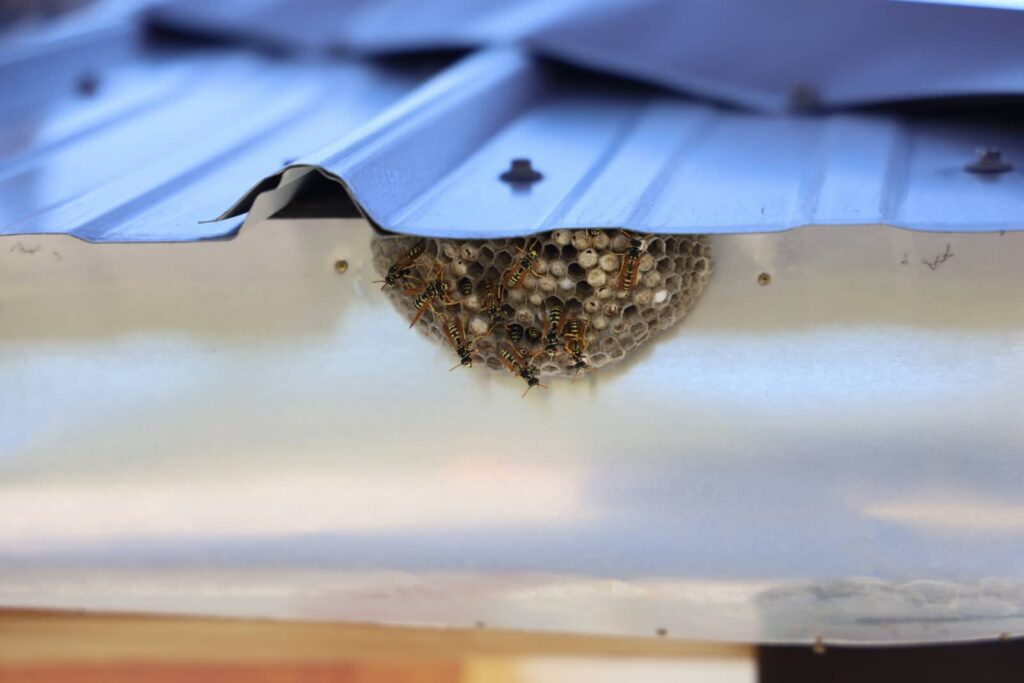
Bees and box elder bugs typically gather on exterior areas that offer warmth, shelter, and easy access points into the structure. You’ll see pest attraction increase where your home design creates gaps, shade, and dry surfaces.
Check these parts first:
- Roof eaves and soffits, where seams stay protected.
- Window frames and door trim, where tiny cracks let insects rest.
- Siding joints and utility penetrations, where openings stay stable.
You can reduce activity by sealing joints, repairing damaged screens, and keeping exterior finishes tight.
Light-colored walls and sun-exposed surfaces often draw more insects because they hold heat. If your house has clustered vents, loose fascia, or unsealed expansion gaps, it may feel inviting to these pests.
Staying proactive helps you protect your space and keep your household comfortable.
How to Tell Bees From Box Elder Bugs?
At a glance, you can separate bees from box elder bugs by body shape, movement, and color patterns. Bees have rounded, hairy bodies with obvious waist constriction, while box elder bugs look flatter, more elongated, and sharply outlined in red and black.
You’ll usually notice bee behavior as purposeful flight from flower to flower, with steady hovering and landing. Box elder bugs move more slowly, often clustering on warm surfaces, windows, or siding.
In bug identification, antennae and wings help too: bees carry translucent wings that fold over the back, and box elder bugs hold wings flat in an X pattern.
If you’re comparing a cluster, look for fuzz, segmentation, and movement style. Those details help you recognize your home’s visitors confidently.
How to Get Rid of Bees Safely
Once you’ve confirmed you’re dealing with bees rather than box elder bugs, the safest removal approach is to avoid direct contact and identify whether the insects are simply foraging or have established a nest.
You should keep pets and people away, then use a measured plan that fits your shared space.
- Observe from a distance and note entry points or cluster size.
- Apply natural repellents only to nearby surfaces, never to active bees.
- If a nest is present, contact a licensed beekeeper or pest professional for live relocation.
You’ll protect pollinators, reduce risk, and keep your household aligned with bee friendly alternatives.
If bees only visit flowers, leave them undisturbed and let them leave on their own.
How to Prevent Box Elder Bugs
To prevent box elder bugs, you need to remove the conditions that draw them to your property and block their access points.
Start your box elder prevention plan by sealing cracks around windows, doors, vents, and utility lines with caulk or weatherstripping. Trim female box elder, maple, and ash trees near structures, and keep leaf litter, seed pods, and debris away from foundations.
Reduce outdoor lighting at night, because these insects gather around bright sources.
Inside, vacuum sightings quickly and dispose of the contents outdoors. If you want extra protection, use natural repellents such as peppermint oil sprays around entry points, but reapply often.
Frequently Asked Questions
Do Bees and Box Elder Bugs Pose Similar Risks to People?
No, you don’t face similar risks. Bees can sting you, causing pain or allergies; box elder bugs rarely bite and usually signal bug infestations. You should manage each differently, because their health impacts differ.
Can Box Elder Bugs Damage My Home’s Structure?
No, box elder bugs usually won’t cause structural damage to your home. They may gather in box elder infestations, but they feed on sap outdoors and typically just shelter indoors without harming wood, framing, or insulation.
Are Certain Seasons Worse for Bee and Bug Activity?
Yes, you’ll usually see more activity in spring and late summer, when seasonal patterns and hive behavior shift. Warm weather boosts foraging, while box elder bugs often peak in fall as they seek shelter nearby.
Do Nearby Gardens Increase Bee Problems Around Houses?
Yes, nearby gardens can increase bee activity around your house if they provide pollen sources. With thoughtful garden design, you can direct foraging away from entry points and still support pollinators without feeling isolated.
When Should I Call a Professional for Bee or Bug Removal?
Call a professional when you spot a nest, swarm, repeated stings, or indoor infestations; don’t let the cat out of the bag by waiting. They’ll assess bee behavior and bug prevention safely and precisely.
Wrap-Up
In short, you’ll attract bees when your property offers nectar-rich flowers, steady water, and sunny, sheltered areas. You’ll see box elder bugs when box elder trees are nearby and warm exterior walls provide a resting site. If you manage flowering plants, remove standing water, and seal entry points, you can reduce both pests. Pay attention to seasonal patterns and species-specific habits, because a stitch in time saves nine when you’re preventing infestations.
Recent Posts
How Much Does Mice Extermination Cost in West Michigan?
In West Michigan, how much does mice extermination cost can vary significantly from one home
Do Mice Go Away on Their Own? The Honest Answer
You may not realize that mice often stay put even when a home feels busy
Mouse Droppings vs Rat Droppings: Identify Your Intruder
You may not know that droppings can tell you more than just whether rodents are