
Contents
A red flour beetle infestation can feel like a slow contamination spreading through your pantry. You’re dealing with Tribolium castaneum control, which means finding the source, removing infested food, cleaning hidden residues, and treating harborages where adults and larvae survive. Effective extermination isn’t just spraying; it’s a structured process that combines inspection, sanitation, targeted application, and monitoring. The details matter, and the next step determines whether they return.
Key Takeaways
- Red flour beetle extermination is the process of locating, removing, and treating Tribolium castaneum infestations in stored dry goods and pantry areas.
- It starts with sanitation, including discarding contaminated food, vacuuming spills, and cleaning shelves, seams, and cracks.
- Exterminators use residual treatments in hiding spots, such as cabinet joints, baseboards, and pantry gaps, where beetles breed and shelter.
- Monitoring traps and follow-up inspections confirm activity drops and help prevent reinfestation.
- Prevention includes airtight storage, low humidity, sealed entry points, and regular inspection of flour, cereal, and pet food.
What Is Red Flour Beetle Extermination?
Red flour beetle extermination is the targeted removal and control of Tribolium castaneum infestations in stored food products, pantries, mills, and other dry-goods environments.
You protect your inventory by combining sanitation, sealing, monitoring, and direct suppression methods that interrupt breeding and spread. In practice, you may use chemical treatments selected for food-handling settings, but you should apply them only according to label directions and site-specific safety rules.
Professional services can help you identify harborage points, treat hidden sources, and coordinate follow-up inspections.
You’ll get the best results when you remove contaminated material, clean cracks and equipment, and maintain dry conditions. This approach supports a healthier storage space and helps your team keep beetles from returning.
Signs of a Red Flour Beetle Infestation
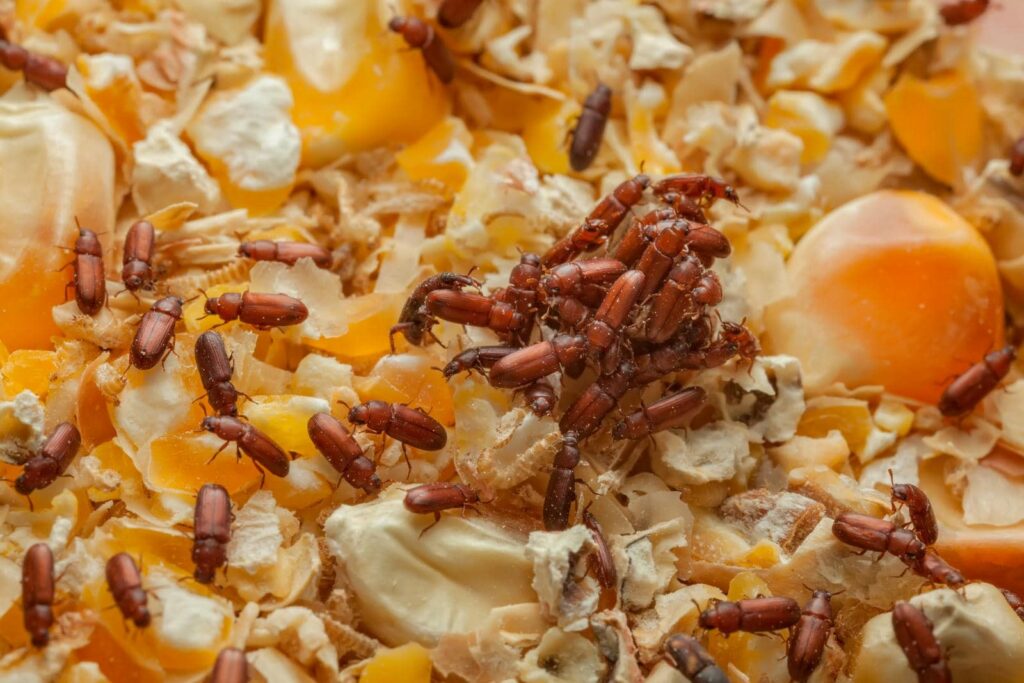
You can often spot a red flour beetle infestation by seeing small, reddish-brown adults or pale larvae near stored dry goods.
Check flour, cereal, and packaging for holes, clumping, or fine debris that signals feeding activity. If you find these signs, inspect nearby containers immediately and isolate affected products.
Visible Beetles And Larvae
Although they’re small, visible red flour beetles and their larvae are often the clearest sign of an infestation in stored dry goods. You may spot adults crawling on shelves, inside containers, or along seams where food sits undisturbed.
Larvae appear creamy white to yellowish and move steadily through fine debris, flour dust, or grain residue. Watching their larvae behavior helps you confirm active breeding, not just accidental entry.
Because the beetle lifecycle develops quickly in warm, sheltered spaces, seeing both stages together usually means the population is established. Check for movement near corners, lids, and folds in packaging.
If you’re seeing these insects, you’re not alone; this pest commonly spreads where dry ingredients stay accessible and overlooked.
Damaged Flour And Packaging
Damaged packaging often gives away a red flour beetle problem before you catch the insects themselves. You should inspect bags, boxes, and liners for pinholes, tears, or sealed seams that’ve been chewed open.
Inside, look for flour clumps, fine dust, and webbed residue; these signs mean larvae have fed and moved through the product. Use these checks to protect your pantry and support the same standards your household relies on.
- Check packaging materials for punctures and thinning.
- Sift flour to spot live beetles or cast skins.
- Apply flour preservation techniques: cool storage, airtight bins, and rotation.
If you see damage, isolate the product quickly, clean nearby shelves, and discard compromised flour. That helps your home stay secure and keeps infestations from spreading.
How Red Flour Beetles Get Indoors
Red flour beetles usually get indoors in contaminated grain, flour, cereal, or pet food that you bring into storage or the kitchen.
They can also enter through torn packaging, loose seams, and damaged containers, then spread into nearby products.
Once inside, they move through cracks and crevices in walls, cabinets, and baseboards, where they can hide and reproduce.
Contaminated Grain Sources
Contaminated grain often brings red flour beetles indoors before you ever notice an infestation. You can reduce that risk with careful grain inspection and steady pest management. Check bags, bins, and stored products for live insects, webbing, clumps, or fine dust.
If you find damaged grain, isolate it right away and remove it from your storage area.
- Buy from suppliers with documented sanitation.
- Store grain in dry, sealed containers.
- Rotate stock so older grain doesn’t linger.
When you monitor incoming grain closely, you protect your kitchen, pantry, or facility and help your team stay ahead of beetle activity. That simple routine keeps your space safer and supports everyone who relies on clean, usable food.
Entry Through Packaging
Even when grain looks clean at delivery, red flour beetles can still enter through packaging flaws and handling points. You should inspect packaging materials for pinholes, loose seams, torn corners, and incomplete seals before you store anything.
Beetles can ride in on sacks, liners, cartons, and reused containers, then spread after you open them. Choose sturdy packaging materials, and keep them closed until use.
Tight storage methods matter, too: rotate stock quickly, avoid overfilling bins, and isolate new shipments until you’ve checked them. If you handle bulk ingredients, clean transfer tools between loads so insects don’t move from one package to another.
When you and your team use consistent receiving checks, you lower the chance that beetles slip indoors with ordinary deliveries.
Cracks And Crevices
Small openings around your facility can let red flour beetles slip indoors and establish hidden infestations. You need to inspect floor-wall joints, utility penetrations, and gaps around doors, because these pests move through tiny cracks that you may miss during routine checks.
Prioritize crack sealing with durable caulk, gasket replacement, and tight thresholds to block access. Then add crevice cleaning to remove flour dust, spills, and debris that support breeding sites.
- Check shelving bases and baseboards for voids.
- Seal damaged concrete, trim gaps, and conduit entries.
- Vacuum deep seams, then monitor with traps.
When you act fast, you help protect your team, your stock, and your shared standards. Consistent exclusion keeps beetles from turning minor openings into long-term harborage zones.
Where Red Flour Beetles Hide Inside
Red flour beetles usually hide in dark, protected places near food sources, and you’ll often find them inside pantry staples, cabinet cracks, drawer joints, and gaps around shelving.
You should inspect flour, cereal, pasta, spices, and pet food first, because these sheltered areas give adults and larvae stable access to grain dust and crumbs. Check seams in unopened packages, along shelf edges, and beneath liners where tiny hiding spots can stay unnoticed.
In kitchens, they also concentrate near appliance bases, storage bins, and wall-floor junctions. In pantries, look behind stacked containers and under loose lids.
You belong with a thorough inspection routine, so use a flashlight and move items methodically. Careful attention helps you map infestation hotspots before they spread.
How Exterminators Treat Red Flour Beetles
Exterminators start by confirming where beetles are active, then they target infested food, vacuum cracks and voids, and apply residual treatments to harborage areas where adults and larvae hide.
You’ll usually see a sanitation-first plan that removes spills, then seals repeat entry points so your space stays protected. They may use chemical treatments in labeled, food-safe formulations, rotating products to reduce resistance.
In some accounts, natural remedies support monitoring, but they won’t replace professional control.
- Inspect stored grains, flour, and pet food
- Treat shelving, baseboards, and wall voids
- Recheck traps to verify activity drops
You’re treated like a partner, so technicians explain timing, access needs, and follow-up steps clearly, helping your kitchen or pantry return to normal faster.
Why DIY Red Flour Beetle Control Fails
DIY red flour beetle control often falls short because it treats visible adults, not the full infestation. You may vacuum, toss contaminated food, and spray surface cracks, but DIY methods rarely reach eggs or larvae hidden in flour, pet food, or shelf seams.
These beetles exploit small gaps, and their pest behavior lets them spread quickly between nearby packages. You also can’t easily break the breeding cycle without locating every infested source, which takes careful inspection and sanitation.
If you share a pantry with family or roommates, missed material can reintroduce beetles fast, making everyone feel stuck in the same frustrating loop. Effective control needs a systematic approach, not scattered treatment, because partial cleanup only reduces what you see today.
When to Call a Red Flour Beetle Exterminator
You should call a red flour beetle exterminator when you see visible infestation signs, such as live beetles, shed skins, or fine debris in stored dry goods.
If your pantry contamination keeps returning after cleaning and discarding affected items, the source is likely still active in hidden cracks, shelves, or packaging.
A professional can identify the infestation points and apply targeted control before the problem spreads further.
Visible Infestation Signs
Tiny invaders leave clear evidence when a red flour beetle problem is established. You can spot their activity fast if you know what to inspect. Strong pest identification helps you decide when to call a pro and supports infestation prevention in your pantry team.
Adult beetles: flat, reddish-brown insects near flour, cereal, or baking mixes
Movement: tiny beetles crawling along shelves, seams, and package folds
Frass: fine powder or specks around stored dry goods and cabinet edges
If you see several adults at once, or repeated sightings after cleaning, your home needs expert attention. A red flour beetle exterminator can verify the source, assess spread, and help you restore control without guessing.
Persistent Pantry Contamination
When red flour beetles keep reappearing in cleaned pantry spaces, the contamination usually extends beyond what you can see on shelves. You may have eggs, larvae, or adults inside cracks, packaging seams, and adjacent cabinets.
If vacuuming, discarding infested goods, and improving pantry hygiene don’t stop activity within two weeks, call a red flour beetle exterminator. Persistent pest behavior often means hidden food sources, wall voids, or transport in bulk ingredients. You’ll need targeted inspection, source tracing, and residual treatment to break the cycle.
A professional can also confirm whether nearby grain products, pet food, or spices are sustaining the population. Acting early helps you protect shared kitchen spaces, restore confidence in stored food, and keep your home aligned with careful, dependable pest control.
How to Prevent Red Flour Beetles From Returning
To keep red flour beetles from returning, eliminate the conditions that let them survive and reproduce. You should tighten food storage and make regular inspections part of your routine, so you’re protecting the whole pantry community, not just one shelf.
Check dry goods, seams, and hidden crumbs, then act quickly if you spot live insects or damaged packaging.
- Vacuum shelves, corners, and drawer tracks thoroughly.
- Seal cracks around cabinets, walls, and baseboards.
- Rotate pantry items and discard infested products promptly.
Keep humidity low and repair leaks fast, because moisture supports activity.
After cleaning, monitor sticky traps to confirm beetle pressure stays down. When you stay consistent, you help create a stable, pest-resistant kitchen that everyone in your home can trust.
Food Storage Tips to Prevent Reinfestation
Store dry goods in airtight containers made of glass, metal, or thick plastic so red flour beetles can’t access or lay eggs in flour, cereal, rice, or pet food.
You should label each container and rotate stock using first in, first out food storage practices. Inspect packages before you buy them, and transfer contents right away after opening.
Keep shelves dry, clean, and free of crumbs, because residue supports pest management failures. Vacuum corners, wipe lids, and seal opened bags before returning them to storage.
Store birdseed and pet food separately from pantry staples. If you share a kitchen, make these habits standard so everyone protects the same space.
Consistent, careful storage cuts hidden harborage and helps prevent reinfestation.
Red Flour Beetle Extermination FAQs
Got questions about red flour beetle extermination? You’re not alone. These pests hide in dry foods, so you should inspect flour, cereal, spices, and pet food first.
Common misconceptions say freezing alone solves infestations, but you need cleanup plus targeted treatment methods.
- Seal and discard infested products.
- Vacuum shelves, cracks, and baseboards thoroughly.
- Use residual insecticides or heat treatment when needed.
You can reduce recurrence by storing food in airtight containers and monitoring pantry corners weekly.
If you still find adults after treatment, check nearby cabinets and wall voids. A coordinated plan works best, and you belong in a kitchen that stays clean, controlled, and beetle-free.
Frequently Asked Questions
Can Red Flour Beetles Damage Packaged Food?
Yes, you can see red flour beetles damage packaged food by chewing thin packaging and contaminating contents. Watch for infestation signs, and use prevention methods like sealing containers, rotating stock, and storing food cool, dry, and airtight.
Do Red Flour Beetles Bite People or Pets?
No, red flour beetles don’t bite you or your pets. Their red flour beetle behavior centers on feeding stored grains. Use pest control methods to reduce infestations, and you’ll keep your kitchen and home safer.
How Long Does Red Flour Beetle Extermination Take?
Usually, you’ll need 2–6 weeks for red flour beetle extermination. Like a clockwork cleanup, extermination methods target adults, larvae, and eggs across the life cycle, and you’ll feel reassured when monitoring confirms they’re gone.
Are Red Flour Beetle Treatments Safe for Kitchens?
Yes, they’re safe for kitchens when you follow label directions and choose food-grade pest control methods. You’ll protect kitchen safety by removing food, cleaning surfaces, and reentering only after the treatment fully dries.
Can Red Flour Beetles Spread to Other Rooms?
Yes, they can spread to other rooms; a stitch in time saves nine. You should watch infestation signs and follow prevention tips, because these beetles hitchhike on stored foods, then move through cracks, cupboards, and adjacent spaces.
Conclusion
Red flour beetle extermination isn’t just a quick spray—it’s a full-scale assault on a hidden pantry invasion. You’ll get the best results when you combine sanitation, targeted treatment, and careful monitoring to wipe out Tribolium castaneum at its source. If you seal entry points, store food airtight, and stay alert for early signs, you’ll dramatically reduce the odds of another infestation. Act fast, or these tiny pests can turn your food storage into a disaster zone.
Recent Posts
How to Keep Mice Out of Your House This Fall: 10 Prevention Steps That Work
As temperatures drop, mice start looking for warmth, food, and cover, and your home can
Mice Removal: The Complete Guide for West Michigan Homeowners
If you’re noticing scratching in the walls, droppings in the pantry, or chewed insulation, mice
Expert Colony Removal for Persistent Pests
When you see ants beyond a few stray workers, you’re likely dealing with an active