
Contents
If you suspect mice, you need to check the places they prefer most: wall voids, attics, kitchens, basements, crawl spaces, garages, and even closets. Where Do Mice Hide in a House often comes down to quiet, cluttered, or food-rich areas where they can stay protected. The first signs are often small ones you can miss, such as droppings, scratching sounds, nesting material, or gnaw marks. A quick inspection can tell you a lot, but some hotspots are easier to overlook than you’d think.
Key Takeaways
- Mice hide in wall voids, crawl spaces, attics, basements, and other quiet, out-of-the-way areas.
- Inspect kitchens and pantries for droppings, chewed packaging, shredded paper, and gaps around appliances or utility lines.
- Check basements, laundry rooms, and utility areas along walls, behind boxes, and around pipes for nesting signs.
- Look in garages, mudrooms, and closets for droppings, rub marks, gnawed cardboard, and entry gaps at doors or vents.
- Examine ceilings, attic hatches, vents, and duct openings for scratches, odors, shredded nesting material, and small access holes.
Where Mice Hide in a House
Mice usually hide in the quiet, out-of-the-way parts of a house, especially wall voids, crawl spaces, attics, basements, and the gaps behind or under appliances.
If you’re wondering where do mice hide in a house, start by thinking like them: they want warmth, cover, and easy access to food. You’ll often find signs near stored boxes, insulation, plumbing runs, and cluttered corners where movement stays unnoticed.
Check for droppings, gnaw marks, oily rubs, and scratched nesting material. These clues can help you confirm activity without tearing into every room.
You’re not alone if this feels unsettling; most homes have hidden spaces that mice can use. A careful, room-by-room look gives you control and helps you decide your next step confidently.
Check Wall Voids, Baseboards, and Attics
Check wall voids for small gaps, hollow sounds, and any signs of movement or droppings, since mice often travel inside hidden spaces.
Run your eyes along baseboards and inspect attic corners, insulation, and stored items for nesting material or chewed edges.
If you spot even a few clues, you’re already narrowing down where they’re hiding.
Wall Voids And Gaps
Even when you don’t see them, mice can slip into wall voids, baseboard gaps, and attic spaces to stay hidden and move through a house. You can check these areas by listening for scratching, tapping, or soft rustling after dark.
Look for small holes around pipes, wires, vents, and utility lines, since mice often use those openings as travel routes. If you spot droppings, gnaw marks, or shredded paper, treat the area as active.
Keep a flashlight handy and inspect from room to room, especially where walls meet trim or where the structure feels loose. Seal only after you’re sure no mice are trapped inside.
Taking this step helps you protect your space and feel more in control, together with your household.
Baseboards And Attic Hiding Spots
Along baseboards and up in attic corners, mice often tuck themselves into narrow, quiet spaces that stay warm and out of sight. You should trace your flashlight along trim, looking for tiny droppings, greasy smears, chewed paint, or rubbed dirt.
Press gently near loose baseboards and listen for soft rustling; movement behind them can point to wall voids. In the attic, inspect insulation edges, boxed items, and beam junctions where mice nest and travel.
Focus on areas near vents, wiring, and pipes, since they offer hidden paths. If you spot fresh signs, seal gaps, clean carefully, and keep food stored tightly.
You’re not alone in this; a methodical check helps you regain control and protects everyone at home.
Inspect Kitchen Cabinets, Pantries, and Drawers
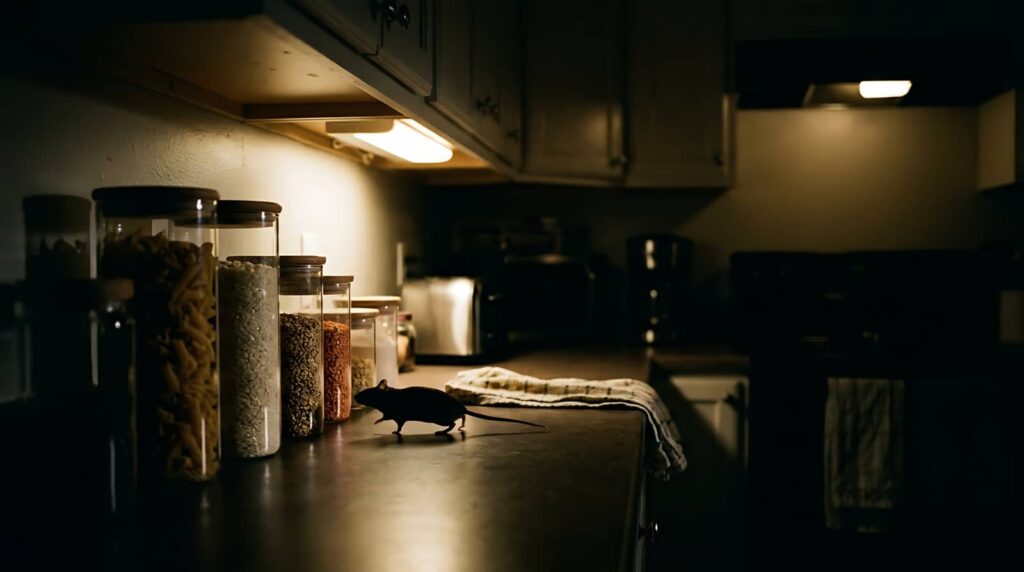
Start by inspecting kitchen cabinets, pantries, and drawers for signs of mouse activity, since these storage areas often give mice easy access to food and nesting material.
Check corners, shelf edges, and drawer bottoms for droppings, shredded paper, chewed packaging, or greasy rub marks. Open each container and look for tiny holes in boxes, bags, and cereal liners.
If you spot damage, move food into sealed glass or sturdy plastic bins right away. Wipe crumbs from hinges, handles, and tracks, then vacuum the shelves and drawer runners.
Keep items grouped neatly so you can spot new signs quickly. When you stay organized, you make your kitchen less welcoming and more manageable.
You’re not alone in this; small, steady checks can protect your home and confidence.
Look Behind Appliances and in Utility Gaps
Check behind your refrigerator, stove, washer, and dryer, and make sure there’s enough clearance for you to inspect the space.
Look for gaps around utility lines, pipes, and cords, since mice can slip through these openings into warm hidden corridors.
If you spot droppings, nesting material, or chew marks, you’ve likely found a travel route worth sealing.
Appliance Clearance Check
Move each appliance a little and inspect the narrow gaps behind and beside it, because mice often use these hidden utility spaces as travel routes and nesting spots.
Check under the refrigerator, stove, washer, dryer, and dishwasher for droppings, shredded paper, food bits, or greasy smudges. Use a flashlight and move slowly so you don’t miss a small nest tucked near the floor.
If an appliance sits flush against a wall, look for chew marks on cords, dust trails, or dark rub lines.
Keep the area clean and dry, since clutter and crumbs invite repeat visits. You’re not alone in this; many homes hide activity here.
A careful sweep now gives you a clearer picture and helps you respond with confidence tonight.
Utility Line Openings
Look behind appliances and along utility line openings, because mice often slip through the small gaps where pipes, cords, and hoses enter walls or floors.
You can check the space around your sink, dishwasher, refrigerator, washer, dryer, and furnace with a flashlight. If you see daylight, crumbs, droppings, or greasy smudges, treat that spot as active.
Gently move stored items, then inspect the edges of cabinets and baseboards for tiny routes in and out. Seal openings with steel wool and caulk, or use hardware cloth for larger gaps.
Keep cords neat and reduce clutter so you can spot new access points quickly. When you inspect these areas regularly, you stay ahead of mice and protect the home you share.
Warm Hidden Corridors
Mice also favor the warm hidden corridors behind appliances and inside utility gaps, where heat, darkness, and cover make travel easy.
You should pull out the stove, refrigerator, and washer enough to check for droppings, grease smears, shredded nesting, and chewed insulation.
Look along water lines, gas lines, and electrical chases, since mice use these narrow routes as protected highways.
If you spot a gap larger than a pencil, seal it with steel wool and the right caulk or hardware cloth.
Keep floors clear so you can inspect confidently, and wipe away crumbs that draw traffic.
You’re not alone in this search; these spaces are common mouse hiding spots, and a careful look now helps you stay ahead.
Search Basements, Crawl Spaces, and Storage Areas
Start with basements, crawl spaces, and storage areas, since mice often use these low-traffic spots for nesting and travel.
You’ll want to inspect along walls, behind stored boxes, and near any clutter where they can stay hidden. Look for droppings, shredded material, gnaw marks, and narrow openings that may lead deeper inside.
Move items carefully so you don’t miss a trail or nest tucked in a corner. Keep your flashlight low and scan for rub marks or disturbed dust.
If you share these spaces with your home, you’re not alone—mice often choose them first because they feel protected. A steady, methodical check helps you spot activity early and decide your next step with confidence.
Check Laundry Rooms, Bathrooms, and Pipes
Next, check laundry rooms, bathrooms, and the pipes that run through them, since mice often use these spaces to move between walls, floors, and hidden gaps.
Look behind washers, dryers, sinks, toilets, and vanities for droppings, shredded paper, or gnaw marks. Feel along pipe chases, supply lines, and drain openings for warm, narrow routes mice can follow.
Inspect cabinets and the backs of appliances, where dust may hide fresh tracks. If you find a small hole, note it and keep the area clean and dry.
Close laundry detergent, pet food, and toiletries in sealed containers. Your home’s utility spaces can stay manageable when you check them regularly.
A careful look tonight helps you protect the people and routines you share there.
Inspect Garages, Mudrooms, and Entry Gaps
While you’re checking the rest of the house, inspect garages and mudrooms for signs mice use to slip inside. Focus on door edges, torn weatherstripping, and gaps around thresholds, where small bodies can squeeze through.
You’ll often spot droppings, rub marks, gnawed cardboard, or shredded nesting material near stored items. Check where utility lines, vents, and pipes enter the wall, and seal openings with steel wool and caulk.
- Sweep corners for crumbs and seed spills
- Move pet food into sealed containers
- Stack boxes off the floor
- Replace damaged door sweeps
- Keep exterior doors closed
If you find fresh signs, clean the area, block access, and watch for new activity. You’re not alone in this; these spots are common, fixable entry points.
Look in Closets, Ceilings, and Vents
Check closets, ceilings, and vents for the hidden paths mice love to use.
In closets, scan shelves, corners, and the back wall behind stored boxes or clothing. Mice like quiet, rarely disturbed spots where they can move unseen.
Look up at ceiling edges, attic hatches, and the seams around light fixtures, since these spaces often connect to larger voids.
In vents, inspect return grilles, duct openings, and gaps around registers. A small opening can give mice easy access from one room to another.
Keep your search calm and methodical, and you’ll cover the places many people miss.
If you share your home with others, make the inspection a team effort so nothing gets overlooked.
Signs Mice Are Hiding in Your House
If mice are hiding in your house, they usually leave clear clues behind. You can spot trouble early by checking for small, dark droppings near walls, cabinets, and food.
Listen for scratching in walls or ceilings, especially at night. Watch for shredded paper, insulation, or fabric tucked into hidden corners; mice build nests where they feel safe.
You may also notice gnaw marks on boxes, wires, or baseboards. A musky odor can signal a larger hidden group. Trust what you see and hear; you’re not overreacting.
- Tiny droppings
- Scratching sounds
- Shredded nesting material
- Chewed surfaces
- Musty odor
Frequently Asked Questions
How Quickly Can Mice Multiply Inside a House?
Mice can multiply fast—you might see a new litter every 3 weeks, with several pups each time. If you spot signs early, you can act quickly and keep your home from becoming overrun.
Do Mice Hide in Walls During Daytime or Nighttime?
Yes—you’re most likely to hear mice in walls at night, when they’re active and foraging, but they can hide there by day too. Check for scratching, droppings, and gaps near pipes, vents, and appliances.
What Sounds Do Hidden Mice Make at Night?
You’ll usually hear faint scratching, scurrying, squeaks, or nibbling at night. Listen near walls, ceilings, and appliances; those sounds mean hidden mice are active, and you can inspect calmly before deciding on removal.
Can One Mouse Indicate a Larger Infestation?
Yes—one mouse can signal a bigger infestation, so you shouldn’t ignore it. You’ll want to inspect nearby entry points, food sources, and hidden spaces tonight, since mice usually travel in groups and breed quickly.
When Should I Call a Professional for Mice Removal?
Call a professional as soon as you see repeated droppings or gnaw marks; one mouse can mean up to 50 hidden relatives. You’ll get faster, safer removal, and you won’t feel alone.
Final Thoughts
Now you know where mice hide, so you can take charge tonight. Check quiet corners, crowded cabinets, and hidden gaps with calm, careful consistency. Spot droppings, gnaw marks, or nests? Act fast, seal openings, and clear clutter. Your steady search helps stop sneaky rodents before they spread. Keep inspecting the nine hotspots, and you’ll protect your home with practical, peace-of-mind prevention. Small steps now mean fewer surprises later.
Recent Posts
The Best Pet Safe Mouse Repellent Options, Ranked by a Pro
You probably don’t know that many “mouse repellents” fail because they target the mouse instead
How Much Does Mice Extermination Cost in West Michigan?
In West Michigan, how much does mice extermination cost can vary significantly from one home
Do Mice Go Away on Their Own? The Honest Answer
You may not realize that mice often stay put even when a home feels busy