
Contents
Managing wasps in your garden requires a strategic wasp control approach. First, you need to identify and eliminate potential nesting sites. Next, consider natural repellents that deter wasps without harming beneficial insects. Finally, creating a balanced ecosystem can help maintain harmony with these creatures. By implementing these tips, you can effectively control wasp populations while promoting a healthy garden environment. Let’s explore each method in detail to ensure your garden remains a safe and thriving space.
Key Takeaways
- Survey your garden regularly to identify and remove potential nesting sites, such as eaves and hidden corners.
- Use natural repellents like diluted essential oils and vinegar traps to deter wasps without harming beneficial insects.
- Create a balanced ecosystem by planting native flowers that attract beneficial insects and provide shelter for wasps.
- Monitor wasp activity consistently to adjust control measures based on their behavior and nesting patterns.
- Educate yourself and others about the ecological benefits of wasps, promoting coexistence rather than extermination.
Identify and Remove Nesting Sites
Identifying and removing nesting sites is essential for effective wasp control in gardens.
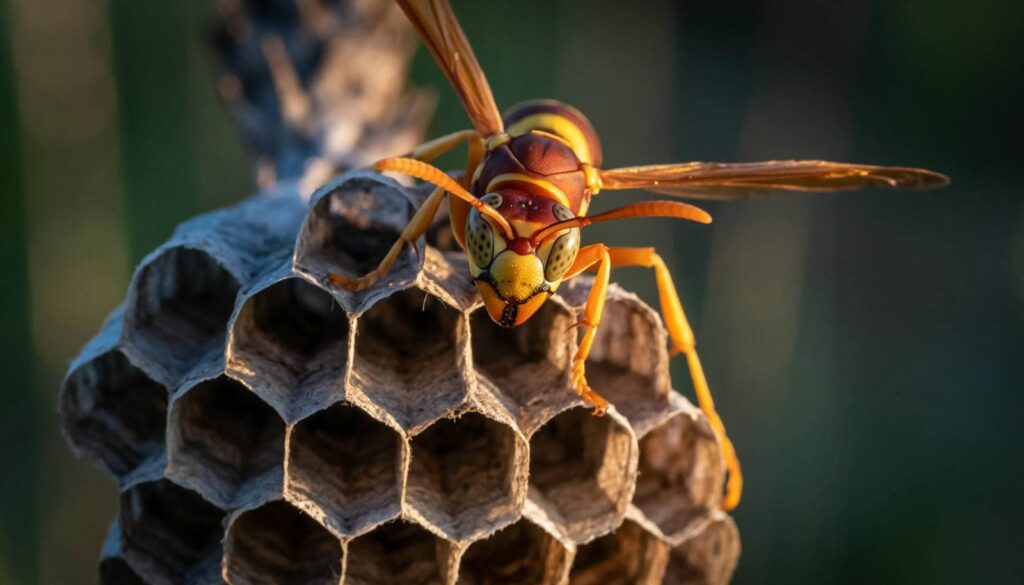
Begin by surveying your garden for potential nesting locations, such as eaves, tree branches, or hidden corners. Wasps prefer to use nesting materials like paper, mud, and plant fibers, which can often be found nearby. Pay attention to signs of activity, like wasps flying in and out of specific areas.
Once you find a nest, take action promptly to avoid further establishment. Removing nesting materials and sealing off locations where wasps might build nests is vital.
Use Natural Repellents
Natural repellents can be an effective way to deter wasps from making your garden their home. By utilizing natural ingredients, you can create a more welcoming environment for yourself and your plants without harming beneficial insects.
Here are a few options to contemplate:
Essential oils: Oils like peppermint, eucalyptus, and clove can repel wasps when diluted and sprayed around your garden.
Vinegar traps: A simple mixture of vinegar and sugar can attract and trap wasps, helping to reduce their numbers.
Citrus peels: Placing citrus peels around your garden can act as a natural deterrent due to the scent.
Incorporating these strategies keeps wasps at bay while promoting a healthy, thriving garden.
Create a Wasp-Friendly Environment
Creating a wasp-friendly environment can actually help maintain a balanced ecosystem in your garden.
By carefully considering your plant selection, you can attract beneficial insects that coexist harmoniously with wasps. Incorporate native plants that produce nectar and pollen, as these provide essential food sources for wasps and other pollinators.
Avoid using pesticides that harm these insects, as they play vital roles in pest control and pollination. Additionally, creating sheltered spots, like dense shrubs or hollow stems, can encourage wasps to thrive.
Frequently Asked Questions
What Time of Year Are Wasps Most Active in Gardens?
Wasps are most active in late summer and early fall due to their behavioral patterns and seasonal activity. During this time, you’ll notice increased foraging as they seek food sources before winter’s arrival.
How Can I Safely Remove a Wasp Nest?
To safely remove a wasp nest, consider dusk when they’re less active. Use protective gear, spray from a distance, and follow nest removal techniques. Always prioritize safety precautions to prevent painful encounters and ensure a successful removal.
Are There Specific Plants That Attract Wasps?
Certain plants, like fruit trees and flowering herbs, attract wasps due to their nectar and fruit. For plant selection, consider natural repellents like mint or citronella to deter them while maintaining a pleasing garden aesthetic.
Can Wasps Harm Pets in the Garden?
Yes, wasps can harm pets in the garden. Understanding wasp behavior is essential for pet safety. If your pet provokes them, they may sting, causing pain or allergic reactions. Always supervise pets around wasps.
What Should I Do if I Am Stung by a Wasp?
If you’re stung by a wasp, clean the area and apply ice to reduce swelling. Monitor for allergy symptoms like difficulty breathing or swelling beyond the sting site, and seek first aid if needed.
Recap
By identifying and removing nesting sites, you reduce the chances of wasps invading your garden. By using natural repellents, you protect beneficial insects while deterring unwanted pests. By creating a wasp-friendly environment, you foster a balanced ecosystem that supports pollination. Together, these steps don’t just manage wasps; they enhance your garden’s liveliness. Embrace these strategies, and you’ll enjoy a thriving garden that coexists harmoniously with wasps, promoting both beauty and biodiversity.
Recent Posts
Bee and Box Elder Bug Removal
If you’re dealing with bees or box elder bugs, you need to identify the pest
Why Bee Removal Helps With Boxelder Bugs
When you remove a paper wasp nest from an eave in late summer, you often
Red Flour Beetle Removal Guide
If you’ve found small reddish-brown beetles in your pantry, you need to act fast. You