
Contents
If you’ve found small reddish-brown beetles in your pantry, you need to act fast. You can identify red flour beetles by their flat bodies and their habit of infesting grains, cereals, and spices. Start by checking hidden food packages and nearby shelves, then remove contaminated items before the problem spreads. The next steps focus on cleanup, control, and the measures that keep them from coming back.
Key Takeaways
- Identify red flour beetles by their flat reddish-brown bodies, quick movement, and larvae in stored dry foods.
- Remove infested flour, cereal, pasta, spices, nuts, and pet food by sealing and discarding contaminated packages.
- Clean pantry shelves, corners, cracks, and shelf pin holes with vacuuming and thorough wiping.
- Seal gaps, baseboards, shelf joints, and utility openings with caulk to block beetle entry and hiding spots.
- Store dry goods in airtight containers and inspect pantry items regularly to prevent future infestations.
How to Identify Red Flour Beetles
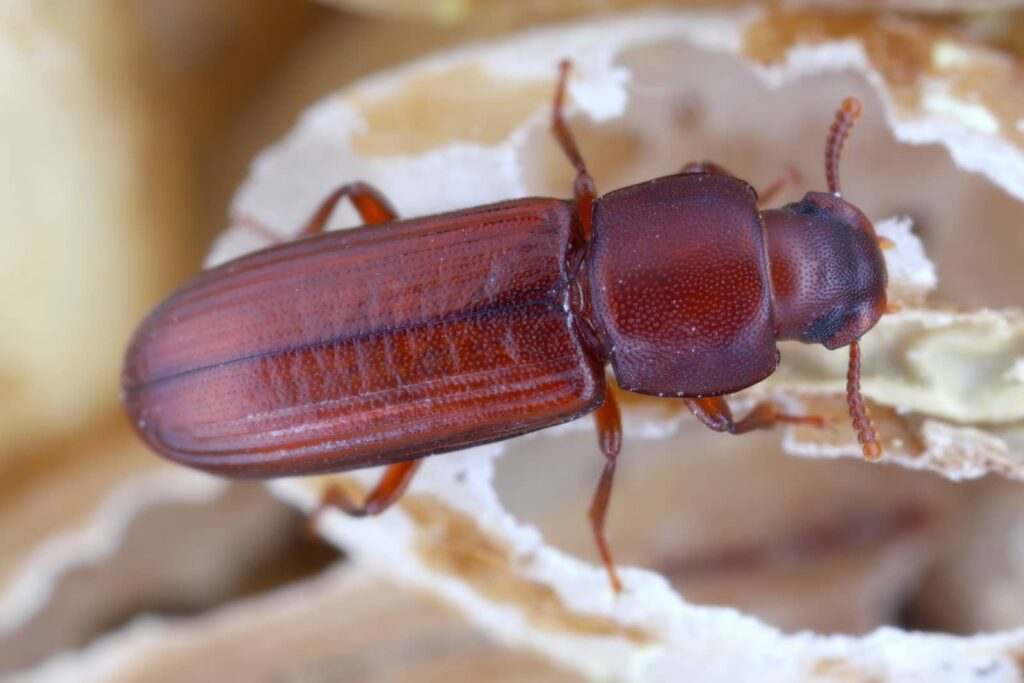
Tiny but persistent, red flour beetles are easy to spot once you know what to look for. You’ll notice red flour beetle characteristics such as a flat, reddish-brown body, oval shape, and fine, sawlike edges on the thorax.
Adults measure about 1/8 inch long and move quickly when disturbed. Their antennae end in a gradual club, not a sharp tip.
You may also see pale larvae that are wormlike and active in stored products. Check common habitats like flour, cereal, pasta, nuts, spices, and pet food.
If you’re scanning a pantry as part of your pest-control crew, these details help you confirm the pest fast and act with confidence before the infestation spreads.
Where Red Flour Beetles Hide
Once you’ve confirmed red flour beetles, the next step is to find where they’re nesting and feeding. You’ll usually find them in common hiding spots like cracks in cabinets, seams around shelves, baseboard gaps, and behind stored dry goods.
Check warm, dark areas near your favorite food sources, including flour, cereal, pasta, spices, pet kibble, and baking mixes. Adult beetles and larvae can slip into tiny spaces, so inspect package folds, lid rims, and drawer corners carefully.
Use a flashlight and look for live beetles, shed skins, and fine powdery debris. Stay systematic and calm; you’re not dealing with a mess alone.
When you map these hotspots, you can target cleanup and control with confidence, and your kitchen gets back on your side.
Remove Infested Pantry Foods
Pull every infested food item from the pantry and seal it in a heavy-duty trash bag before moving it out of the kitchen.
Check flour, cereal, rice, pasta, spices, pet food, and baking mixes for live beetles, webbing, or powdery residue. If you spot any sign of infestation, discard the whole package; partial saving won’t protect your pantry.
Keep suspect containers separate while you inspect nearby items, because red flour beetles spread fast. Wipe jar rims and lids before returning clean goods to storage.
During pantry cleaning, label what you keep and note opening dates so you can monitor freshness. Don’t leave infested foods on counters or in hallways.
Work methodically, and you’ll help your household feel safe, organized, and ready for the next step.
Clean and Seal Pantry Areas
After you remove the infested food, clean the pantry surfaces to eliminate beetles, eggs, and debris. Vacuum shelves, corners, trim, and shelf pin holes, then wipe all areas with warm soapy water.
Dry surfaces fully, because moisture supports survival and hides residue. Use cleaning tips that target cracks, seams, and packaging dust, since red flour beetles often shelter there.
Check nearby jars, bins, and door edges, and clean them too. You can boost pest control by sealing gaps around baseboards, wall penetrations, and shelf joints with caulk.
Replace torn liners and use tight-fitting containers for flour, cereal, and spices. When your pantry’s clean and sealed, you’re helping your household stay organized, protected, and ready to keep beetles out.
Use Traps and Treatments for Red Flour Beetles
Use sticky traps and targeted treatments to reduce adult red flour beetles and track where activity is highest. Place sticky traps along baseboards, shelf edges, and near infested packaging. Add pheromone lures if you need stronger monitoring in busy storage zones. Check traps every few days so you can map hotspots and judge control progress.
- Position sticky traps at floor level where beetles travel.
- Replace pheromone lures on the schedule the label gives.
- Apply only labeled treatments to cracks, crevices, and voids.
- Record catch counts so your team can act with confidence.
Keep your approach tight and methodical. You’re not alone in this process; these tools help you and your household stay in control while you reduce active populations and focus effort where it matters most.
Prevent Future Red Flour Beetle Infestations
To prevent future red flour beetle infestations, you should seal pantry cracks, gaps, and other entry points so pests can’t get inside.
Store grains, flour, and dry goods in airtight containers to block access and limit contamination.
Inspect dry goods regularly for signs of beetles, larvae, or damaged packaging so you can act fast.
Seal Pantry Entry Points
Even tiny gaps can let red flour beetles back into your pantry, so seal every likely entry point before you restock. You’ll protect your space by treating pantry design as a barrier system, not just storage.
Check trim, shelf seams, baseboards, and utility penetrations, then seal openings with caulk or foam rated for indoor use. Tight-fitting door sweeps and weatherstripping add reliable insect barriers, and you can use them without changing your layout.
- Inspect edges where cabinets meet walls.
- Seal cracks around pipes and conduits.
- Replace warped door gaskets and sweeps.
- Patch gaps near vents and corners.
When you close these access points, you make your pantry harder to invade and easier to keep beetle-free. You’re building a cleaner routine with your household.
Store Grains Airtight
Once you’ve sealed entry points, keep red flour beetles from reestablishing themselves by storing all grains in airtight containers with tight, undamaged lids.
Choose rigid glass, metal, or food-grade plastic containers that close fully and resist cracking. Label each container and move flour, rice, oats, and similar staples out of original bags right away.
This grain storage method blocks adult beetles, limits egg-laying sites, and reduces moisture exchange that can support pests. Keep containers on clean shelves, away from heat and wall contact, so you can maintain a tidy pantry that feels secure and shared.
Replace any lid that warps, gaps, or loosens, because even small openings invite reinfestation. With disciplined storage, you protect your supplies and keep your kitchen ready for everyone.
Inspect Dry Goods Regularly
Check your dry goods on a regular schedule so you catch red flour beetles before they spread. You’ll protect your pantry when you inspect flour, cereal, rice, and spices for pest behavior and infestation signs.
Look for fine dust, webbing, clumped product, moving beetles, or larvae in seams and corners. If you spot even a few insects, isolate the package right away and discard it or freeze it to stop development.
Make this a shared routine in your household so everyone stays alert and confident.
- Empty one shelf at a time.
- Check labels, seals, and package folds.
- Use a flashlight to scan cracks.
- Clean shelves after each inspection.
Frequently Asked Questions
How Long Do Red Flour Beetles Live?
You’ll usually see red flour beetles live 6 to 10 months, though lifespan factors and environmental influences like temperature, food, and humidity can extend or shorten it. You can reduce populations with dry, cool storage.
Can Red Flour Beetles Bite Humans?
No, red flour beetles don’t bite humans, dear reader. You’ll see them in your pantry; their beetle behavior targets grain. For infestation prevention, store food sealed and use pest control if numbers rise.
Do Red Flour Beetles Damage Sealed Packages?
Yes, you can find red flour beetles compromising sealed packages if packaging isn’t airtight. You’ll protect your food storage by inspecting seams, rotating stock, and tightening pest prevention so your pantry stays secure and welcoming.
Are Red Flour Beetles Harmful to Pets?
They’re usually harmless to your pets, like dust in a pantry. You should still manage red flour beetle behavior: they won’t bite, but infested food can spoil. Use pest control methods to protect your home.
Can Red Flour Beetles Infest Non-Food Items?
Yes, you can find red flour beetles in non-food items like packaging, fabrics, or stored materials. Watch for infestation signs, like tiny beetles and dust, and use prevention methods, such as sealing and cleaning.
Conclusion
By clearing out infested foods, scrubbing every shelf, and sealing dry goods in airtight containers, you break the beetle’s quiet cycle. You reclaim your pantry like a clean, bright room after a storm, with every jar sealed and every corner checked. Keep watching for the first reddish speck, and act fast if it returns. With steady inspections and simple habits, you don’t just remove red flour beetles—you keep your stored food protected.
Recent Posts
7 Best Elder Bug Control Tips
If you’re dealing with box elder bugs, you need a control plan that starts with
Top-Rated Year-Round Bug Control Tips
If you want year-round bug control that actually works, you need more than quick sprays.
Why Springtails Invade Your Home?
After a week of heavy rain, you may notice tiny springtails clustering on a bathroom