
Contents
Is it true that summer months increase the likelihood of Indian meal moth infestations? Many homeowners find that warmer temperatures and humidity create ideal conditions for these pests to thrive. Understanding their behavior and lifecycle is essential for effective control. By exploring proactive measures and natural deterrents, you can safeguard your pantry and maintain a pest-free environment throughout the season.
Key Takeaways
- Organize your pantry using airtight containers to prevent Indian meal moth access to food sources during the summer.
- Regularly inspect your pantry for signs of infestation and discard any infested items promptly.
- Use natural repellents like bay leaves and lavender sachets to deter moths in warm summer months.
- Maintain cleanliness by frequently vacuuming shelves and corners to eliminate eggs and larvae.
- Create homemade traps using apple cider vinegar and dish soap to capture adult moths effectively.
Understanding the Indian Meal Moth Lifecycle
Understanding the lifecycle of the Indian meal moth is essential for effective pest control. You’ll find that this pest undergoes four stages: egg, larva, pupa, and adult.
The moth reproduction process begins when females lay eggs in food sources, typically grains or dried goods. Each female can deposit up to 400 eggs, leading to rapid population growth.
Once the eggs hatch, the larvae emerge and begin their larval development. This stage is critical, as larvae feed on the food, causing significant damage. They can grow for about two to three weeks before forming cocoons and entering the pupal stage, where they undergo metamorphosis.
After the pupal phase, adults emerge, ready to mate and repeat the cycle. Understanding these stages helps you identify potential breeding sites, allowing you to take proactive measures against infestations in your home.
Identifying Infestations in Your Home
How can you tell if your home has been invaded by Indian meal moths? Start by looking for visual signs. These pests often leave behind webbing, especially in food containers or pantry corners.
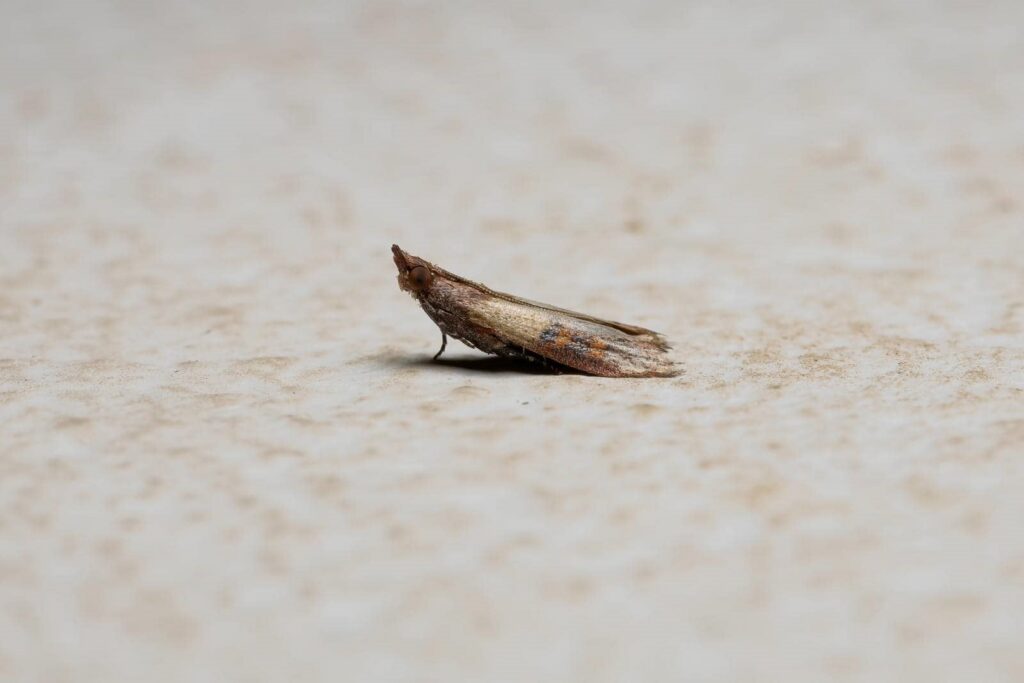
You may also notice small, brownish moths fluttering around, particularly near light sources. Inspect your food sources, as Indian meal moths typically infest grains, dried fruits, and nuts.
If you find tiny larvae or silk threads in these items, it’s a clear indication of an infestation. Check for any damaged packages or unusual clumping within your food products.
Additionally, be alert for frass, which looks like small grains of pepper and can accumulate in food. Knowing these signs helps you act quickly to protect your home and pantry.
If you suspect an infestation, it’s essential to take immediate action and address the problem effectively.
Effective Prevention Techniques
To effectively prevent Indian meal moth infestations, you should implement a combination of proactive strategies in your home.
Begin with pantry organization; keep all food items in airtight containers to eliminate easy access for moths. Regularly inspect your pantry for signs of pests and discard any infested products immediately.
Incorporate natural repellents, like bay leaves and lavender sachets, into your storage areas. These can deter moths while adding a pleasant scent to your pantry.
Additionally, maintain cleanliness by vacuuming shelves and corners to remove any eggs or larvae that may be present.
Consider rotating food supplies, using older items first to minimize the chance of prolonged storage that may attract pests.
Together, these techniques will create a barrier against Indian meal moths, ensuring your kitchen remains a welcoming space for you and your family.
Safe and Eco-Friendly Treatment Options
While you may want to avoid harsh chemicals in your home, several safe and eco-friendly treatment options can effectively combat Indian meal moth infestations.
Start by using natural repellents like essential oils, such as peppermint or lavender, which can deter moths when mixed with water and sprayed in infested areas.
You can also create homemade traps using simple materials. For example, fill a jar with a mixture of apple cider vinegar and dish soap; the vinegar attracts moths while the soap traps them.
Hang sticky traps made from non-toxic glue near infested areas to catch adult moths.
Regularly vacuuming and cleaning your pantry will help remove eggs and larvae, further enhancing your efforts.
When to Call a Pest Control Professional
Despite the effectiveness of safe and eco-friendly methods, some infestations may require professional intervention. Knowing when to seek help is vital for effective Indian meal moth control. Here are key signs to watch for:
Persistent Presence: If you notice adult moths or larvae consistently, despite your efforts, it’s time to contact a pest control expert.
Severe Infestation: When you find multiple infested food items or webbing in multiple locations, the situation may be beyond DIY solutions.
Health Concerns: If someone in your household is experiencing allergic reactions or respiratory issues potentially linked to the infestation, it’s important to act quickly.
Calling a professional saves time and ensures a thorough assessment and tailored treatment plan.
Don’t hesitate to address your concerns; swift action can protect your home and health.
Conclusion
Controlling Indian meal moths requires vigilance and proactive measures. The theory that these pests can thrive in even the cleanest homes underscores the importance of consistent pantry inspections and secure storage practices. By implementing effective prevention techniques and utilizing safe treatments, you can markedly reduce the risk of infestations. If the problem persists despite your efforts, don’t hesitate to call a pest control professional for assistance to ensure a moth-free environment.
Recent Posts
Mouse Droppings vs Rat Droppings: Identify Your Intruder
You may not know that droppings can tell you more than just whether rodents are
What Attracts Mice to a Clean House? 7 Surprising Culprits
Some homes report some mouse activity each year, and even a spotless house can still
How Do Exterminators Get Rid of Mice? A Look Inside the Process
When you call an exterminator for mice, the process starts with a careful inspection to