
Contents
Imagine you’ve just discovered an infestation of Indian meal moths in your pantry, leaving you frustrated and concerned about food safety. Fortunately, there are effective eco-friendly solutions that can help manage this issue without resorting to harmful chemicals. By examining natural repellents, homemade traps, and sustainable cleaning practices, you can tackle these pests efficiently. Understanding these methods is essential for creating a pest-free environment in your home.
Key Takeaways
- Use essential oils like peppermint and lavender to repel Indian meal moths naturally and create a pleasant scent in your kitchen.
- Store dry goods in airtight glass or hard plastic containers to prevent moth access and reduce infestation risk.
- Implement homemade traps using vinegar and dish soap to effectively attract and drown moths without harmful chemicals.
- Incorporate herbal sachets filled with dried herbs to create a barrier against moths and enhance your pantry’s aroma.
- Utilize eco-friendly pesticides such as diatomaceous earth and neem oil to disrupt the moth life cycle safely.
Understanding Indian Meal Moths
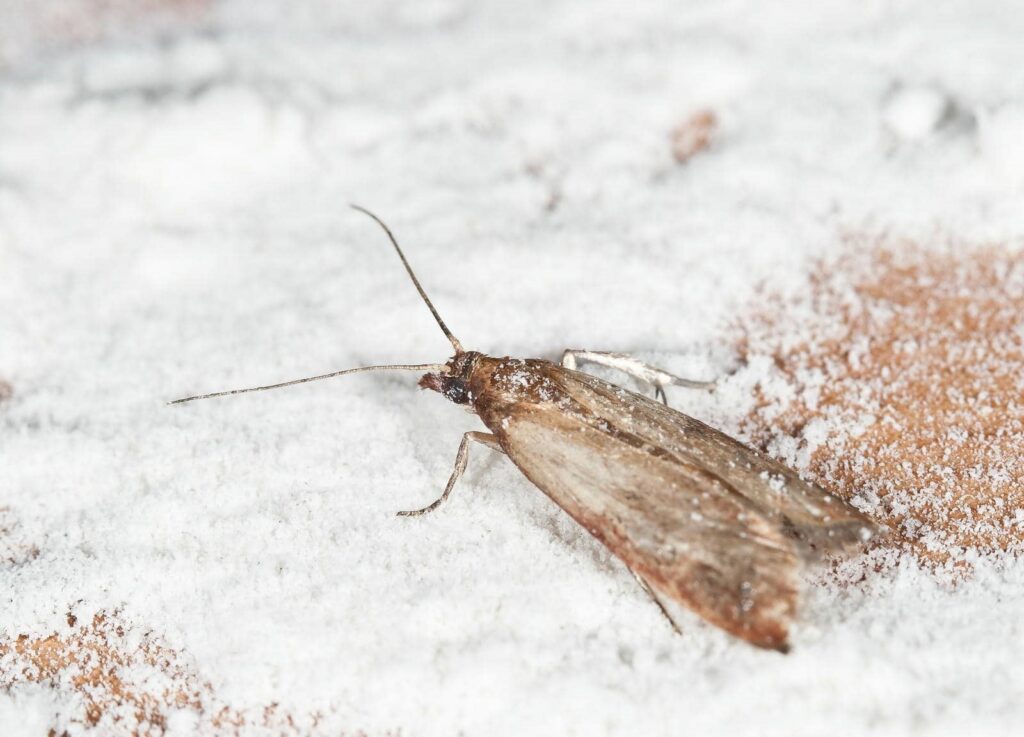
Although you may not notice them at first, Indian meal moths (Plodia interpunctella) can quickly become a nuisance in your pantry. Understanding their life cycle is essential for effective management.
These pests begin as tiny eggs laid in food products, usually grains or dried fruits. Within a week, they hatch into larvae, which actively consume your food, growing rapidly. This stage lasts about two to four weeks, during which their behavior becomes increasingly destructive.
Once they mature, they transform into pupae, eventually emerging as adult moths. The entire life cycle can span as little as a month under ideal conditions, allowing populations to explode.
Recognizing this cycle and their pest behavior helps you take proactive steps to prevent infestations. By being aware of their life cycle, you can better protect your pantry and maintain a clean, pest-free environment, fostering a sense of belonging in your home.
Identifying Infestations
To identify an infestation of Indian meal moths, start by looking for common signs such as webbing in food packages and small, brownish moths fluttering around your pantry.
Inspect your food sources carefully, focusing on grains, nuts, and dried fruits, as these are prime targets for these pests.
Early detection is key to managing the problem effectively and preventing further spread.
Signs of Infestation
Identifying an infestation of Indian meal moths early can save you from significant pantry damage.
Watch for key infestation indicators, such as the presence of small, web-like structures in your food products. You might notice adult moths fluttering around your kitchen, especially during the evening. This behavior often signifies a nearby food source.
Additionally, look for larvae, which are small, white caterpillars that may be hidden in grains or dried fruits. Their presence can lead to severe spoilage if not addressed promptly.
Inspecting Food Sources
Once you’ve recognized the signs of an Indian meal moth infestation, inspecting your food sources becomes critical.
Start by checking your pantry organization to ensure you catch any hidden pests. Here are some steps to follow:
- Examine all food storage containers for holes or webbing.
- Look for larvae or adult moths in grains, nuts, and dried fruits.
- Discard any infested items immediately to prevent further spread.
- Clean shelves and corners thoroughly to remove eggs and larvae.
- Consider using airtight containers to protect your pantry from future infestations.
Preventative Measures
While it may seem challenging to keep Indian meal moths at bay, implementing effective preventative measures can greatly reduce their presence in your home.
Start by adopting preventive strategies, such as regularly checking your pantry for any signs of infestation. Store dry goods in moth resistant packaging to create a barrier against these pests. Glass or hard plastic containers with tight-fitting lids work best for this purpose.
Also, maintain a clean kitchen environment by promptly cleaning up spills and crumbs, as these can attract moths. Consider using silicone seals on pantry doors to further minimize entry points.
Additionally, be mindful of your food purchasing habits; choose products with minimal packaging and inspect items before bringing them home.
Natural Repellents
When tackling Indian meal moths, natural repellents like essential oils and herbal sachets can be effective solutions.
Essential oils such as peppermint and eucalyptus deter moths and provide a pleasant scent to your pantry.
Similarly, herbal sachets filled with dried herbs can create a barrier that keeps these pests at bay, enhancing your food storage’s eco-friendliness.
Essential Oils Benefits
As you explore natural methods for repelling Indian meal moths, essential oils stand out for their effectiveness and safety.
These oils act as natural pest deterrents and provide a pleasant aroma for your home.
Here are some essential oil uses that can help keep those pesky moths at bay:
Peppermint Oil: Its strong scent disrupts moth navigation.
Lavender Oil: A calming fragrance that also repels pests.
Cedarwood Oil: Known for its insect-repelling properties and fresh scent.
Tea Tree Oil: A powerful antimicrobial that also deters moths.
Eucalyptus Oil: Its invigorating aroma helps keep pests away.
Incorporating these essential oils can create a safer, more inviting environment while effectively managing moth infestations.
Herbal Sachets Effectiveness
How effective are herbal sachets in repelling Indian meal moths?
These sachets, filled with natural herbal ingredients like lavender, mint, and rosemary, serve as potent deterrents against these pests. Their effectiveness largely hinges on proper sachet placement.
When you position them in areas where food is stored—like pantries or cupboards—you create a barrier that disrupts the moths’ ability to locate food sources. The scents emitted from the sachets mask the pheromones moths use for navigation.
Regularly replacing the sachets ensures that the herbal ingredients maintain their potency. By incorporating herbal sachets into your pest control routine, you promote an eco-friendly environment and foster a sense of belonging to a community that values sustainable living.
Traps and Baits
Traps and baits serve as effective tools in managing Indian meal moth infestations. You can utilize various eco-friendly methods to capture and reduce these pests in your home.
Here are some options to evaluate:
Homemade traps: Create simple traps using a mixture of vinegar and dish soap to attract and drown moths.
Pheromone traps: Commercially available, these traps lure male moths, disrupting their mating cycle.
Bait alternatives: Use a blend of essential oils like peppermint or eucalyptus to deter moths naturally.
Sticky traps: Place these around your pantry to catch any moths on the move.
Regular cleaning: Keep your kitchen tidy to eliminate food sources and reduce moth attraction.
Biological Control Methods
While traps and baits effectively reduce Indian meal moth populations, biological control methods offer a more sustainable approach to long-term management.
You can introduce predator insects, such as certain beetles, into your environment to help keep moth numbers in check. These beneficial insects actively hunt and feed on the larvae, making them a natural solution to your infestation problem.
Another option is to release parasitic wasps, which lay their eggs in or on the moth larvae. As the wasp larvae develop, they consume the host, effectively reducing the moth population.
This method addresses the current infestation and helps prevent future outbreaks. By opting for these biological control methods, you contribute to an eco-friendly strategy that promotes a balanced ecosystem while fostering a sense of community responsibility.
Embrace these solutions for a healthier, moth-free environment.
Cleaning and Sanitation Practices
Maintaining rigorous cleaning and sanitation practices is essential for preventing Indian meal moth infestations. By implementing effective sanitation techniques, you can greatly reduce the likelihood of attracting these pests.
Here are some key practices to follow:
Regularly clean pantry shelves: Wipe down surfaces with eco-friendly cleaning products to remove any food residues.
Check food packaging: Inspect and discard any damaged or expired items that might harbor larvae.
Vacuum frequently: Use a vacuum to eliminate potential eggs and larvae hidden in nooks and crannies.
Seal food containers: Store grains, cereals, and dried fruits in airtight containers to keep moths out.
Maintain humidity levels: Keep your kitchen dry, as moisture can attract pests.
Eco-Friendly Pesticides
To effectively combat Indian meal moths without resorting to harmful chemicals, you can explore various eco-friendly pesticides that are both safe for your home and the environment.
Organic formulations, such as diatomaceous earth and neem oil, offer effective solutions by targeting pests while minimizing risks to humans and pets. These substances disrupt the life cycle of the moths and inhibit their ability to reproduce.
Incorporating sustainable practices into your pest management strategy enhances your home’s safety while supporting ecological balance.
Essential oils, such as peppermint and lavender, repel moths while creating a pleasant atmosphere. Additionally, utilizing traps made from natural materials can help monitor and reduce infestations.
Conclusion
By embracing eco-friendly solutions, you can effectively manage Indian meal moths while nurturing your home environment. These natural methods, from herbal sachets to homemade traps, serve as a fortress against infestations, allowing you to reclaim your space without harsh chemicals. Just like tending to a garden, consistent care and vigilance will yield a pest-free sanctuary. With a blend of prevention and natural repellents, you’ll protect your pantry and contribute to a healthier planet.
Recent Posts
Mouse Droppings vs Rat Droppings: Identify Your Intruder
You may not know that droppings can tell you more than just whether rodents are
What Attracts Mice to a Clean House? 7 Surprising Culprits
Some homes report some mouse activity each year, and even a spotless house can still
How Do Exterminators Get Rid of Mice? A Look Inside the Process
When you call an exterminator for mice, the process starts with a careful inspection to