
Contents
Have you ever wondered what might be lurking in your pantry? Identifying weevils requires keen observation of specific signs that indicate their presence. From unusual holes in packaging to the sight of small brown or black beetles, knowing what to look for is essential. Additionally, signs of flour or grain infestations and unpleasant odors can further suggest a problem. Understanding these key indicators can help you maintain a pest-free kitchen environment.
Key Takeaways
- Look for distinctive elongated snouts and oval bodies covered in a textured exoskeleton, indicating the presence of weevils.
- Check for small, round holes in grains or flour packaging, which suggest possible weevil infestation.
- Inspect for small brown or black beetles, as these are often signs of adult weevils emerging from infested products.
- Be aware of clumps or unusual textures in flour, which may indicate the presence of weevil larvae.
- Pay attention to unpleasant odors in food storage areas, as they can signal potential weevil activity.
Visual Identification of Weevils
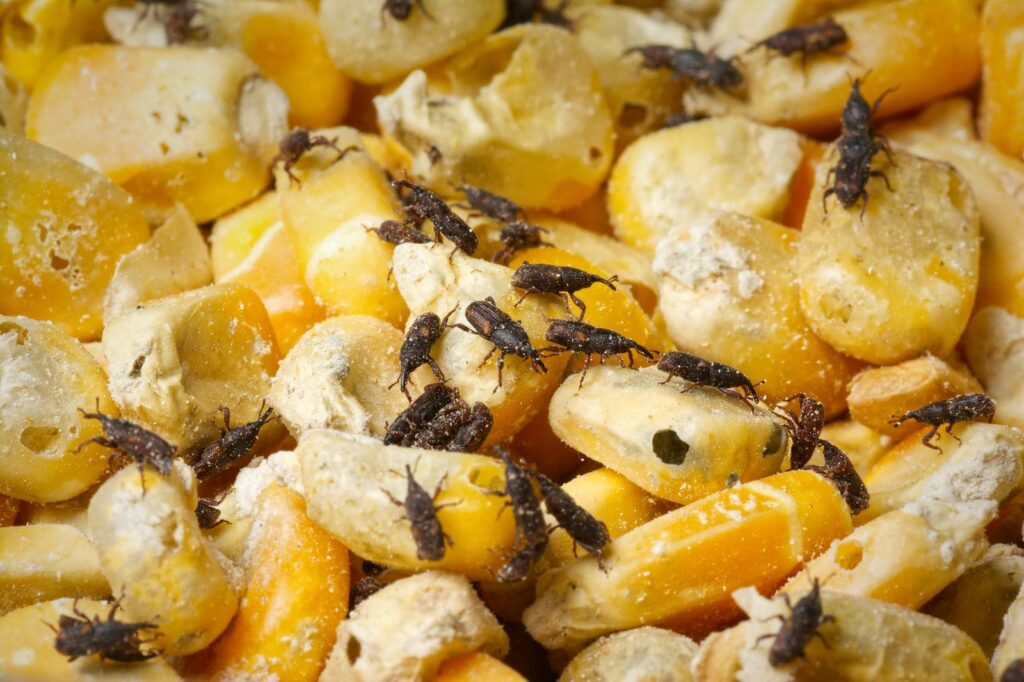
When inspecting your pantry for weevils, it’s essential to recognize their distinctive features to guarantee accurate identification. Weevils, belonging to the family Curculionidae, exhibit a characteristic elongated snout, which is a key aspect of their anatomy. Their bodies are typically oval and covered in a textured exoskeleton, often brown or black, aiding in camouflage.
You might also notice small, round holes in grains or flour, indicating their presence. To effectively engage in pest prevention, look closely for adult weevils, which measure approximately 1/8 to 1/2 inch in length.
Examine food items for larvae, which are creamy-white and legless, hiding within their food sources. By familiarizing yourself with these features, you’ll enhance your ability to identify weevils swiftly, ensuring a sanitary pantry and a sense of belonging in a pest-free environment.
Unusual Holes in Food Packaging
Adult weevils often leave behind telltale signs that can alert you to their presence, one of which is the appearance of unusual holes in food packaging. These holes indicate a breach in packaging integrity, suggesting that pests have accessed your stored food.
It’s essential to inspect packages regularly; small punctures can lead to significant infestations if left unchecked.
When you notice these holes, take immediate action. Dispose of the affected items to prevent further contamination and safeguard your pantry.
Implement pest prevention strategies by sealing food in airtight containers, which not only protects against weevils but also preserves freshness.
Presence of Small Brown or Black Beetles
If you spot small brown or black beetles in your pantry, it’s likely a sign of a weevil infestation. These beetles aren’t just unsightly; they indicate that adult weevils have emerged from infested food products.
Understanding the weevil lifecycle is significant here. Adult weevils lay eggs in stored grains, and once the larvae hatch, they feed on the grains until they mature into beetles, completing the cycle.
To combat this issue, effective pest prevention strategies are essential. Start by inspecting all food items, discarding any infested products.
Seal remaining items in airtight containers to limit access and reproduction. Regular cleaning of your pantry helps eliminate potential breeding grounds.
Recognizing the presence of these beetles allows you to act promptly, ensuring your pantry remains a safe and welcoming space for your food.
Stay vigilant to maintain a weevil-free environment.
Flour or Grain Infestation Signs
Noticing unusual signs in your flour or grain can indicate a weevil infestation. First, check for small holes in your flour packaging. These punctures signal that grain pests have made their way in, laying eggs and consuming your food.
Next, inspect your flour for clumps or unusual textures; these can be remnants of weevil larvae. If you spot tiny, dark specks, they’re likely frass—excrement left by these pests.
Also, be aware of any webbing or silk-like threads in your flour storage; these indicate the presence of adult weevils. If you’ve recently purchased bulk grains, make certain they’re stored in airtight containers to prevent infestations from spreading.
Regularly examine your pantry items, as early detection is key to managing grain pests effectively. By staying vigilant, you’ll protect your food and maintain a healthy kitchen environment.
Unpleasant Odors in Food Storage Areas
When unpleasant odors emanate from your food storage areas, it often signals potential pest activity, including weevils. These odors may arise from infested grains or flour, where weevils and their larvae thrive, degrading food quality and posing food safety risks.
It’s essential to address these smells promptly, as they indicate a larger infestation problem that could affect your entire pantry.
To guarantee pest prevention, regularly inspect your food storage areas for any signs of weevils or other pests. Check sealed containers for cracks and make sure they’re airtight.
Additionally, consider using natural repellents, such as bay leaves, to deter weevil activity.
Summary
While you might think your pantry is a safe haven, weevils can turn it into their personal buffet. By remaining vigilant and recognizing the signs—tiny beetles, mysterious holes, clumpy grains, and odd odors—you can reclaim your space. It’s ironic that the very items you cherish for nourishment could be harboring these pests. So, don’t wait for a full-blown infestation; act now to guarantee your pantry remains a place for food, not unwelcome guests.
Recent Posts
Do Mice Go Away on Their Own? The Honest Answer
You may not realize that mice often stay put even when a home feels busy
Mouse Droppings vs Rat Droppings: Identify Your Intruder
You may not know that droppings can tell you more than just whether rodents are
What Attracts Mice to a Clean House? 7 Surprising Culprits
Some homes report some mouse activity each year, and even a spotless house can still